Foodynamics Freeze-Dried Treats Recall: The Small Recall With a Correction
Some recalls are large, loud, and spread across the country. This one was not. The Foodynamics recall of freeze-dried chicken heart treats, posted on October 9, 2025, involved just eight packages in its corrected total — every one of them traced, every direct customer contacted, and no illnesses reported. Yet it still deserves a careful telling, because the original notice got part of the story wrong, and the correction that followed is exactly the kind of detail that matters to an owner checking a bag at home.
Foodynamics, based in Wales, Wisconsin, issued a voluntary recall after FDA sampling found Salmonella in the treats. The company then corrected its own announcement, changing which brand name was attached to three of the packages. If you only read the first version, you could easily check for the wrong brand and miss the right one. If you read the corrected version, the picture is clear — and small enough to check in a minute.
The Short Answer
Foodynamics voluntarily recalled certain freeze-dried chicken heart treats after FDA sampling found Salmonella. The corrected recall covers eight packages in total, all of which were traced, with direct customers contacted. No illnesses were reported.
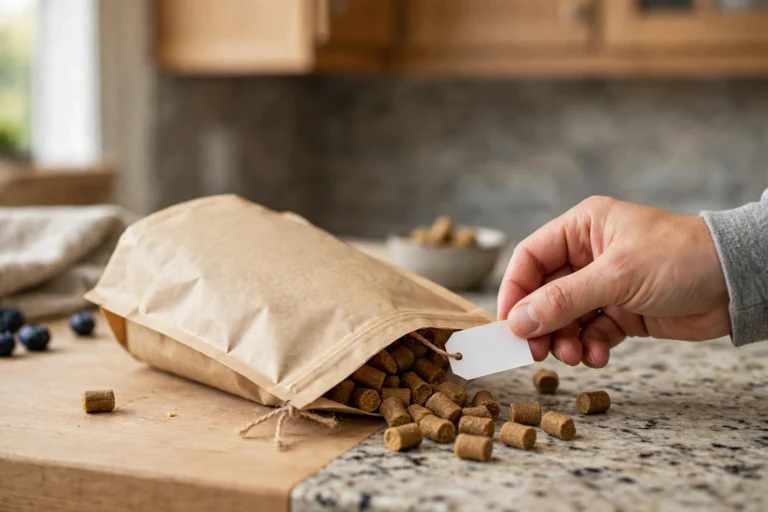
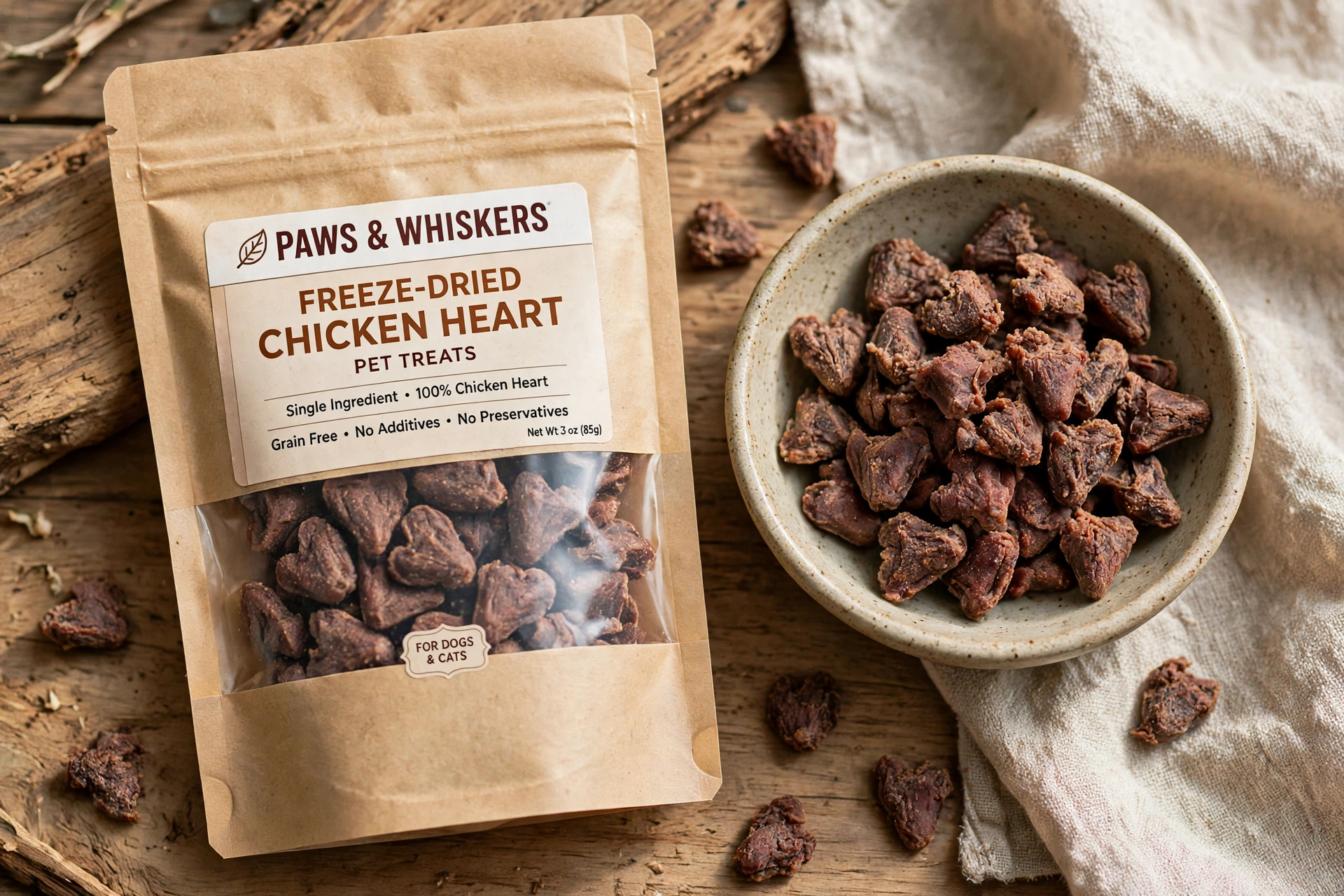
The recalled treats were sold under several brand names — Raw Dog Barkery, What’s In the Bowl, BellePepper Cats, and Kanu Pets — but the lot numbers are what identify them. The Use By date on these products doubles as the lot number, and it appears on a sticker on the back label. That is the detail to check first, before the brand name on the front of the bag.
Production and distribution of the affected treats ceased pending the FDA investigation. The recall is small, but Salmonella is not a minor concern in pet treats, and the handling advice that accompanies it applies whether a household has one of these exact packages or is simply trying to handle raw-style treats more safely.
What Was Recalled: The Corrected List
The corrected list is the one to use. It covers the following products and lots:
- Raw Dog Barkery Whole Chicken Hearts, 16 ounces — lot 030527
- What’s In the Bowl Whole Chicken Hearts, 3 ounces and 16 ounces — lot 030527
- BellePepper Cats Freeze Dried Chicken Heart Slices, 3 ounces — lot 031627
- BellePepper Cats Freeze Dried Sample Treats, about 0.1 ounce, unpackaged and unlabeled — lots 121426 and 011526
- Kanu Pets Freeze Dried Chicken Heart Raw Treats, 3 ounces — lot 031627
Three features of that list are worth noting. First, the same lot number can appear under more than one brand, as with lot 030527 for both Raw Dog Barkery and What’s In the Bowl, and lot 031627 for both BellePepper Cats slices and Kanu Pets treats. Checking only the brand name is therefore not enough; the lot number on the back label is decisive.
Second, the BellePepper Cats sample treats are described as unpackaged and unlabeled, at about 0.1 ounce, with lots 121426 and 011526. A sample handed out without a printed bag is easy to overlook in a recall check, which is why the correction and the lot list matter: if you received a small sample of freeze-dried chicken heart treats from one of these sources, the lot information, rather than a package label, is the way to identify it.
Third, the Use By date doubles as the lot number. In many recalls, owners look for a separate lot code printed elsewhere on the bag. Here, the sticker on the back label carries a date that serves both purposes. If that sticker matches one of the lots above, treat the product as recalled, even if the front of the bag looks ordinary.
Salmonella in Freeze-Dried Treats
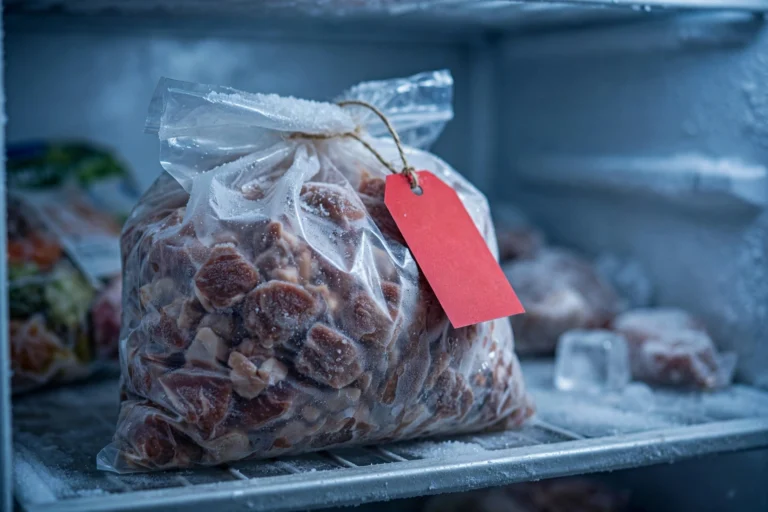
Salmonella is the reason for this recall, and freeze-drying does not change that risk in the way some owners might expect. Freeze-drying removes moisture and can preserve a treat for a long time, but it does not kill Salmonella. A freeze-dried treat can therefore carry the bacteria even though it is dry, shelf-stable, and looks clean.
That point is important because freeze-dried treats often feel safer than raw meat. They are light, dry, and easy to store, and they do not have the obvious handling cues of raw food. The recall is a reminder that the same hygiene rules apply: wash your hands after handling the treats, disinfect surfaces and bowls that touched them, and keep treats away from children and from human food preparation areas.
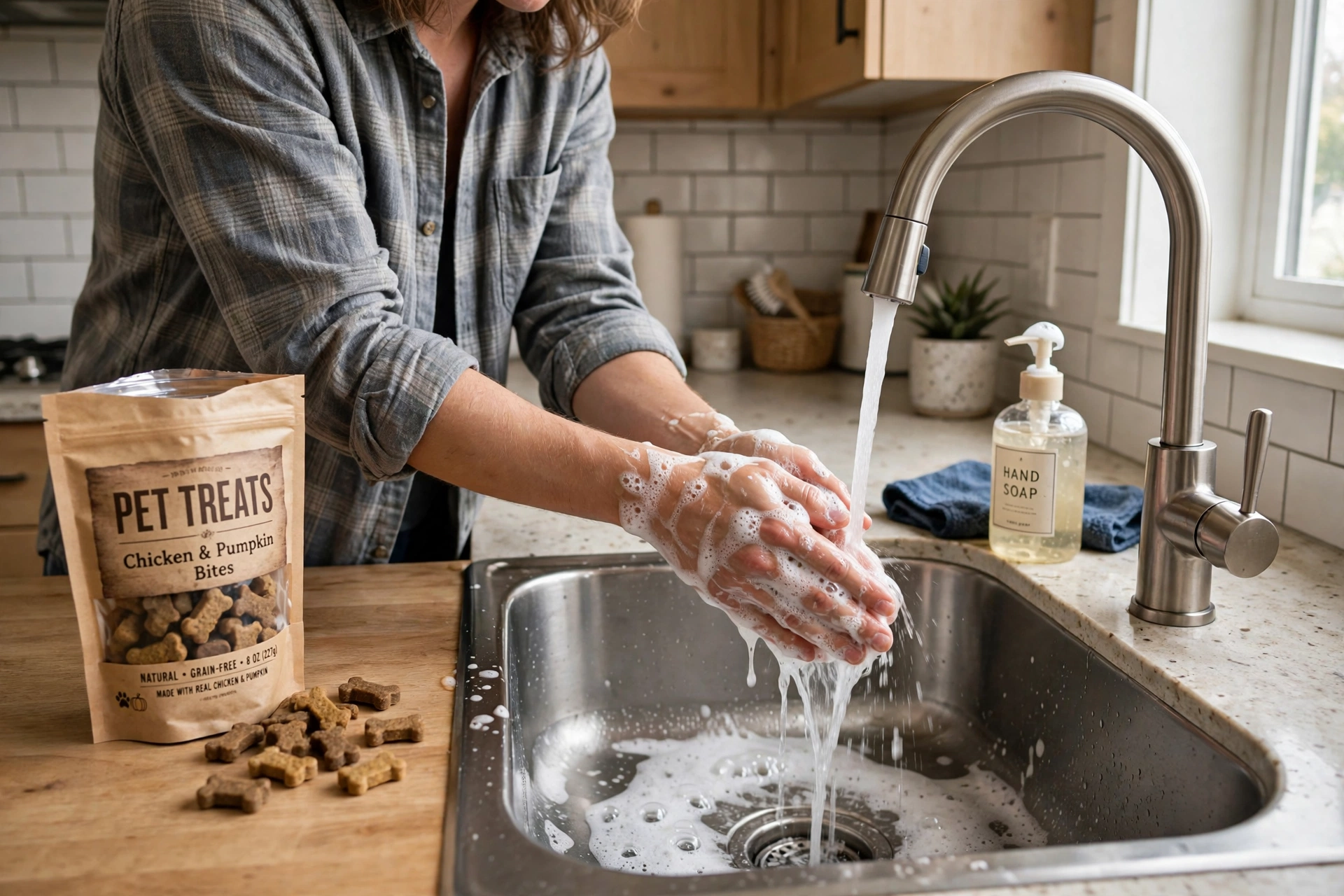
For pets, Salmonella can cause vomiting, diarrhea, reduced appetite, fever, and lethargy, although some animals may carry it without obvious symptoms. For people, handling contaminated treats and then touching food, faces, or surfaces without washing hands can spread the bacteria within a household. That household risk is one reason recall advice so often emphasizes handwashing and cleaning, not just stopping feeding the product.
For another recent example of treats linked to Salmonella, see the Canada treats report, which shows how a different treats outbreak unfolded in another setting.
The Correction: Three Packages, Two Brand Names
The most instructive part of this recall is not its size, but its correction. The original notice mis-identified three packages as Raw Dog Barkery products when they were, in fact, What’s In the Bowl products. The corrected announcement fixed that error, and the corrected list above reflects the fix.
Why does a three-package correction matter in an eight-package recall? Because in a recall this small, three packages are a large share of the total, and a brand-name error can send owners looking in the wrong place. An owner with What’s In the Bowl Whole Chicken Hearts, lot 030527, who read only the original notice might have concluded that their treats were not recalled, because the original notice attached those packages to a different brand. Conversely, an owner with Raw Dog Barkery treats might have been confused about whether their package was among the three mis-identified ones.
The correction therefore does more than tidy up a press release. It changes the practical check an owner performs at home. The corrected instruction is simple: use the brand and lot combinations in the corrected list, and if you have What’s In the Bowl Whole Chicken Hearts in 3-ounce or 16-ounce size with lot 030527, treat it as recalled.
Corrections like this also offer a useful lesson for reading recall news generally. The first version of a notice is not always the final version, and when a company issues a correction, the corrected version should replace the earlier one in any summary, checklist, or social media post. Passing on the original error, even with good intentions, can undo the purpose of the correction.
Where the Treats Went
The recalled treats were shipped from Wisconsin via UPS to retailers in Wisconsin, New York, and Florida. Retailers included SimplyDried Treats, Magpies Gourmet Dog Treats, and What’s In the Bowl in Delafield, Wisconsin, along with retailers in New York and Florida.
That distribution pattern helps explain why the recall, though small, reached more than one state. A Wisconsin-based producer shipping by UPS to specialty retailers can place a handful of packages in several locations quickly, and those retailers, in turn, may sell them to local customers or hand out samples. The corrected total of eight packages, with 100 percent traced and direct customers contacted, suggests a contained distribution chain rather than a mass-market product on thousands of shelves.
For owners, the geography is less important than the lot check. A treat bought in Wisconsin, New York, or Florida could be affected, but so could a treat bought elsewhere if it came through one of these retailers or as a sample. The lot number, not the state of purchase, is the reliable identifier.
What to Do If You Have a Recalled Treat
If you have a treat that matches the corrected list, stop feeding it. Do not give it to another pet, and do not donate it. Dispose of it in a secure container so that pets, children, and wildlife cannot reach it.
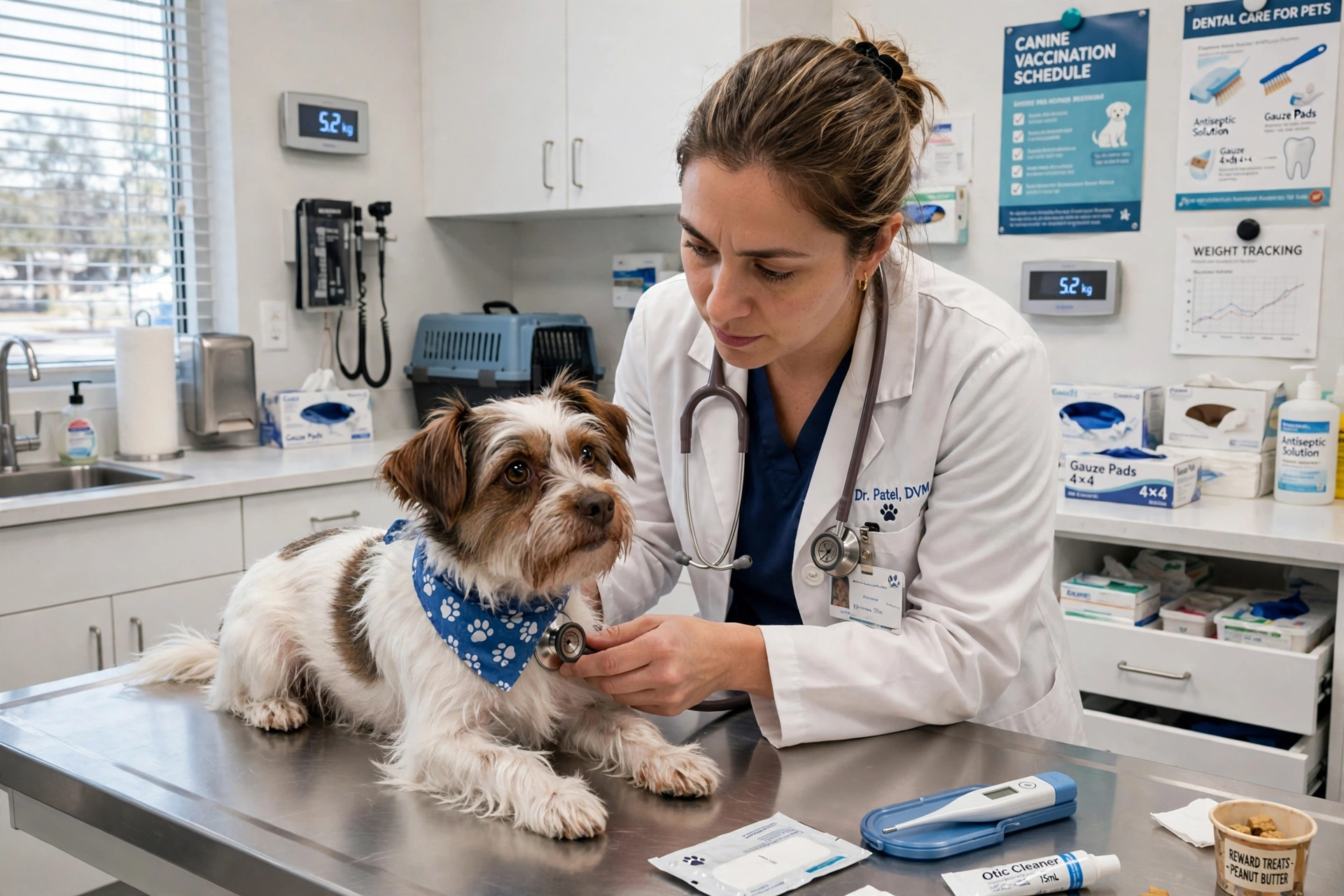
Then clean up. Wash your hands thoroughly after handling the treats, disinfect any surfaces, bowls, scoops, or containers that touched them, and keep the treats away from children and from human food areas. If you still have the packaging, photograph the back label and its Use By and lot sticker before disposal, so you retain the identifying information.
Watch your pet for signs of illness, including vomiting, diarrhea, reduced appetite, fever, or lethargy, and contact your veterinarian if any appear, mentioning the Foodynamics treats and lot number. No illnesses were reported in connection with this recall, but monitoring after a known exposure is still prudent, and a veterinarian can advise whether any further steps are needed.
For questions about the recall, the company provided contact information as text in its announcement: info@foodynamics.com and (262) 421-5339, Monday to Friday, 9am to 5pm Central. Production and distribution ceased pending the FDA investigation, so owners should not expect the same affected lots to reappear on shelves in the meantime.
Bottom Line
The Foodynamics recall is small — eight packages, fully traced, no illnesses reported — but it is a good example of why recall details matter. Freeze-drying does not kill Salmonella. A Use By date can also be a lot number. A brand name on an original notice can be wrong, and a correction can change which bag in your home is affected.
Check the back label sticker on any Raw Dog Barkery, What’s In the Bowl, BellePepper Cats, or Kanu Pets freeze-dried chicken heart treats you have. If the lot matches 030527, 031627, 121426, or 011526 for the corresponding product, stop feeding it, dispose of it securely, clean everything it touched, and wash your hands. If it does not match, this recall does not cover it — but the handling advice, as with all raw-style treats, is still worth keeping.
Source: FDA company announcement, October 9, 2025, as corrected.