Blue Buffalo Dog Treats Recall History: Treats, Dates, and What Was Never Recalled
If you have ever stood in a pet store aisle, or scrolled through a recall alert online, and wondered whether Blue Buffalo dog treats have ever been recalled, you are not alone. Blue Buffalo is one of the best-known names in American pet food, and its treats are in millions of homes. That popularity also means that old recall notices, social media claims, and memories of unrelated Blue Buffalo food recalls can blur together into a confusing picture.
The honest answer is more specific than a simple yes or no. Yes, Blue Buffalo has recalled dog treats — but only a small number of specific products, in specific years, for specific reasons. Other events that are often lumped into a treats recall history were not treats recalls at all. And one claim that has circulated recently has no FDA recall notice behind it. Sorting those categories out is the point of this history: so you can check the bag or box in your own home against the real record, rather than against a rumor.
The Short Answer
Three treat events form the core of the Blue Buffalo dog treats recall history. In November 2015, one lot of cub-size Blue Wilderness Wild Chews Bones was recalled over potential Salmonella contamination. In February 2019, Blue Wilderness Trail Trays were recalled over potentially elevated levels of naturally occurring beef thyroid hormone. In November 2020, certain lots of BLUE Bits Chicken Recipe treats were recalled over potential mold contamination.
There is also a November 2015 cat treat event that is often mentioned alongside the dog treats: Blue Kitty Yums Tasty Chicken Recipe cat treats in 2-ounce pouches, with best-by dates of April 24 or July 24, 2016, were recalled because of low levels of propylene glycol, which can be a risk for cats, including a risk of anemia.
Beyond those events, there is no current Blue Buffalo treat recall in the verified record covered here. That does not mean a new recall could never happen — it means that, as of this history, owners should check for the specific products, lots, and dates below, and treat anything outside that list with appropriate caution rather than assuming it was recalled.
November 2015: Salmonella and the Blue Wilderness Wild Chews Bones
The earliest dog treat recall in this history dates to November 2015. The FDA notice dated November 25, 2015, covered one lot of cub-size Blue Wilderness Wild Chews Bones, recalled over potential Salmonella contamination.
Salmonella is a familiar concern in pet food recalls for a good reason. It can make dogs ill, with symptoms that may include vomiting, diarrhea, reduced appetite, fever, and lethargy, and it can also pose a risk to people who handle contaminated treats, especially if they do not wash their hands afterward or if treats come into contact with food preparation surfaces. For that reason, even a single-lot recall is worth taking seriously: the risk is not only to the dog that eats the treat, but to the household around the dog.
The narrow scope matters here too. This was one lot of one cub-size product, not a recall of every Blue Wilderness bone, every Blue Buffalo treat, or the brand as a whole. If you are checking an old purchase today, the question is not whether you ever bought Blue Buffalo, but whether you bought that specific product in that specific lot. That distinction — product, size, and lot, rather than brand alone — runs through this entire history.
November 2015: Blue Kitty Yums and a Different Kind of Risk
In the same month, November 2015, Blue Buffalo recalled Blue Kitty Yums Tasty Chicken Recipe cat treats. These were 2-ounce pouches with best-by dates of April 24 or July 24, 2016. The reason was low levels of propylene glycol.
Propylene glycol is worth explaining because it is not a contaminant in the same sense as Salmonella or mold. It is a substance that can be used in some pet products, but cats are particularly sensitive to it, and exposure can be associated with anemia and other health risks in cats. That is why a cat treat recall on this ground cannot simply be read across to dog treats: the biology, the product, and the risk are different.
For dog owners reading this history, the Blue Kitty Yums event is therefore best understood as context, not as a dog treat recall. It shows that Blue Buffalo’s November 2015 recall activity covered more than one species and more than one issue, but it does not add another dog treat product to the list. Keeping cat and dog products separate is one of the simplest ways to avoid overstating what was recalled.
February 2019: Thyroid Hormone in Trail Trays
In February 2019, Blue Wilderness Trail Trays were recalled over potentially elevated levels of naturally occurring beef thyroid hormone. This is a different kind of recall from a bacterial contamination event, and the symptoms owners were told to watch for reflect that difference.
Dogs that consumed treats with elevated thyroid hormone could show increased thirst and urination, weight loss, restlessness, and a rapid heart rate. Those signs can be easy to miss at first, or easy to attribute to something else, which is why the recall information emphasized watching for a pattern rather than a single symptom. If a dog showed those signs after eating the affected treats, veterinary advice was the appropriate next step, and owners were advised to stop feeding the product.
The phrase naturally occurring is also important. The concern was not an added chemical in the usual sense, but hormone levels in beef-derived ingredients that were higher than expected. That does not make the recall less serious — elevated thyroid hormone can have real effects — but it does explain why a recall like this can happen without any sign of spoilage, off smell, or visible problem with the treats themselves. A treat can look and smell normal and still be part of a recall, which is why checking product names and dates matters more than checking appearance.
March 2017: A Withdrawal That Was Not a Treats Recall
March 2017 is where many recall histories go wrong, so it deserves a clear paragraph of its own. In March 2017, Blue Buffalo withdrew 17 varieties of Blue Divine Delights and Blue Wilderness Trail Trays wet food cups over foil-seal quality issues. No illnesses were known in connection with that withdrawal.
Three points keep this event in its proper place. First, these were wet food cups, not treats. Second, the issue was foil-seal quality, not Salmonella, thyroid hormone, or mold. Third, it was described as a withdrawal, and no illnesses were known. Including it in a dog treats recall history without those qualifications would overstate the treats record, and would also confuse owners who are trying to work out whether a bag of treats in their pantry was ever affected. It was not a treats recall, and it should not be counted as one.
That distinction also illustrates a broader lesson for reading recall histories. Brands withdraw or recall products for many different reasons, and the product category matters as much as the brand name. A wet food withdrawal does not imply a treats problem, just as a cat treat recall does not imply a dog treat problem.
November 2020: Mold in BLUE Bits Chicken Recipe
The most recent verified treats recall in this history came in November 2020, involving BLUE Bits Chicken Recipe treats. The recalled products were the 4-ounce size, with UPC 859610007820, and the 16-ounce size, with UPC 859610007807, with a best-by date of April 24, 2021. The reason was potential mold contamination, and no illnesses were reported in connection with the recall.
Mold is another recall reason that can be hard to judge by appearance alone, especially in a sealed bag. Some mold may be visible, but potential contamination does not always announce itself, and the recall was based on the product and lot information rather than on owners spotting a problem at home. The practical advice that follows from that is the same as for the earlier recalls: check the UPC and best-by date on your bag, not just whether the treats look fine.
The absence of reported illnesses in this event is welcome, but it is not a reason to ignore a recall. Recalls are often issued precisely to prevent illnesses, and a product can be recalled before anyone becomes ill. No illnesses reported means no illnesses were reported — it does not mean the product was safe to keep feeding.
What Was Never Recalled: The Circulating 2025 Claim
Owners who follow pet food news online may also have seen a circulating 2025 claim about a plasticizer, or DEHP, in Blue Buffalo treats. That claim must be presented carefully, because it is unverified as a recall. There is no FDA notice for it, and no products or lots have been identified for it in the verified record used here.
That does not, by itself, prove that every online claim is false in every detail, but it does mean it cannot be treated as a recall. A recall is a specific public action with a product, a reason, and usually a lot or date range. A social media claim without an FDA notice, without named products, and without lots is not the same thing, and presenting it as if it were a recall would mislead owners who are trying to check their own treats.
If an official recall notice for such a claim ever appears, the correct response would be to add it to this history with its products and dates, just as the verified events above are listed. Until then, the responsible description is the one used here: unverified, not a recall.
Wider Brand History: 2007 and 2010
Two older events are sometimes mentioned in Blue Buffalo histories, and they need the same careful placement as the March 2017 withdrawal. The 2007 melamine event and the October 2010 vitamin D event are part of wider brand history. They are not current treat recalls, and they should not be read as if they describe the treats on sale today.
Their value in a history like this is context: they help explain why some owners have a long memory for Blue Buffalo safety news, and why the brand’s name can trigger concern even when the current treats record is narrow. But context is not the same as a current recall. A dog owner checking a bag bought recently should focus first on the 2015, 2019, and 2020 treat events listed above, and on any new official notice, rather than on events from 2007 or 2010.
How to Check Your Bag
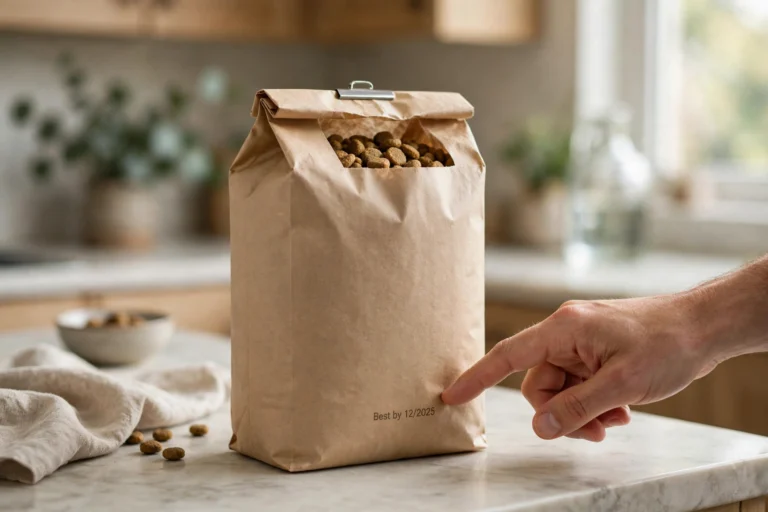
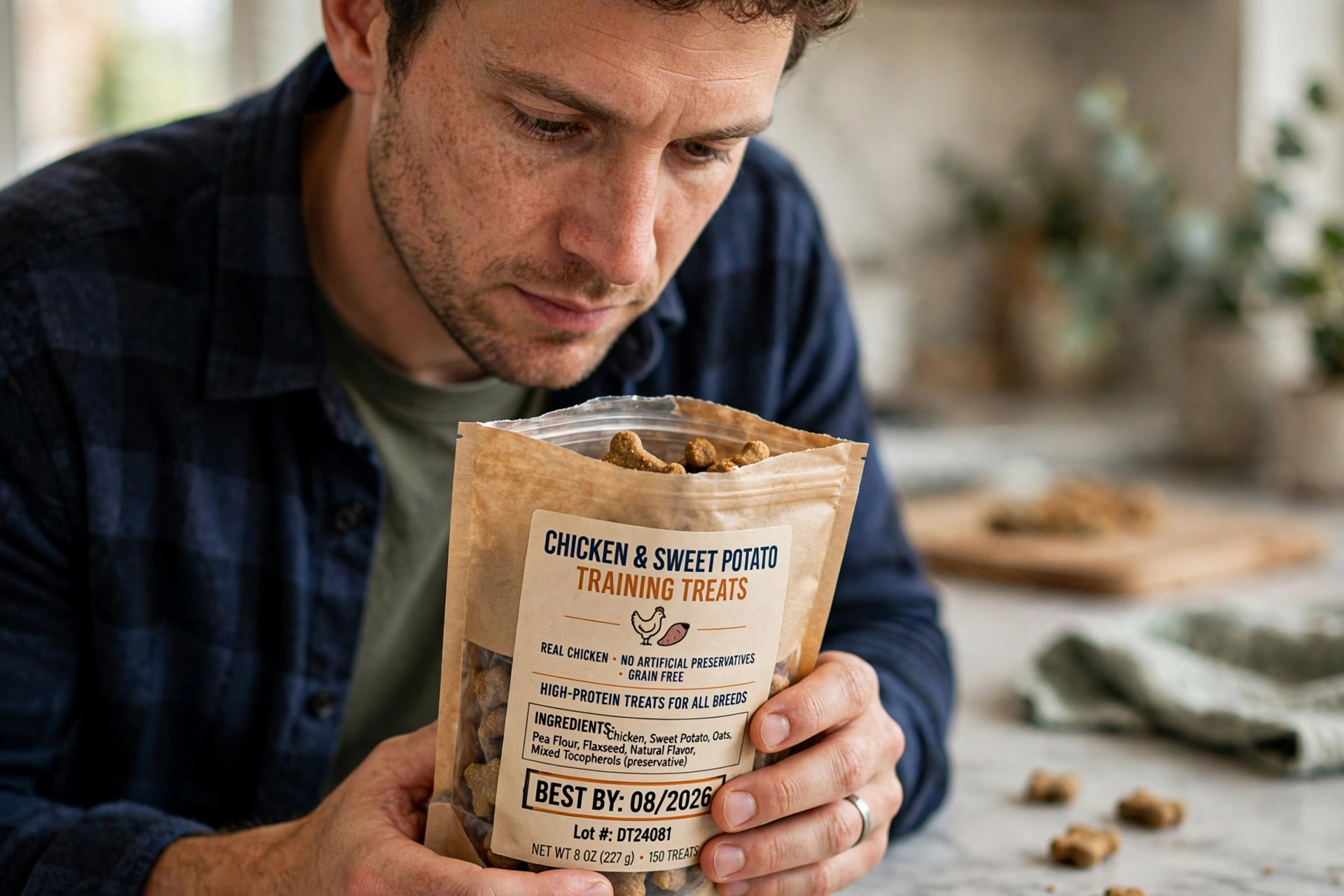
Checking a bag or box of Blue Buffalo treats is a short, practical task, and it is worth doing methodically rather than from memory. Start with the product name and size: is it Blue Wilderness Wild Chews Bones in cub size, Blue Wilderness Trail Trays, or BLUE Bits Chicken Recipe in 4-ounce or 16-ounce size? Then check the identifying details that match the recall: lot information where given, UPC for the BLUE Bits products, and best-by date, including April 24, 2021, for the 2020 BLUE Bits recall and April 24 or July 24, 2016, for the Blue Kitty Yums cat treats.
If your product matches a recalled product and its identifying details, stop feeding it, keep the packaging if you can, and follow the return or disposal guidance in the original recall notice. Photographing the label and best-by date before disposal can also help if you need to discuss the product with your veterinarian or retailer. If your product does not match, there is no basis in this history to treat it as recalled — but keep the packaging until you have checked, and wash your hands after handling any treats as a matter of routine.
For a broader sense of how other brands’ treat histories have unfolded, the Merrick report on dog food and treats recall history offers a useful comparison, showing how different brands have faced different issues in different years.
Bottom Line
Blue Buffalo’s dog treats recall history, on the verified record, is short and specific: one lot of cub-size Blue Wilderness Wild Chews Bones in November 2015 over potential Salmonella; Blue Wilderness Trail Trays in February 2019 over potentially elevated beef thyroid hormone; and BLUE Bits Chicken Recipe 4-ounce and 16-ounce treats in November 2020 over potential mold, with best-by April 24, 2021, and no illnesses reported. Alongside those dog treat events sit a November 2015 cat treat recall over propylene glycol, a March 2017 wet food cup withdrawal over foil-seal quality that was not a treats recall, wider brand history from 2007 and 2010 that is not a current treats recall, and a circulating 2025 plasticizer claim that remains unverified, with no FDA notice and no identified products or lots.
That is the record to check your bag against. If it matches, act on it. If it does not, do not let a brand name alone, or an unverified claim, turn a safe bag into a recalled one in your mind — and do not let the absence of a current recall stop you from checking the next official notice when it comes.
Source: FDA recall notices, November 2015, February 2019, and November 2020, and FDA enforcement records.