Hill’s Science Diet Recall History: The 2019 Vitamin D Recall Explained
Searching for a Science Diet recall usually leads to one event: the 2019 vitamin D recall, one of the largest canned dog food recalls on record. Hill’s Science Diet has had only a handful of recalls in its long history, but the 2019 episode was big enough, and serious enough, to define the brand’s safety record in search results ever since. It grew from 25 canned foods in January 2019 to 33 varieties and 86 lots by the time it ended, it drew a formal FDA warning letter, and it led to lawsuits from owners who said their dogs were harmed.
This report lays out the full history, including a smaller 2012 Salmonella recall, explains what elevated vitamin D actually does to a dog, and separates the recall from the many rumours that circulate about Science Diet online. There has been no Hill’s recall since May 2019, and no recall currently in force, which matters as much as the history itself.
The Short Answer: Two Recalls That Matter, Then Nothing Since 2019
Hill’s Science Diet recall history, in brief:
- June 2012: A small recall of 62 bags of Science Diet Adult Small and Toy Breed dry dog food for potential Salmonella contamination. No illnesses were reported.
- January to May 2019: A large recall of canned dog foods for potentially elevated levels of vitamin D, caused by a supplier error in the vitamin premix. It began with 25 products on January 31, 2019, expanded on March 20, 2019, and again in May 2019, reaching 33 varieties and 86 lots. Dogs were hospitalised, and the FDA later said the company’s food safety plan had systematically failed.
- Since May 2019: No Hill’s Science Diet recall has been recorded.
That is a short list for a brand that has been sold since the 1930s, when a veterinarian created the original Hill’s diet for a dog with kidney disease. The brevity of the list is part of the story: Hill’s has had few recalls, but the one big one was very big indeed.
The 2019 Recall: How a Vitamin Premix Error Became 86 Lots
On January 31, 2019, Hill’s Pet Nutrition recalled 25 canned dog foods after a dog that ate one of them was diagnosed with vitamin D toxicity. Vitamin D is an essential nutrient, and it is added to dog food deliberately in a premix, a concentrated blend of vitamins mixed into the recipe. In this case, Hill’s later said, the company that supplied its vitamin premix made a manufacturing error, and the premix contained far more vitamin D than the recipe called for. The error affected canned food, not dry food.
The recall did not stay at 25 products. On March 20, 2019, after the FDA asked Hill’s to test samples it had kept from production, the company expanded the recall, adding more varieties and lots. A further expansion followed in May 2019. By the end, the recall covered 33 varieties and 86 lots of canned dog food, including Science Diet and Prescription Diet lines, in 13-ounce cans and 12.5-ounce stews, among them Adult 7+ Chicken and Barley Entree, Adult 7+ Beef and Barley Entree, and several Healthy Cuisine stews.
The reason the expansions kept coming is worth understanding, because it explains why owners were told to keep checking. The vitamin D problem was not in one batch from one day. It was in a premix supplied over a period, and as testing of retained samples widened, more production lots were found to be affected. A can bought in February could be safe while an identical-looking can from a different lot was not, which is why the recall notices listed exact product names, sizes, SKUs, and lot codes, and why checking the lot code, not just the product name, was the only reliable test.
What Elevated Vitamin D Does to a Dog
Vitamin D toxicity is not a stomach upset. Vitamin D controls how the body handles calcium, and too much of it drives calcium levels dangerously high. Dogs with vitamin D toxicity may vomit, lose their appetite, drink and urinate excessively, lose weight, and become lethargic. In severe cases, high calcium damages the kidneys, and kidney failure can be fatal.
The FDA’s warning during the recall was direct: stop feeding the recalled lots, and call a veterinarian if a dog showed signs such as vomiting, loss of appetite, increased thirst, increased urination, excessive drooling, or weight loss. The danger was not theoretical. Dogs were hospitalised after eating the affected canned foods, and owners later filed a consolidated lawsuit in federal court in Kansas City, involving around 300 plaintiffs, alleging that hundreds of pets had died or become seriously ill. Those are allegations in litigation, not findings by a court, and they should be reported as such, but they show how seriously affected owners took the episode.
The FDA’s follow-up was equally direct. After investigating, the agency issued Hill’s a warning letter stating that a systematic failure of the company’s food safety plan had occurred that resulted in the recall of canned dog food, and it required corrective measures with further inspections to follow. Hill’s said it continued to cooperate with the FDA, including all inspections and requests for information. For a company that sells much of its food through veterinary clinics, a warning letter of that kind was a reputational blow as well as a regulatory one.
The 2012 Recall: 62 Bags and a Different Hazard
Hill’s earlier recall was far smaller. In June 2012, the company voluntarily recalled 62 bags of Science Diet Adult Small and Toy Breed dry dog food for potential Salmonella contamination. No illnesses were reported, and the recall was limited to that single product and quantity. It is a footnote beside 2019, but it belongs in a complete history for two reasons. First, it shows that Hill’s recalls have involved both contamination, Salmonella, and nutrition errors, vitamin D, which are different failure modes. Second, it shows the scale difference: 62 bags in 2012 against 86 lots of canned food in 2019.
Some recall trackers also list a June 2014 date for a similar small dry-food recall, reflecting differences in how the same FDA enforcement records are dated. The well-documented core is the same either way: a small, single-product dry food recall in the early 2010s, with no illnesses, long before the 2019 canned food episode.
What Was Not Recalled, and What the Rumours Get Wrong
Because Science Diet is sold through veterinarians, it attracts more online rumour than most brands, and much of it is wrong. Dry Science Diet food was not part of the 2019 recall, which covered canned food only. Cat food was not the focus of the 2019 recall either, which concerned canned dog foods. And a recall of one lot does not mean every can of that product was affected: the 2019 notices were lot-specific, and cans outside the listed lots were not recalled.
A separate confusion comes from the FDA’s investigation into grain-free diets and dilated cardiomyopathy, a heart condition, in which Hill’s was one of many brands named in owner reports. That was an investigation, not a recall, and no Science Diet food was pulled from shelves because of it. Conflating an investigation with a recall is one of the most common errors in pet food searches, and it makes a brand’s record look worse than it is.
There is also no current Hill’s recall. Searches that return alarming headlines about Science Diet in 2025 or 2026 are almost always resurfacing the 2019 recall, sometimes with a new date stamped on an old article. The check is simple: if the article does not name a product, a lot code, and a 2025 or 2026 FDA notice, it is not describing a new recall.
Hill’s Today: The Clean Stretch Since May 2019
Since the final expansion in May 2019, Hill’s has had no recorded recall. That is now a clean stretch of more than seven years, spanning the entire period in which the company’s current canned and dry lines have been sold. The company changed its premix controls after 2019, under FDA scrutiny, and the absence of a repeat vitamin D event since then is part of the record.
A clean stretch does not mean a brand can never be recalled again, and owners should keep checking. It does mean that the question “is Science Diet recalled right now” has had the same answer since May 2019: no. Owners with old canned food from early 2019 still stored at home should check it against the 2019 lot lists, because canned food keeps for a long time, and a can bought in 2019 could still be sitting in a cupboard. Owners buying Science Diet today are buying products outside every documented recall window.
For shoppers weighing a brand on its recall history, the fair reading of Hill’s record is this: a very small Salmonella recall in 2012, one very large vitamin D recall in 2019 caused by a supplier premix error, with dogs harmed and a regulatory warning to show for it, and nothing since. That is a materially different record from a brand with repeated contamination recalls, and it is also a materially different record from a brand with no recalls at all. Both halves of that sentence matter.
How to Check Any Science Diet Product
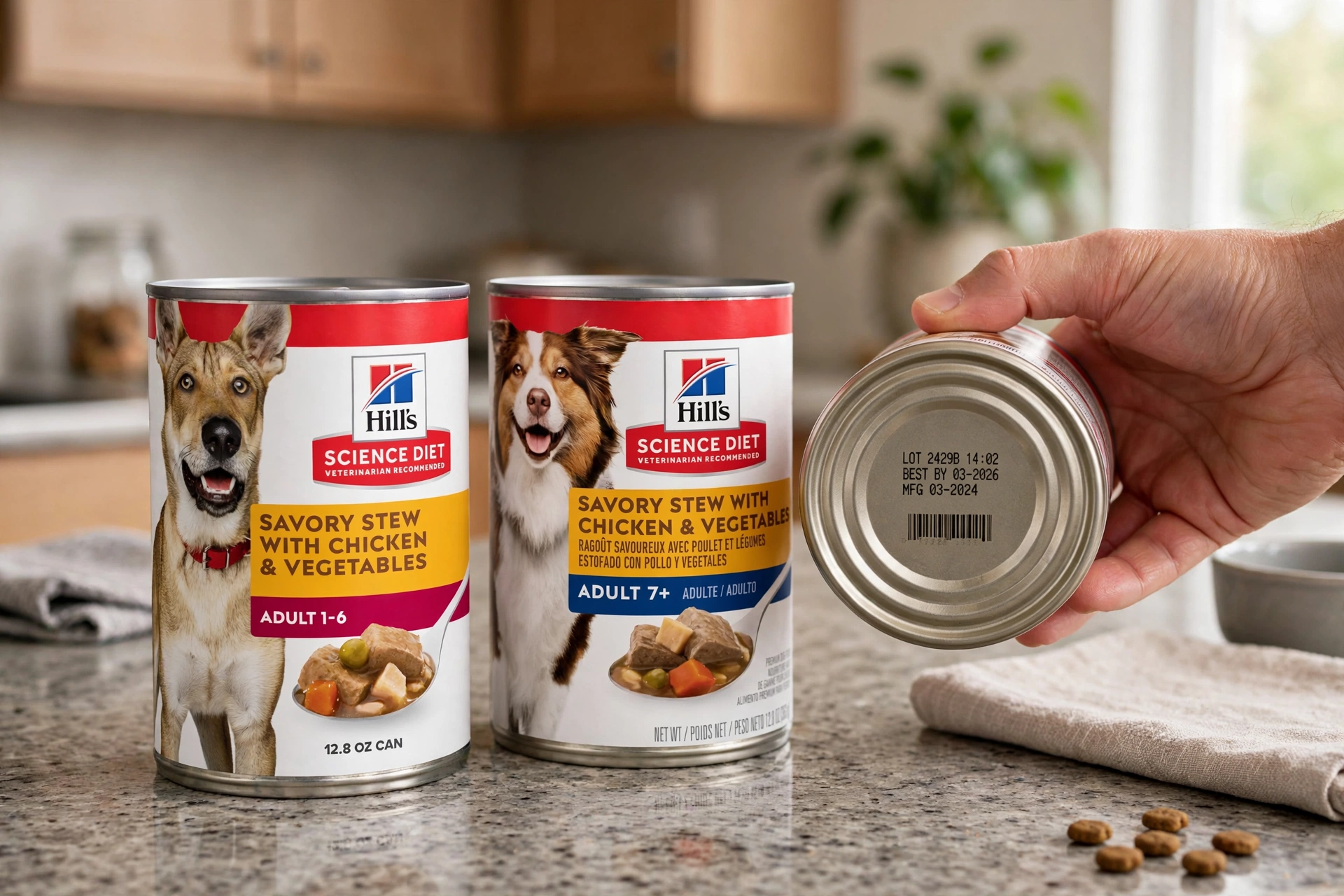
Keep the can or bag until it is finished, so the product name, size, SKU, and lot code are available. Compare all four against any recall notice, not just the brand name. For the 2019 recall, the lot code printed on the bottom of the can was the deciding detail, and two cans of the same product could have different recall status.
If a product matches a recall, stop feeding it, follow the return or disposal instructions in the notice, and contact a veterinarian if the dog shows symptoms such as vomiting, loss of appetite, increased thirst or urination, or weight loss. Photographing the lot panel of each new case of canned food turns a later news story into a thirty-second check.
Source: FDA recall notices and company announcements, June 2012 and January to May 2019, and the FDA warning letter to Hill’s Pet Nutrition. For another major recall history, see our report on the Victor dog food recall.
The Bottom Line on Science Diet
Hill’s Science Diet has had few recalls, but its biggest one was genuinely serious: 33 varieties and 86 lots of canned dog food recalled in 2019 for elevated vitamin D, after a supplier premix error, with hospitalised dogs, a lawsuit, and an FDA warning letter. Before that, a 62-bag Salmonella recall in 2012 with no illnesses. Since May 2019, nothing. Owners with old 2019 cans should check the lot codes. Everyone else can treat the history as a caution about premix controls and lot checking, not as an alarm about the food on shelves today.