Rachael Ray Cat Food Recall: The 2015 Vitamin D Recall, and Nothing Since
Searching for a rachael ray cat food recall returns a single, well-documented event, and that is the whole story. In June 2015, Ainsworth Pet Nutrition of Meadville, Pennsylvania voluntarily recalled five varieties of Rachael Ray Nutrish wet cat food because they contained potentially elevated levels of vitamin D. Eleven illness reports were associated with the products. Production of the affected varieties was suspended until they were reformulated, and no Rachael Ray Nutrish cat food recall has been recorded since.
This report lays out the recalled varieties with their UPCs and best-by dates, explains what too much vitamin D does to a cat and what the symptoms look like, and separates the one real recall from a later FDA investigation that named the brand but never recalled it.
The Short Answer: One Recall, Five Varieties, Eleven Illness Reports
The Rachael Ray Nutrish cat food recall, in brief:
- Date: June 4, 2015, announced by Ainsworth Pet Nutrition and posted by the FDA.
- Products: Five wet cat food varieties in 2.8-ounce single packs, plus two variety packs containing them, distributed nationwide.
- Hazard: Potentially elevated levels of vitamin D, traced by the company to the natural vitamin D levels in some of the fish ingredients used in those formulas.
- Illnesses: 11 reports of illness associated with the products at the time of the announcement.
- Since then: No further Rachael Ray Nutrish cat food recall. The brand changed hands in 2018, when JM Smucker acquired Ainsworth Pet Nutrition, and under Smucker ownership there have been no Nutrish recalls.
If you have a Nutrish wet cat food cup in the cupboard today, it cannot be part of the 2015 recall. The recalled products had best-by dates in 2015 and 2016, and those dates passed a decade ago.
The Recalled Varieties, UPCs, and Best-By Dates
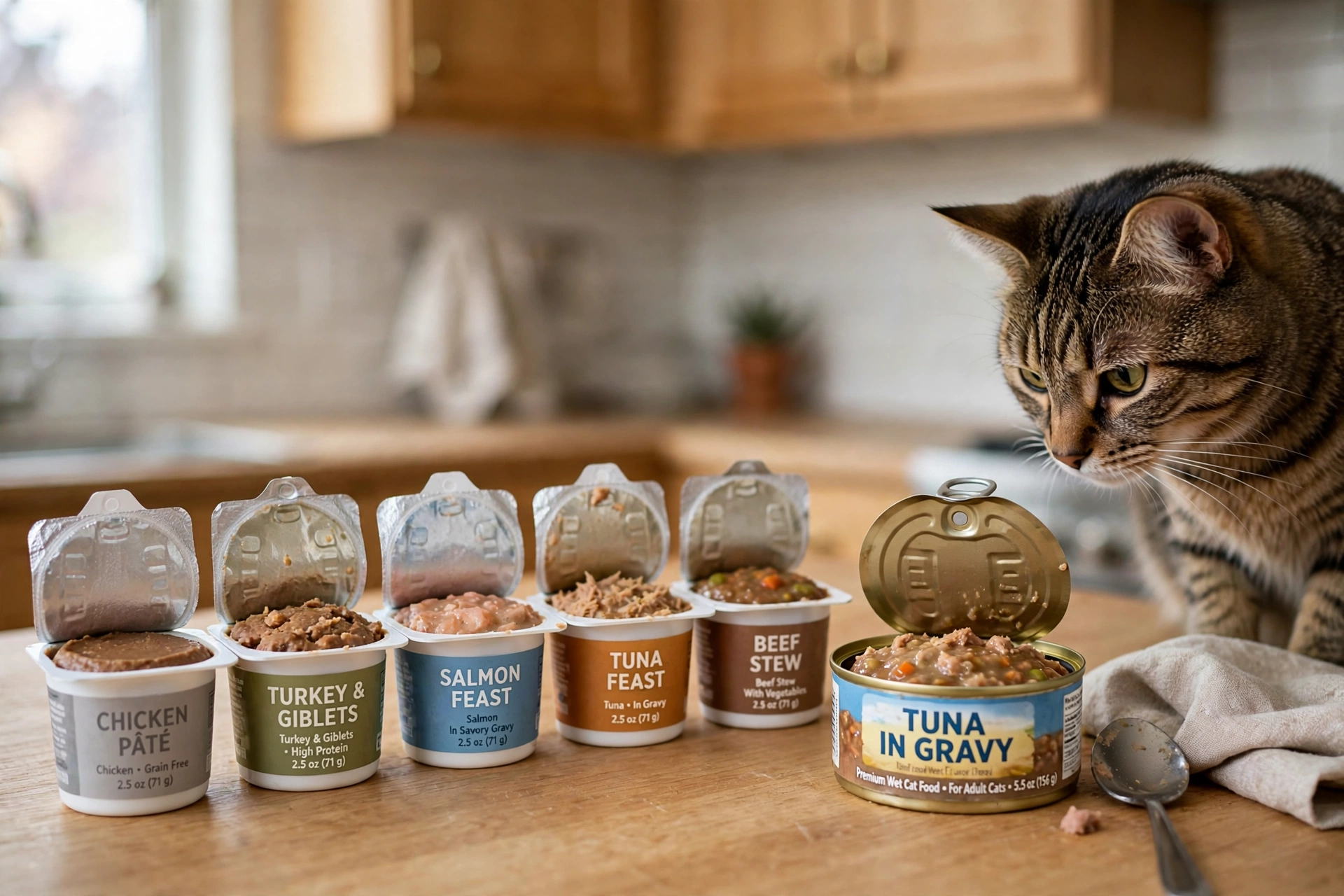
The June 2015 recall covered the following single-pack varieties, all in 2.8-ounce cups:
- Paw Lickin’ Chicken and Liver — UPC 071190007032 — best-by date August 17, 2015 (certain lot codes only)
- Ocean Fish and Chicken Catch-iatore — UPC 071190007049 — best-by date December 1, 2016
- Ocean Fish-a-licious — UPC 071190007056 — best-by date December 1, 2016
- Tuna Purrfection — UPC 071190007063 — best-by date December 1, 2016
- Lip Smackin’ Sardine and Mackerel — UPC 071190007070 — best-by date December 1, 2016
Two variety packs containing some of these products were also recalled:
- Chicken Lovers Variety Pack (12-count pack of 2.8-ounce cups) — UPC 071190007773 — best-by date December 1, 2016
- Ocean Lovers Variety Pack (12-count pack of 2.8-ounce cups) — UPC 071190007780 — best-by date December 1, 2016
No other Rachael Ray Nutrish products were affected. In particular, the recall did not cover Nutrish dry cat food, Nutrish dog food, or any Nutrish treats. The company said at the time that production of the affected varieties had been suspended and would resume after reformulation, and it advised owners to dispose of any of the affected wet cat varieties they still had.
The UPC check is the detail that matters most for this recall, because the product names alone are not enough. Paw Lickin’ Chicken and Liver, for example, was recalled only for certain lot codes, while the other four varieties were recalled across the board for their listed best-by dates. Anyone who kept a cup from 2015 would need the UPC and the best-by date to confirm it, and anyone buying Nutrish today needs neither, because the dates are a decade old.
What Too Much Vitamin D Does to a Cat
Vitamin D is essential for cats. It regulates calcium and phosphorus in the body, and a normal amount in a balanced diet is not only safe but necessary. The problem in 2015 was dose: the recalled formulas contained vitamin D at levels high enough to cause vitamin D toxicosis, also called hypervitaminosis D, in cats that ate them.
When a cat takes in far too much vitamin D, the body absorbs too much calcium, and the excess calcium damages the kidneys and other organs. Symptoms usually develop within 12 to 36 hours of eating the affected food, and they include vomiting or diarrhoea, increased thirst and urination, loss of appetite, and in severe cases muscle tremors or seizures. The 11 illness reports associated with the 2015 recall fit that pattern, and the company’s announcement advised that any cat showing those symptoms after eating the recalled food should be taken to a veterinarian immediately.
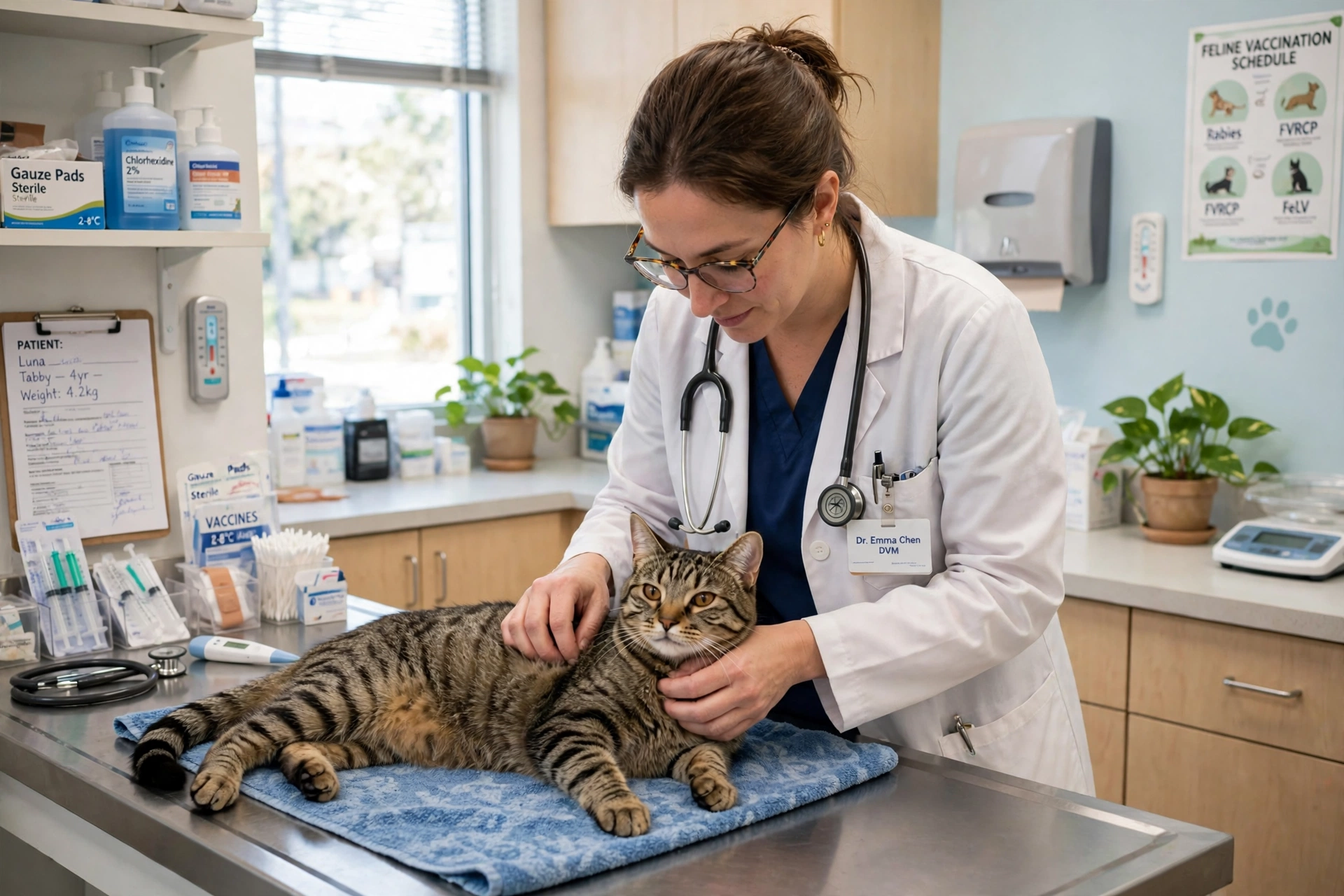
Vitamin D toxicosis is treatable when it is caught early, and the treatment is built around stopping the source, supporting the kidneys, and bringing calcium levels down. That is why the recall advice was so direct: dispose of the affected varieties, do not try to finish the case, and do not switch the cat to another fish-based wet food from the same batch in the hope that it will be fine. The hazard was in the formula, not in one cup.
The company’s explanation for the high levels is also worth recording, because it shows how a natural ingredient can become a hazard. Ainsworth said the elevated vitamin D resulted from the natural levels of vitamin D found in some of the fish ingredients used in those specific formulas. Fish is naturally rich in vitamin D, and when a batch of fish ingredient runs higher than expected, a formula that was balanced on paper can end up over the limit in practice. It is a formulation and testing failure, not a contamination event, and it is the reason manufacturers now test finished product for vitamin D rather than relying only on ingredient specifications.
The 2019 Heart Disease Investigation Is Not a Recall
A second Rachael Ray Nutrish story circulates online, and it needs to be separated from the 2015 recall clearly, because the two are often confused. In late June 2019, the FDA named Rachael Ray Nutrish as one of 16 pet food brands that appeared in reports of dilated cardiomyopathy, a heart condition, in dogs and cats, as part of the agency’s investigation into a potential link between certain diets and heart disease.
None of those 16 brands was recalled as part of that investigation. The FDA itself described the issue as complex, said it could not be certain that diet was a cause of the heart problems, and noted that multiple factors might be involved. The investigation centred on grain-free diets and on diets high in peas, lentils, and potatoes, and it produced a great deal of reporting and very little in the way of firm conclusions.
For shoppers, the distinction matters. A recall means a specific product has been pulled for a specific hazard, with UPCs and dates to check. An investigation naming means a brand appeared in case reports that the agency was studying, with no product pulled and no hazard confirmed. The 2015 vitamin D recall is the former. The 2019 heart disease investigation is the latter, and it should not be described as a Rachael Ray recall, because it never was one.
What Changed After 2015
Two things changed for the Nutrish brand after the recall, and both are relevant to shoppers today. First, the affected varieties were reformulated before production resumed, which is the standard response to a nutrient-level recall: the formula is adjusted, the finished product is retested, and only then does it go back on sale. Second, the brand changed hands. In May 2018, JM Smucker acquired Ainsworth Pet Nutrition, and Nutrish has been a Smucker brand since then. Under Smucker ownership, no Rachael Ray Nutrish recall has been recorded, for cat food or dog food.
It is also worth noting what did happen under Smucker ownership, because it sometimes gets folded into Nutrish roundups by mistake. In December 2018, Smucker recalled 9Lives canned cat food over low vitamin B1, thiamine. That was a different brand, a different product, and a different hazard, and it is not a Nutrish recall. Brand-family roundups that list it under Nutrish are mixing up a parent company’s portfolio with the brand itself.
How to Check Any Rachael Ray Nutrish Product
The checking habit for Nutrish is the same as for any brand, with one extra step that this recall makes clear. Keep the cup or the case until it is finished, so the product name, UPC, and best-by date are available. Compare all three against any recall notice, not just the brand name, and for variety packs, check the UPC on the outer pack as well as the cups inside, because the 2015 recall listed the variety packs under their own UPCs.
If a product matches a recall, stop feeding it, follow the return or disposal instructions in the notice, and contact a veterinarian if the cat shows symptoms such as vomiting, increased thirst, or increased urination. For vitamin D specifically, the window matters: symptoms usually appear within 12 to 36 hours, so a cat that ate a recalled cup days ago without symptoms is in a different position from a cat that ate one this morning and is now drinking excessively.
For today’s shoppers, the check is simpler. Any Nutrish wet cat food bought in the last several years has a best-by date far beyond December 2016, and it cannot be part of the 2015 recall. The recall is history, not a current warning, and the question “is Nutrish cat food recalled right now” has had the same answer since 2015: no.
Source: FDA recall notice, June 4, 2015, and Ainsworth Pet Nutrition announcement, June 2015. For another cat food vitamin recall, see our report on the Quest cat food recall.
The Bottom Line on Rachael Ray Nutrish Cat Food
Rachael Ray Nutrish cat food has exactly one recall on its record: five wet varieties pulled in June 2015 over elevated vitamin D, with 11 illness reports, UPCs and best-by dates listed above, and production suspended until reformulation. There has been no Nutrish cat food recall since, the 2019 heart disease investigation was not a recall, and the 2018 9Lives recall belonged to a different brand under the same parent company. Owners with cups from 2015 or 2016 should check them against the UPCs. Everyone else can treat the recall as closed history, not as a reason to avoid the brand today.