
How Much Does Commercial Auto Insurance Cost a Small Business in 2026?
The question of how much does commercial auto insurance cost for a small business has a short answer: $147 to $245 a month per vehicle in 2026. The typical small business pays about $2,200 a year per vehicle, although the final price depends heavily on the vehicle, the industry, and the coverage level chosen.
Per Policy Is Not the Same as Per Vehicle
The most important thing to understand about how much does commercial auto insurance cost for a small business is whether a quoted figure is per policy or per vehicle. Rivals blur the two, and the blur can make a cheap-looking quote look far more expensive than it is, or the other way around.
A per-policy figure is the total premium for the whole policy: three vans under one policy means the per-policy premium covers all three, while a per-vehicle figure is the cost for one vehicle alone. Insureon reports a median of $245 a month per policy (about $2,940 a year), Insurance.com an average of $147 a month ($1,764 a year), and Progressive Commercial an average of $276 a month. Those numbers describe different customer mixes, so read them as a range, not as competing answers to the same question.
For one vehicle, the distinction matters less; for three or five, it matters a great deal — always ask whether the number is for the whole policy or for each vehicle. Note too that commercial auto covers vehicles used for business, while general liability covers third-party claims from your premises and operations, such as a customer slipping in your shop.
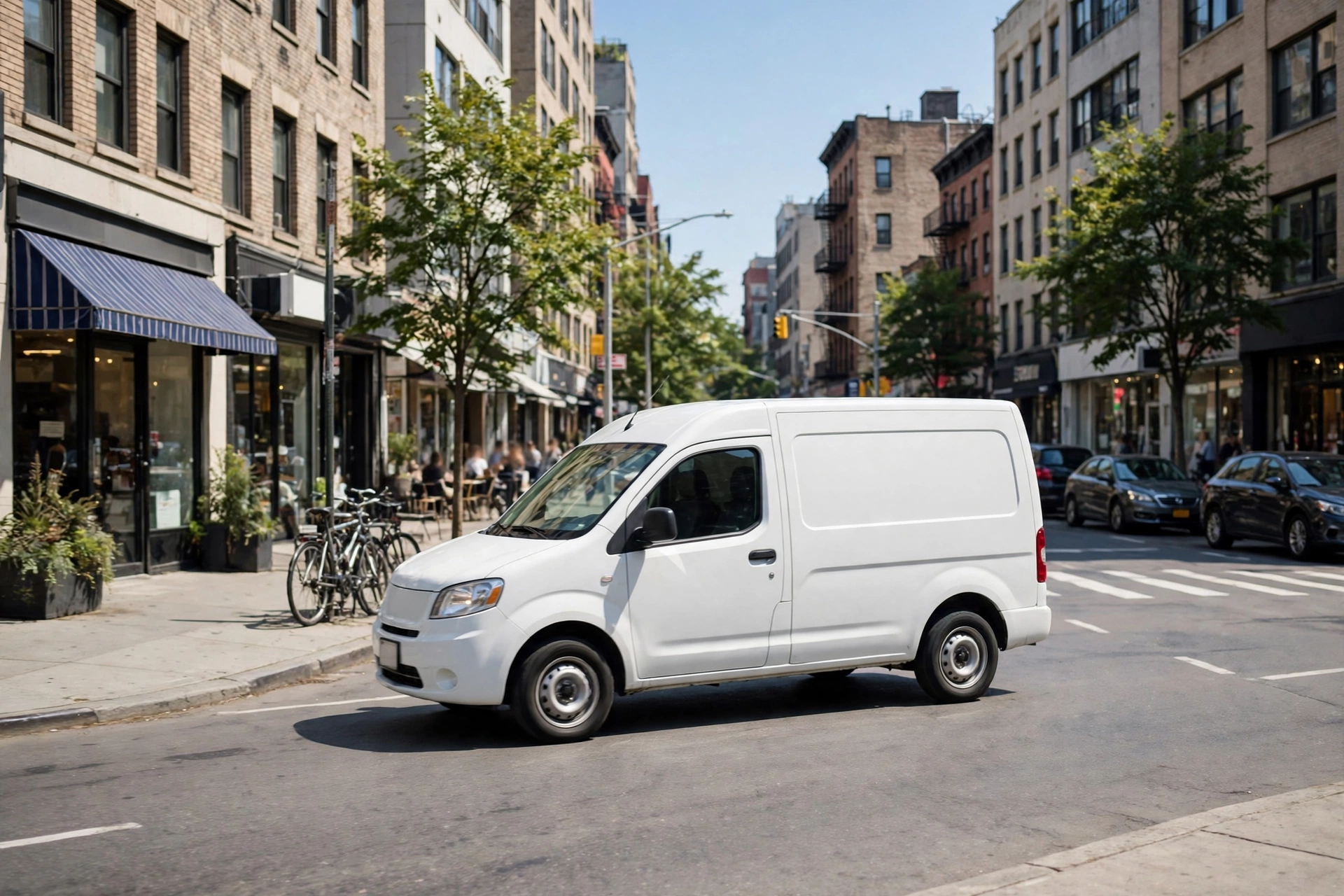
How Much Does Commercial Auto Insurance Cost for a Small Business?
Most small businesses land between $147 and $245 a month per vehicle, or roughly $1,764 to $2,940 a year. A single-vehicle small business typically pays $1,200 to $1,800 a year, while the wider industry range runs from $1,800 to $3,600 a year per vehicle. The average reported premium is about $2,200 a year per vehicle.
Insureon reports that 40% of its customers pay under $200 a month, while 29% pay between $200 and $400 a month, and its annual premiums range from under $375 to over $16,000. A consultant driving a sedan and a for-hire trucking company running semi-trailers are both buying commercial auto insurance, but they are not buying the same risk.
Commercial auto also costs roughly two to three times as much as a personal auto policy, reflecting higher liability limits, business use, heavier vehicles, and more miles driven. The most common setup is a $1 million combined single limit, a $1,000 deductible, and hired and non-owned auto coverage included — a useful benchmark, since a quote with a $500,000 limit and a $2,500 deductible will look cheaper but is not the same product.
Cost by Coverage Level
Coverage level is the fastest way to move a premium up or down: minimum buys the least protection at the lowest price, medium adds meaningful protection for a moderate increase, and high costs the most but is the level many businesses choose once they understand what a serious accident can cost. MoneyGeek’s 2026 report puts minimum coverage at $163 a month ($1,959 a year), medium at $234, and high at $353. The jump from minimum to medium is about $71 a month, and from medium to high about $119 — not small sums, but small compared with a liability claim that exceeds a low limit.
| Coverage level | Average monthly cost | Average annual cost |
|---|---|---|
| Minimum coverage | $163 | $1,959 |
| Medium coverage | $234 | $2,808 |
| High coverage | $353 | $4,236 |
Source: MoneyGeek 2026 report.
Minimum coverage usually means your state’s required liability limits and little else: no repair of your own vehicle after an at-fault accident, and no theft or weather cover, unless added separately. Medium adds higher limits and some cover for your own vehicle; high adds the highest limits and the broadest protection, including collision and comprehensive.
Cost by Vehicle Type
Vehicle type is the second big driver of price: a sedan used to visit clients is cheap to insure, while a box truck, dump truck, or semi-trailer is expensive, because it is heavier, harder to repair, and capable of causing far more damage.
MoneyGeek’s 2026 figures show the spread: a sedan averages $110 a month, a taxi $791, and a limousine $870. Taxis and limousines sit at the top because they carry passengers for hire and drive constantly in busy areas. The table below shows typical monthly costs at a $1 million liability limit.
| Vehicle type | Typical monthly cost at $1M liability |
|---|---|
| Business sedan or light SUV | $120–$250 |
| Service pickup truck | $200–$350 |
| Cargo or work van | $230–$400 |
| Light box truck | $350–$700 |
| Dump truck | $549+ |
| Semi or tractor-trailer | $639+ |
Source: industry pricing data for $1M liability limits; MoneyGeek 2026 report for sedan, taxi and limousine averages.
A service pickup at $200 to $350 a month is normal for a contractor, and a cargo van at $230 to $400 a month is normal for a delivery business.
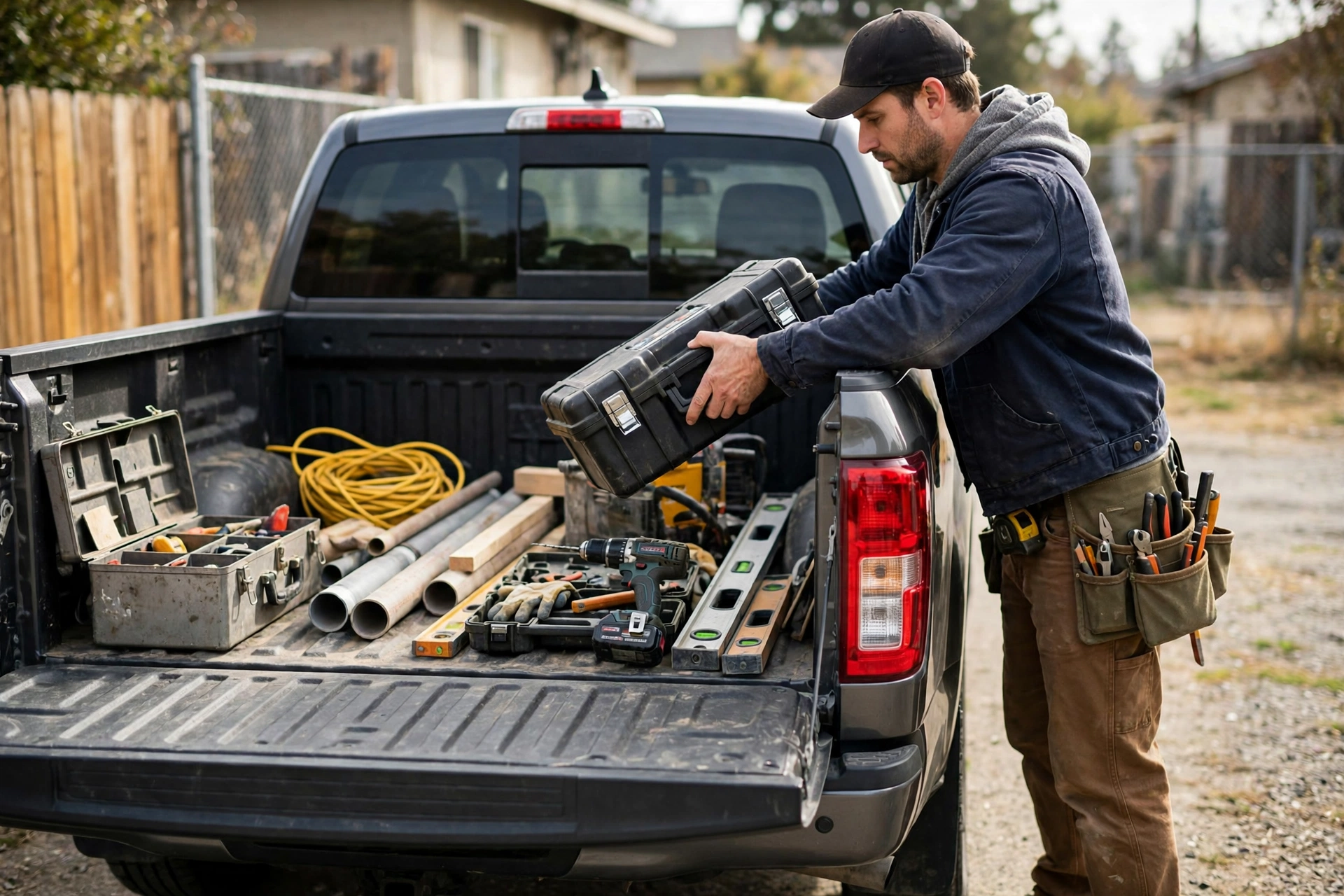
Cost by Industry and by State
Industry matters almost as much as vehicle type, because insurers price the work the vehicle does, not just the metal. Professional services and consulting pay $89 to $194 a month per vehicle; automobile services about $76; real estate about $160; retail about $171; and landscaping about $204. Contractors pay $173 to $427 a month, and trucking and for-hire transport pay $663 to $926 or more, the highest range by a wide margin. Progressive Commercial’s 2025 figures agree: contractors average $260 a month and for-hire transport trucks $926.
Where the business is based also moves the price: MoneyGeek’s 2026 report puts Pennsylvania at $79 a month for minimum coverage and Michigan at $312 — a difference of $233 a month, or nearly $2,800 a year. A business in a busy city usually pays more than a similar business in a small town.
What Drives Your Premium Up or Down
Driving history is one of the largest factors: a driver with accidents or serious violations pays more, and a business with several drivers is priced on the worst record in the group as well as the best. Vehicle age and value matter too, as does the deductible — raising it lowers the premium, since the business takes on more of a small claim. A vehicle driving 5,000 miles a year locally is cheaper than the same vehicle driving 30,000 miles a year, and one carrying passengers or expensive equipment costs more than one carrying only the driver and a laptop.
Two factors catch new businesses by surprise: the new-venture surcharge, with businesses under three years old typically paying 20% to 35% extra until they build a loss history, and the market itself — premiums rose 5.8% in the second quarter of 2026 (M3 market update), in a 59-quarter streak of rate increases. A quote from two years ago is not a reliable guide to today’s price, so re-shop at renewal.
Many small businesses also need cover for vehicles they do not own, such as an employee driving a personal car to a client meeting. Hired and non-owned auto (HNOA) closes that gap for typically $100 to $300 a year, and it is usually included in the standard small business setup — ask whether it is in yours.
How Much Does Commercial Auto Insurance Cost for a One-Vehicle Small Business?
A one-vehicle small business typically pays $1,200 to $1,800 a year, or about $100 to $150 a month, for a standard vehicle with standard coverage.
That is the lower end because a one-vehicle business is usually a small operation with one sedan, pickup, or van, driven by the owner; the Insurance.com average of $147 a month sits just above the range. A single dump truck or for-hire vehicle will still cost far more than $1,800 a year, as will a new business facing the 20% to 35% surcharge. Comparison is easier with one vehicle: get three quotes for the same vehicle, driver, $1 million limit, and $1,000 deductible, and the differences will be real.
What Does Commercial Auto Insurance Cover?
Commercial auto insurance covers liability for injuries and property damage caused by a business vehicle, plus damage to the business vehicle itself when collision and comprehensive cover are included.
Liability is the core of the policy: if a business vehicle causes an accident, liability cover pays for the other person’s injuries and property damage, up to the limit. That is why the $1 million combined single limit is so common — a serious accident can produce bills running into hundreds of thousands of dollars, and a low limit leaves the business to pay the rest. Collision cover pays to repair or replace the business vehicle after an accident, subject to the deductible. Comprehensive cover pays for non-collision damage, such as theft, fire, vandalism, or weather. Uninsured and underinsured motorist cover pays if the other driver has no insurance or not enough.
It does not cover a data breach, a professional mistake, or an employee injury on the job. A data breach is a matter for cyber cover — see the cost of cyber insurance for a small business — a professional mistake for errors and omissions cover (errors and omissions insurance cost for a small business), and a workplace injury for workers’ compensation (cost of workers’ comp for a small business). Commercial auto is for vehicles; buy it alongside those policies, not instead of them.
Do I Need Commercial Auto Insurance?
You need commercial auto insurance if a vehicle is owned by the business, used mainly for business, or used to carry goods, tools, or passengers for work.
The test is use, not ownership alone. A vehicle owned by the business needs a commercial policy, and a personal vehicle used mainly for business, such as daily deliveries, usually needs one too, or at least a business-use endorsement. A vehicle used only occasionally for work may be covered by a personal policy, but ask the insurer in writing rather than assuming: if a personal policy discovers a vehicle was being used for deliveries when it crashed, it may refuse to pay. Most states also require commercial vehicles to carry commercial insurance, and a lender will require it on a financed or leased business vehicle.

Is Commercial Auto Insurance Tax Deductible?
Yes, commercial auto insurance is a fully deductible business expense, and the premium can be deducted as an ordinary business cost.
A deduction reduces taxable income; it does not refund the premium, and the exact benefit depends on the business structure and tax year. Keep proper records of the policy, premiums paid, and vehicles covered, and note that if a vehicle is used for both business and personal driving, the deduction applies to the business share. This guide is not tax advice — ask your accountant how it applies to a complicated setup.
How to Lower Your Premium
The cheapest premium is not always the best, but there are honest ways to lower the cost. First, shop around: get at least three quotes for the same limits and deductible, favouring insurers that specialise in your industry. Second, raise the deductible if the business can afford it — the common $1,000 deductible lowers the premium, but do not raise it beyond what the business could pay tomorrow without borrowing. Third, manage drivers: keep records clean, check them before adding a new driver, and consider driver training if the insurer offers a discount.
Fourth, bundle and review: several policies from one insurer may earn a discount, and a renewal review often turns up a vehicle sold or a driver who has left. Fifth, pay annually if cash flow allows, since many insurers charge a fee for monthly payments. Finally, think about downtime: if a vehicle is out of service, the lost income can exceed the repair bill. That is where business interruption insurance comes in, covering lost income while the business cannot trade normally.
How much does commercial auto insurance cost per month?
Commercial auto insurance costs most small businesses $147 to $245 a month per vehicle: Insurance.com averages $147 a month, Insureon reports a $245 median per policy, and Progressive Commercial averages $276. A single-vehicle small business typically pays $1,200 to $1,800 a year, while heavy trucks and for-hire transport can cost $639 to $926 or more a month.
What does commercial auto insurance cover that personal auto does not?
Commercial auto insurance covers business use a personal policy does not — business-owned vehicles, employee drivers, and vehicles carrying goods, tools, or passengers for work — with higher liability limits, commonly $1 million, plus hired and non-owned auto cover. A personal policy is written for private driving and may refuse a work-use claim.
Do I need commercial auto insurance for one vehicle?
Yes, if it is owned by the business or used mainly for business, such as deliveries, client visits, or carrying tools and goods. A personal policy may not cover a work-use claim, so if the vehicle is used only occasionally for work, ask your insurer in writing whether your personal policy covers it.
How can a small business lower its commercial auto premium?
Compare at least three quotes on the same limits and deductible, raise the deductible to $1,000 if the business can afford it, keep drivers’ records clean, and review the policy at each renewal to remove vehicles or drivers it no longer needs. Paying annually can save instalment fees. Avoid cutting liability limits: a single serious claim can cost far more than the saving.
Source: Insureon, March 2026; MoneyGeek 2026; Progressive Commercial 2025; Insurance.com; M3, Q2 2026.