Consumers Supply Dog Biscuits Recall: Salmonella Found in Treats Sold in 7 States
Consumers Supply Distributing has recalled two varieties of dog biscuits after routine FDA sampling found Salmonella contamination in the finished products. The recall covers 4-pound bags of Country Vet Biscuits and Heartland Harvest Dog Biscuits sold in seven states, all from a single lot with the same best-by date. If you buy dog biscuits in bulk, this is the kind of recall that is easy to miss — and easy to check in under a minute.
No illnesses in pets or people have been reported in connection with this recall. The company has stopped production and distribution of the affected lot while the FDA and the company investigate how the contamination happened.
Which Dog Biscuits Are Recalled
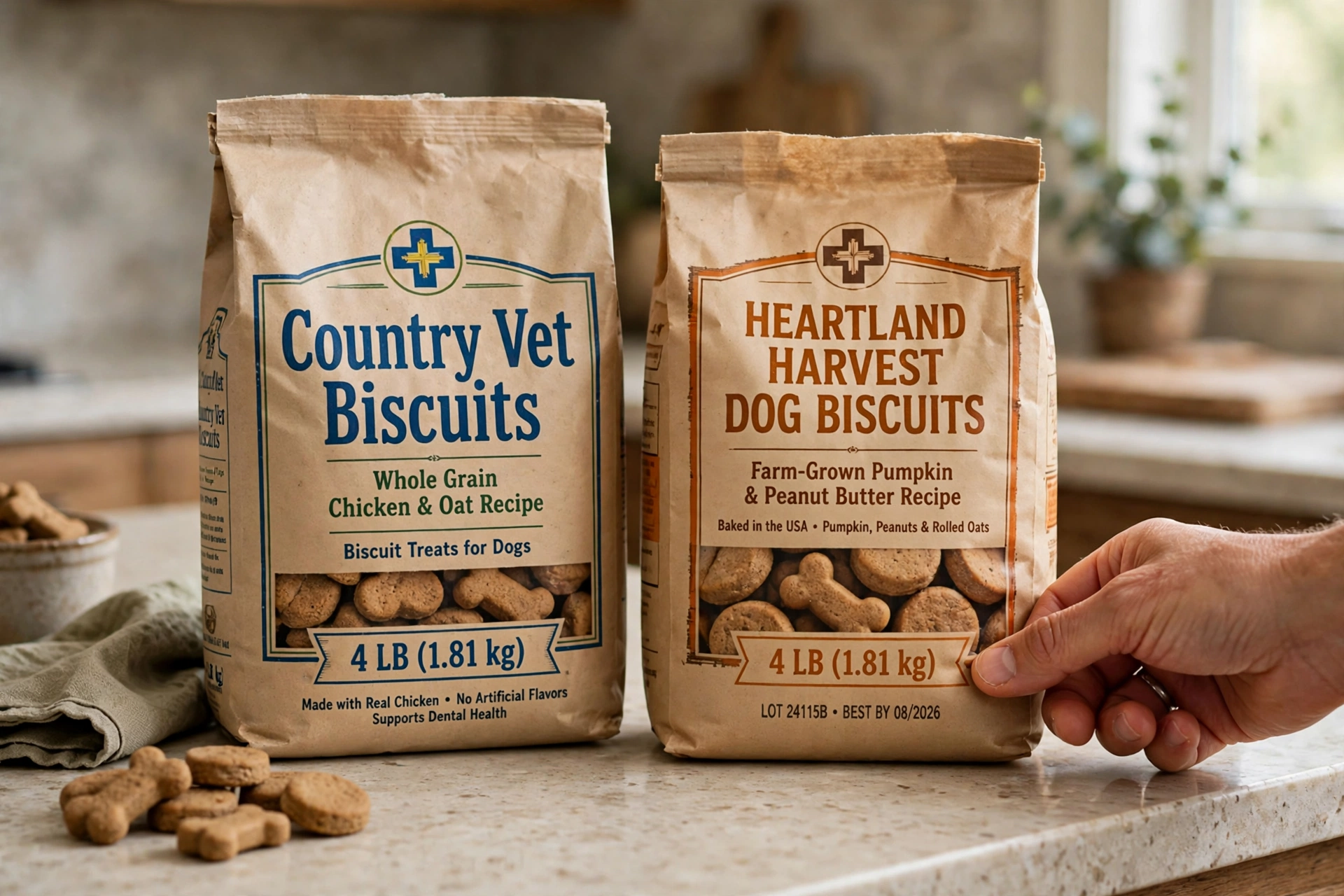
The Consumers Supply dog biscuits recall covers two products, both in 4-pound bags, both carrying lot number 40906513 and a best-by date of 09/06/2026:
- Country Vet Biscuits – Original Meaty Flavor (4 lb bag, UPC 899623000463) — lot number and best-by date printed on the front of the bag
- Heartland Harvest Dog Biscuits – Meaty Flavor with Chicken (4 lb bag, UPC 840227340691) — lot number and best-by date printed on the back of the bag
The recalled biscuits were sold through retail stores in Colorado, Iowa, Kansas, Missouri, Texas, Montana, and Nebraska. If you bought either brand in one of those states, check the bag even if your dog only gets an occasional biscuit — the lot code, not the brand name, is what decides whether your bag is part of the recall.
If the print on your bag is smudged or hard to read, treat it as a match and stop feeding it. A quick check now beats a vet visit later.
Why Salmonella in Dog Biscuits Matters for the Whole Household
Salmonella in dog biscuits is a household problem, not just a pet problem. Biscuits are handled by hand, broken into pieces for training, carried in pockets, and stored in open jars — every one of those touchpoints can move bacteria onto human hands, counters, and treat containers.
Dogs that eat contaminated biscuits may develop lethargy, diarrhea (sometimes bloody), fever, vomiting, and abdominal pain — or show no symptoms at all while still shedding the bacteria. People exposed through handling the treats can develop nausea, vomiting, diarrhea, stomach cramps, and fever, usually within 6 hours to 6 days. Young children, older adults, pregnant women, and anyone with a weakened immune system face the highest risk of severe illness.
This is the same pattern behind other recent salmonella-linked pet treat recalls, and it is why regulators treat any Salmonella-positive pet food as a public health concern rather than an animal-only issue.
What to Do If You Have the Recalled Biscuits
- Stop feeding them immediately and keep the bag out of your dog’s reach.
- Seal the bag in a plastic bag so crumbs and dust cannot spread.
- Return it to the place of purchase for a full refund — keep the packaging with the lot code visible.
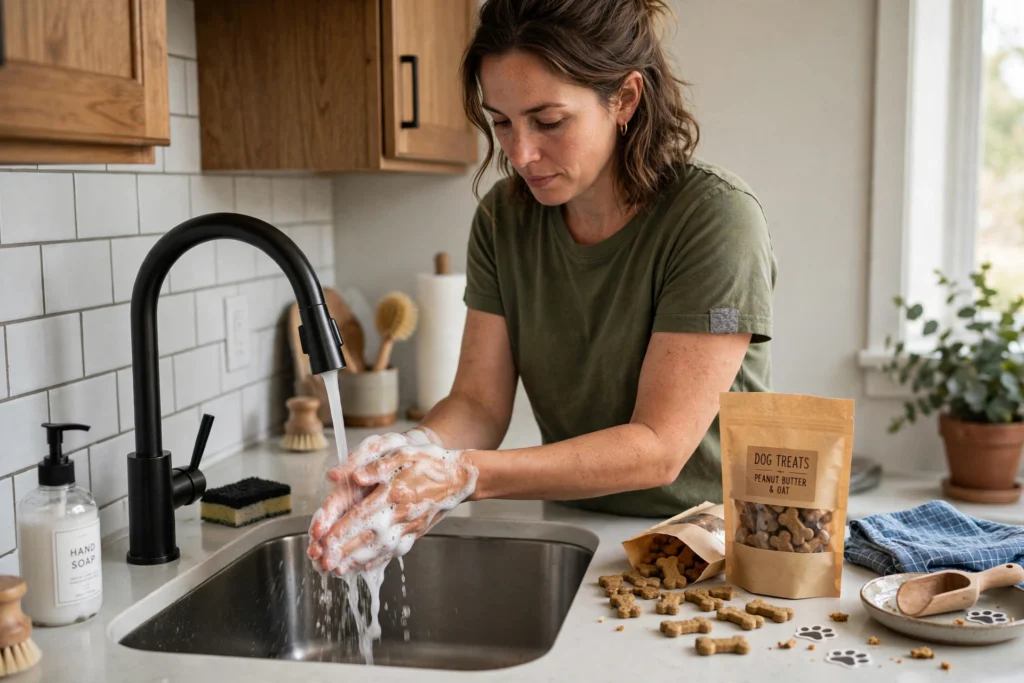
- Wash your hands thoroughly with soap and warm water after handling the biscuits.
- Sanitize everything the biscuits touched — treat jars, bowls, countertops, training pouches, and any surface where crumbs may have fallen.
- Watch your dog for vomiting, diarrhea, lethargy, or loss of appetite, and call your veterinarian if symptoms appear.
- Watch yourself and family members for gastrointestinal symptoms, and contact a healthcare provider if they develop.
Consumers with questions can contact Consumers Supply Distributing, LLC at (712) 202-5609, Monday through Friday from 8:00 a.m. to 5:00 p.m. Central Time.
How Salmonella Gets Into Baked Biscuits
Baked biscuits might seem like an unlikely vehicle for Salmonella — the baking process itself should kill the bacteria. Contamination almost always happens after baking: through contact with contaminated equipment, airborne dust in the facility, coatings or flavorings applied after the oven, or handling during packaging. That is exactly why a single lot can be affected while the rest of a brand’s line is fine, and why checking the lot code matters more than checking the brand.
Routine FDA sampling caught this contamination before any illnesses were reported. It is a reminder that the recall system works best when pet owners actually check their pantries — a recall notice only helps if the affected bag gets found.
Source: Consumers Supply Distributing recall notice via FDA, December 24, 2025