4Health Dog Food Recall History: Salmonella, Thiamine, and a Long Clean Stretch
Searching for a 4health dog food recall turns up a short, old record, and that is good news for anyone feeding the brand today. 4Health is the private-label pet food sold only at Tractor Supply Company stores, and it is made by Diamond Pet Foods, one of the largest pet food manufacturers in the United States. Its recall history is really the story of two episodes tied to Diamond’s Gaston, South Carolina plant: a Salmonella recall in 2012 and a low-thiamine cat food recall in 2013. A later FDA enforcement report also lists some canned 4Health dog foods in 2017 over possible foreign material. Nothing has been recorded for 4Health since then, which means every documented 4Health recall is tied to production dates that passed years ago.
This report lays out each episode with its dates, products, and hazards, explains why a Tractor Supply store brand shows up in a Diamond plant recall at all, and gives the bag-checking steps that turn a scary headline into a thirty-second answer.
The Short Answer: Two Recalls, Both More Than a Decade Old
4Health’s documented recall history, in brief:
- May 2012: All 4Health dry pet foods made at Diamond’s Gaston, South Carolina plant, with best-by dates from December 9, 2012 through April 7, 2013, recalled over potential Salmonella contamination. The recall was precautionary in the sense that it covered an entire plant’s output for a date range, not just a single recipe.
- March 2013: 4Health All Life Stages Cat Formula, in 5-pound and 18-pound bags with product code NGF0802 and best-by dates of August 14, 2013 or August 18, 2013, recalled because the food contained potentially too little thiamine, vitamin B1.
- February 2017 (FDA enforcement report): Certain 4Health canned dog foods, including Chicken and Rice Formula and Lamb and Rice Formula in 13.2-ounce cans, listed over possible foreign material.
No 4Health recall has been recorded since the 2017 enforcement listing. For shoppers today, the practical point is simple: a bag bought this year cannot be part of a 2012, 2013, or 2017 recall, because recalls are tied to production codes and best-by dates, and those dates have long since passed.
What 4Health Is, and Why Diamond’s Plant Matters
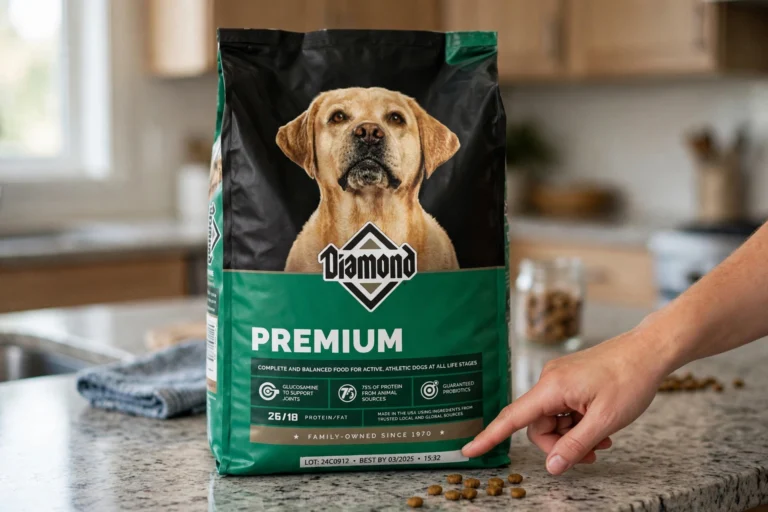
4Health was launched by Tractor Supply Company in 2010 as its own premium-but-affordable pet food line, sold only through Tractor Supply stores and the company’s website. Tractor Supply does not make the food itself. It contracts manufacturing to Diamond Pet Foods, the company behind Diamond Naturals and Taste of the Wild, which runs plants in Missouri, California, and South Carolina.
That arrangement explains the shape of 4Health’s recall history. When a problem is found at a Diamond plant, the recall does not stop at Diamond’s own labels. It sweeps up every brand made at that plant in the affected date range, including store brands like 4Health and Kirkland Signature. So a search for “4Health recall” and a search for “Diamond recall” often return the same event described under different brand names. The plant and the dates are the real identifiers; the brand name on the bag is only part of the check.
It also explains why 4Health’s record looks so much shorter than Diamond’s. Diamond’s own history includes a deadly aflatoxin recall in 2005, before 4Health existed, and a thiamine recall of Diamond Naturals Kitten Formula in 2013. 4Health, launched in 2010, only appears in the episodes that happened after it existed and at a plant that made it.
The 2012 Recall: Salmonella at the Gaston Plant
The 2012 episode began at Diamond’s Gaston, South Carolina facility, where Salmonella was found in the plant environment and in product. In May 2012, Diamond recalled all brands of 4Health dry pet foods manufactured at Gaston, covering best-by dates from December 9, 2012 through April 7, 2013. The recall was part of a much larger multi-brand event that grew through April and May 2012 until it covered Diamond and Diamond Naturals foods and several other brands made at the same facility, including Taste of the Wild, Kirkland Signature, Chicken Soup for the Pet Lover’s Soul, and Natural Balance products from that plant.
What made the 2012 event stand out was not only its size but its human toll. People in several states became ill with the outbreak strain of Salmonella Infantis, and investigators traced the illnesses to handling contaminated dry dog food, not to eating it. An infant was among those hospitalised. That finding changed public health advice about pet food in a lasting way: dry kibble, which most households handle without a second thought, can carry Salmonella, and the people scooping it are at risk as well as the dogs eating it.
Salmonella symptoms in dogs include lethargy, diarrhoea that is sometimes bloody, fever, vomiting, loss of appetite, and abdominal pain, though some infected dogs show no symptoms at all while still shedding the bacteria. In people, symptoms include nausea, vomiting, diarrhoea, stomach cramps, and fever, usually beginning 12 to 72 hours after exposure. The household advice that came out of 2012 is still the standard today: wash hands after handling pet food, keep pet food away from human food preparation surfaces, and do not let small children handle pet food unsupervised.
FDA inspectors who visited the Gaston plant in April 2012 found that all reasonable precautions had not been taken to prevent contamination, and production at the plant was suspended while Diamond overhauled its controls. The company later invested in separating raw and finished product areas, improving air filtration, and screening routinely for pathogens. Those changes were widely cited when the FDA’s preventive-controls rules for animal food came into force, and they are part of why the plant’s record after 2012 looks so different from its record before it.
The 2013 Recall: Low Thiamine in Cat Formula
The second 4Health episode was smaller and different in kind. In March 2013, Diamond recalled 4Health All Life Stages Cat Formula, in 5-pound and 18-pound bags, product code NGF0802, with best-by dates of either August 14, 2013 or August 18, 2013, because the food contained potentially too low levels of thiamine.
Thiamine, vitamin B1, is essential for cats, and a diet low in it over time can cause loss of appetite, weight loss, vomiting, and in severe cases neurological symptoms such as loss of coordination and seizures. Unlike Salmonella, thiamine deficiency is a nutritional problem, not a contamination problem: something is missing from the recipe or the vitamin premix, rather than something harmful getting in. No 4Health dog food was affected by the 2013 recall, and it was limited to that single cat formula and product code.
The 2013 recall is a useful reminder that recall headlines are not all the same kind of danger. A contamination recall means a product may carry something harmful. A nutrient recall means a product may lack something necessary. Both deserve a check, but they call for different responses, and the thiamine case is one where the affected cats were those eating the formula as their main diet over weeks, not pets that had a single bowl.
The 2017 Enforcement Listing: Canned Dog Food and Foreign Material
A third entry appears in 4Health’s record in an FDA enforcement report dated May 31, 2017, listing 4Health canned dog foods, including Chicken and Rice Formula (13.2 ounces, UPC 7-49394-01849-8) and Lamb and Rice Formula (13.2 ounces, UPC 0-49394-01850-4), over possible foreign material. Enforcement reports are a different kind of record from a public recall announcement: they log products that were pulled or corrected, sometimes quietly, and they do not always come with the same consumer-facing detail as a recall notice.
For owners, the practical handling is the same. Foreign material in canned food, which can mean small pieces of plastic, metal, or other non-food material, is a reason to stop feeding the can and check the rest of the case. It is also the kind of issue that is usually caught by a single lot, which is why the UPC and can size matter more than the recipe name alone.
Some recall roundups count only the 2012 and 2013 events as 4Health’s recalls, and describe the brand as having been recalled twice. Others include the 2017 enforcement listing. The difference is a matter of counting, not of safety: whichever way it is counted, the last entry is from 2017, and nothing has followed it.
Is 4Health Recalled Right Now?
No. There is no current 4Health recall, and none has been recorded since 2017. That clean stretch now covers several years across a brand sold in more than 1,500 Tractor Supply stores, which is a meaningful record for a private-label line of its size. A clean stretch is not a guarantee, and it does not erase the 2012 illnesses, but it does mean the question “is 4Health recalled right now” has had the same answer for years.
It is also worth being careful about a claim that circulates on some review sites: that 4Health had a 2019 recall over elevated vitamin D. The established recall trackers do not list a 2019 4Health recall, and the brand’s documented record ends in 2017. Shoppers who see a 2019 date attached to 4Health should treat it with suspicion unless it comes with a product code and an FDA report to match, because vitamin D recalls did affect other brands in 2018 and 2019, and brand names get mixed up in roundups.
How to Check Any 4Health Product
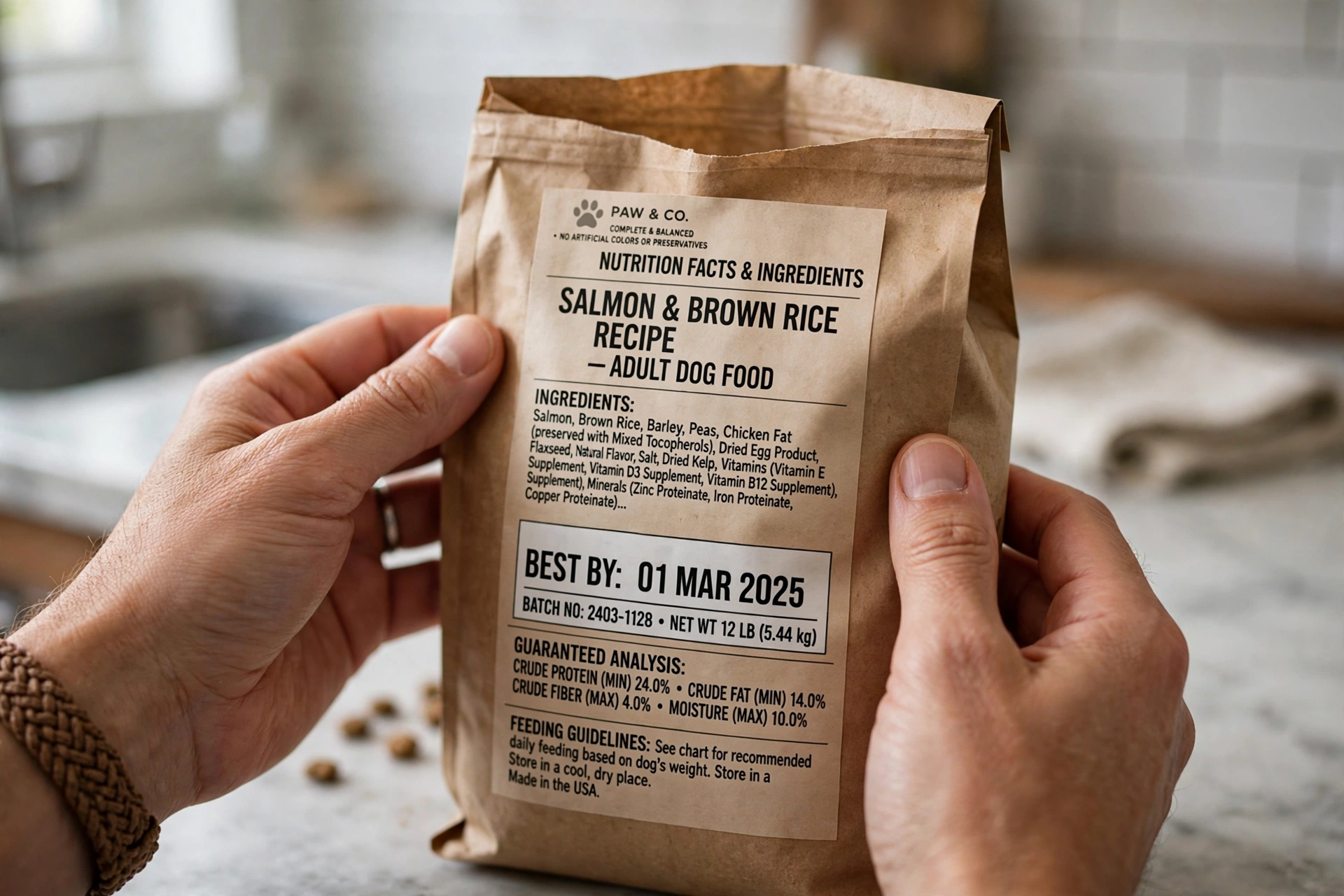
The checking habit is the same for 4Health as for any brand, and it takes less than a minute once the bag is in hand. Keep the bag until it is finished, so the product name, production code, and best-by date are available. Compare all three against any recall notice, not just the brand name. For 4Health’s 2012 recall, the date range mattered as much as the brand: best-by dates from December 9, 2012 through April 7, 2013, from the Gaston plant. For the 2013 recall, the check was product code NGF0802 plus a best-by date of August 14 or August 18, 2013.
If a product matches a recall, stop feeding it, follow the return or disposal instructions in the notice, wash hands and bowls, and contact a veterinarian if the dog or cat shows symptoms. Photographing the lot panel of each new bag turns a later news story into a quick comparison, and for dry food, which is handled daily by the whole household, that habit protects people as well as pets.
Source: FDA recall and enforcement reports, May 2012 and March 2013, and FDA enforcement report dated May 31, 2017. For another major recall history, see our report on the Diamond dog food recall.
The Bottom Line on 4Health
4Health’s recall history is short, old, and tied to a single manufacturing plant: Salmonella in 2012, low thiamine in a cat formula in 2013, and a foreign-material enforcement listing for canned dog food in 2017. Since then, nothing. Owners with food from those years should check it against the codes above. Everyone else can read the history as context for how a store brand inherits its manufacturer’s plant record, not as an alarm about the bag bought this week.