What Is Dropshipping and How Does It Work? The Full Beginner’s Guide for 2026
What is dropshipping and how does it work? Dropshipping is a retail method where you sell products in your own online store without ever holding inventory. When a customer buys from you, you forward the order to a third-party supplier — a wholesaler or manufacturer — who ships the product directly to that customer. You never touch, store or package the item. Your profit is the difference between what the customer paid you and what the supplier charged you, minus your advertising, platform and transaction costs.
It is one of the most searched-for and most misunderstood business models online — equal parts legitimate retail method and get-rich-quick fantasy. The model itself is real and widely used. The fantasy is the part where money arrives without work. This guide explains the order flow step by step, works out the margin on a real example, lists what it actually costs to start, and covers the tax change that arrived in August 2025 and changed the maths for anyone selling into the United States.
The three parties in every order
Every dropshipping sale involves three parties, and understanding who does what is the whole model:
You, the retailer and seller of record. You set the prices, run the store, take the payment, handle customer service, refunds and chargebacks, and collect sales tax where required. Legally, and in the customer’s eyes, the sale is yours. If the product arrives late or broken, the customer complains to you, not to your supplier.
The supplier. A manufacturer, wholesaler or marketplace seller who holds the stock. They pack the order and ship it to your customer, usually with your branding on the packing slip rather than theirs. They never talk to your customer.
The customer. They buy from your store at your retail price. Most will never know a third party fulfilled the order — and that is the point.
Most stores add a fourth piece: a dropshipping app that connects the store to the supplier, imports product listings and pushes orders through automatically, so you are not copying addresses by hand. Shopify’s own documentation describes the same structure and splits dropshipping into three types: reselling a curated range, extending an existing shop’s catalogue, and creating new products by bundling existing ones.
How dropshipping works, step by step
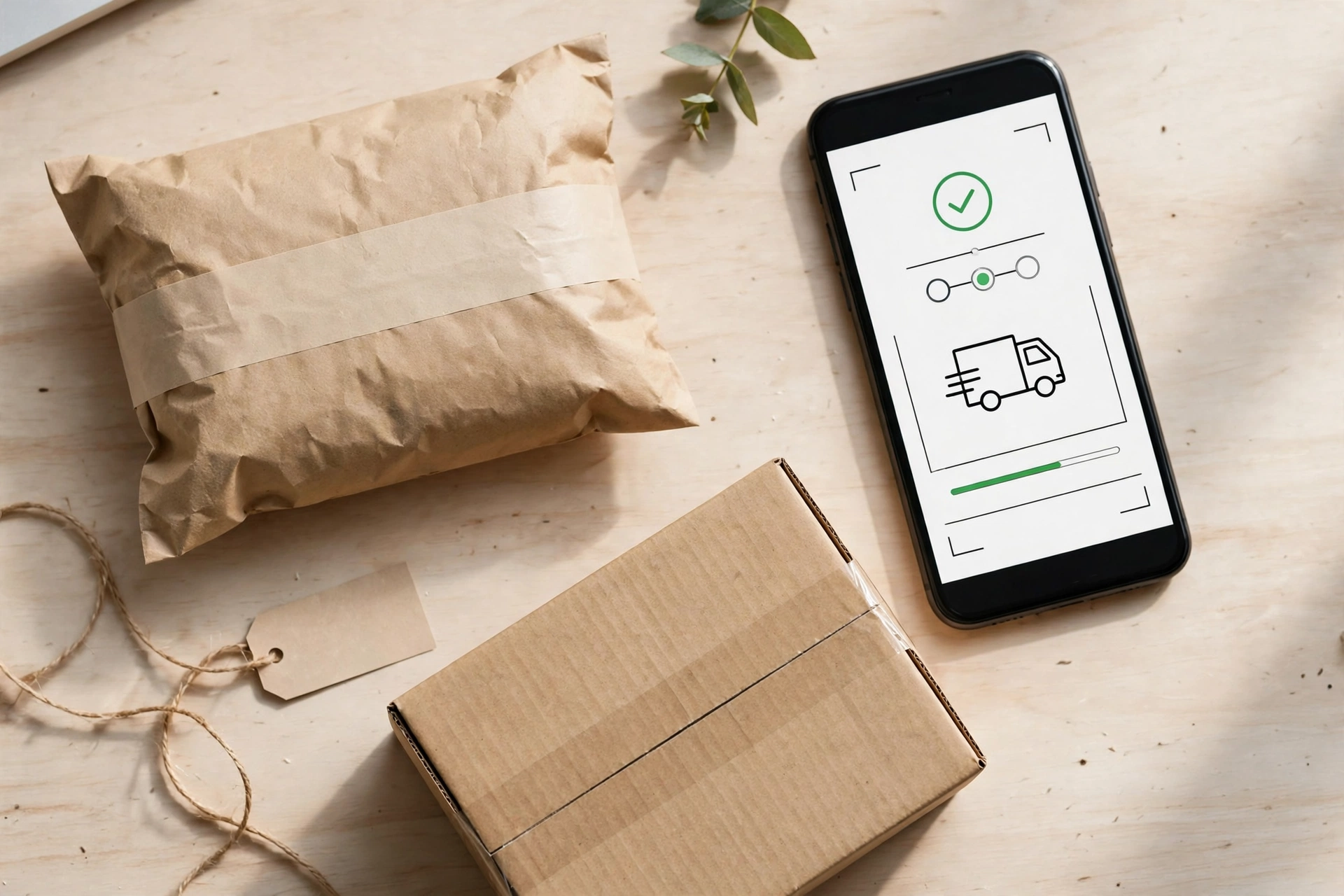
Here is the actual flow of a single sale:
- You find a supplier and list the product. You import the supplier’s listing into your store, rewrite the title and description in your own words, choose photos, and set your retail price. Nothing has been bought yet, and no money has changed hands.
- A customer places an order. They pay your retail price through your checkout. The money lands in your account.
- You forward the order to the supplier. You send the order details — product, quantity, customer name and address — and pay the supplier their lower wholesale price. With an app, this step is automatic.
- The supplier ships the product directly to your customer. Handling usually takes one to five days before the parcel leaves the warehouse, and delivery takes three to seven days domestically or seven to fourteen days internationally.
- You keep the margin. The difference between what the customer paid and what the order cost you — product, shipping, platform fees, payment fees and advertising — is your profit.
The attraction is obvious: you pay for the product only after the customer has paid you, so there is no inventory sitting in a garage and no cash tied up in stock that might never sell. The catch is equally obvious once you run the numbers: the margin is thin, and everything that can go wrong with the order is your problem to fix.

The margin math: a worked example
Take a product you sell for $30. Your supplier charges $12 for the item and $4 for shipping. Your store platform and payment processing take roughly $1.50 on the sale. That leaves $12.50 before advertising. If you spent $6 in ads to win that customer, your real profit is $6.50 — about 22% of the sale price. Before you price a product, run the same numbers through the Marketplace Fee Calculator to see what the marketplace keeps on a comparable sale — the fee stack is the part most beginners underestimate.
Now run the same sale with a cheaper product. Sell at $15, supplier cost $8, shipping $3, fees $0.75, ad cost $4: you are $0.75 in the red before refunds. This is where most beginners lose money — not on any single cost, but on the stack of small ones. Typical dropshipping margins run from 10% to 30% depending on the niche and the product, according to Xero’s 2026 guide, and that range is after all costs, not before them.
The model only works if one thing is true: you can acquire customers for less than your margin. If your ad cost per order is higher than the profit on that order, every sale loses money — and the more you sell, the faster you lose it. That is why experienced dropshippers obsess over product price. A $40 to $60 product with a 30% margin leaves $12 to $18 to cover advertising; a $12 product with the same margin leaves $3.60, which no ad platform will profitably deliver.
What it costs to start dropshipping in 2026
The honest minimum is a few hundred dollars to test the model properly, mostly ad spend you should be genuinely prepared to lose while learning. Anyone telling you that you can start with $0 is describing the fantasy, not the business.
| Cost | Typical range |
|---|---|
| Store platform (Shopify Basic from $29/month billed annually, or WooCommerce hosting) | $29–$40/month |
| Domain name | ~$12/year |
| Dropshipping app (DSers, AutoDS, Zendrop — free tiers exist, paid tiers add automation) | $0–$40/month |
| Product samples (order your own products to check quality) | $50–$150 one-off |
| Test advertising (Meta, TikTok or Google) | $200–$500 to test properly |
| Realistic first-month budget | $300–$800 |

Two costs beginners forget: samples and refunds. Order samples of anything you plan to sell at volume — your reputation depends entirely on a supplier you have never met, and the only way to know what customers will receive is to receive it yourself. And budget for refunds: a 5% refund rate on thin margins wipes out the profit on the other 95% of orders if you have not priced for it.
The 2026 tax change that changed the maths
Since August 2025, the tax side of dropshipping into the United States has changed. The US ended its de minimis exemption — the rule that let low-value imports under $800 enter duty-free — on August 29, 2025. Before that date, a $12 item shipped from a Chinese supplier to a US customer arrived with no import duty. Now duties apply, and either you pay them, your supplier builds them into the price, or your customer is charged on delivery — which is the worst of the three, because a surprise fee at the door is the fastest way to earn a refund request and a bad review.
This matters most for the classic dropshipping model: cheap products sourced from overseas suppliers and shipped directly to US buyers. If your supplier is overseas, ask them in writing how duties are handled now, and test it with a sample order to your own address before you scale. Domestic US suppliers cost more per unit but dodge the duty problem entirely, and their three-to-seven-day delivery times also cut the refund rate that slow international shipping used to cause.
Sales tax is separate and has not changed: as the seller of record, you collect it where you have a tax obligation. Marketplace facilitator laws mean platforms like eBay and Amazon collect it for you on their marketplaces, but on your own store the responsibility is yours. That is one reason many beginners start by selling on Amazon, where the marketplace handles tax collection — though the fee stack there is heavier, as the Amazon cost guide shows.
Pros and cons, honestly weighed
What dropshipping does well. Startup costs are low, because there is no inventory to buy. You can test ten products in a week and drop the nine that do not sell. You can run the business from anywhere, and it scales without a warehouse. For testing whether a product idea has demand, there is no cheaper method.
What it does badly. Margins are thin, so advertising has to be efficient. You have no control over product quality, packing or shipping speed, yet you take every complaint. Suppliers can run out of stock, raise prices or disappear, and your store takes the hit. And because anyone can list the same products, competition pushes prices down — the generic version of dropshipping, finding a trending product and running cheap ads at it, is fading fast as ad costs rise and buyers grow wary of slow shipping.
The version that still works in 2026 is narrower: a focused niche, a supplier you have actually vetted, products priced high enough to carry real ad costs, and a store that looks like a brand rather than a catalogue of random items. Print-on-demand is the closest cousin — same no-inventory structure, but the product is custom-printed for each order, which gives you a reason for the customer to buy from you specifically. It is also worth comparing with the option to sell digital products online, where there is no supplier and no shipping at all — the margin is far higher, though the product is different.
Choosing a supplier without getting burned
Research suppliers the way you would research a business partner, because that is what they are. Order samples before you list anything. Check reviews from other sellers, not just the supplier’s own testimonials. Test response times: a supplier who takes three days to answer a pre-sale question will take longer when a customer’s order is lost. And keep a backup supplier for your best sellers, because a single supplier going dark for a week can empty your store’s best-selling page overnight.
The supplier directories most beginners start with — AliExpress, Alibaba, and apps like DSers and AutoDS that connect them to Shopify — are marketplaces, not vetted partners. Treat every supplier as unproven until a sample order arrives in good condition and on time. Zendrop and similar services that warehouse and quality-check products cost more per order but remove the worst of the quality risk, which is a trade worth making once you have a winning product. And remember eBay’s selling fees if you test products there first — the fee stack on a low-priced item can erase the margin before advertising even starts.
Is dropshipping still profitable in 2026?
The honest answer is that the easy-money era is over, but the model is not dead. Global dropshipping sales are expected to reach about $476 billion by 2026, according to Xero — the market is growing, not shrinking. But growth has gone to sellers who treat it as a real retail business: a niche, a brand, a vetted supplier, honest shipping times and customer service that answers. The sellers who fail are the ones who list a trending gadget, run a week of ads, and wonder why the refund rate ate the margin.
If you want to test it, do it properly: pick one niche, budget $300 to $800 for the first month, order samples, and judge the test on whether you can acquire a customer for less than the order’s profit — not on whether you made a sale. A sale that loses money is not a success. And if the numbers do not work after a genuine test, that is useful information too: it tells you the product or the channel is wrong, before you have spent any more on it.
Frequently asked questions
Is dropshipping legal?
Yes. Dropshipping is a legal retail fulfilment method in the US and most countries. You are the seller of record, so you must follow the same rules as any retailer: accurate product descriptions, honest advertising, collecting sales tax where required, and honouring refunds. It is not a way around consumer-protection law.
How much money do I need to start dropshipping?
A realistic minimum is a few hundred dollars — roughly $300 to $800 for the first month. That covers a store platform (from about $29 a month), a domain, product samples and enough test advertising to learn whether a product sells. Most of the budget is ad spend you should be prepared to lose while testing.
How much do dropshippers actually make?
Typical dropshipping margins run from 10% to 30% after costs, depending on the niche and product. Profit depends entirely on whether you can acquire customers for less than your margin — a $30 product with a 25% margin leaves $7.50 to cover advertising, so the ad cost per order decides whether you profit or lose.
Is dropshipping still profitable in 2026?
The generic version — trending products plus cheap ads — is fading as ad costs rise and buyers avoid slow shipping. The model still works for focused niches with vetted suppliers, products priced high enough to carry ad costs, and honest delivery times. The US end of the de minimis duty exemption in August 2025 also raised costs for overseas-sourced products, so domestic suppliers are more competitive than they were.
Sources (text credit only, no links): Xero, “Dropshipping explained: how it works, pros and cons”, April 2026; Shopify dropshipping documentation; AliDrop, “How Does Dropshipping Work? Beginner Guide 2026”. Prices checked October–November 2026.