
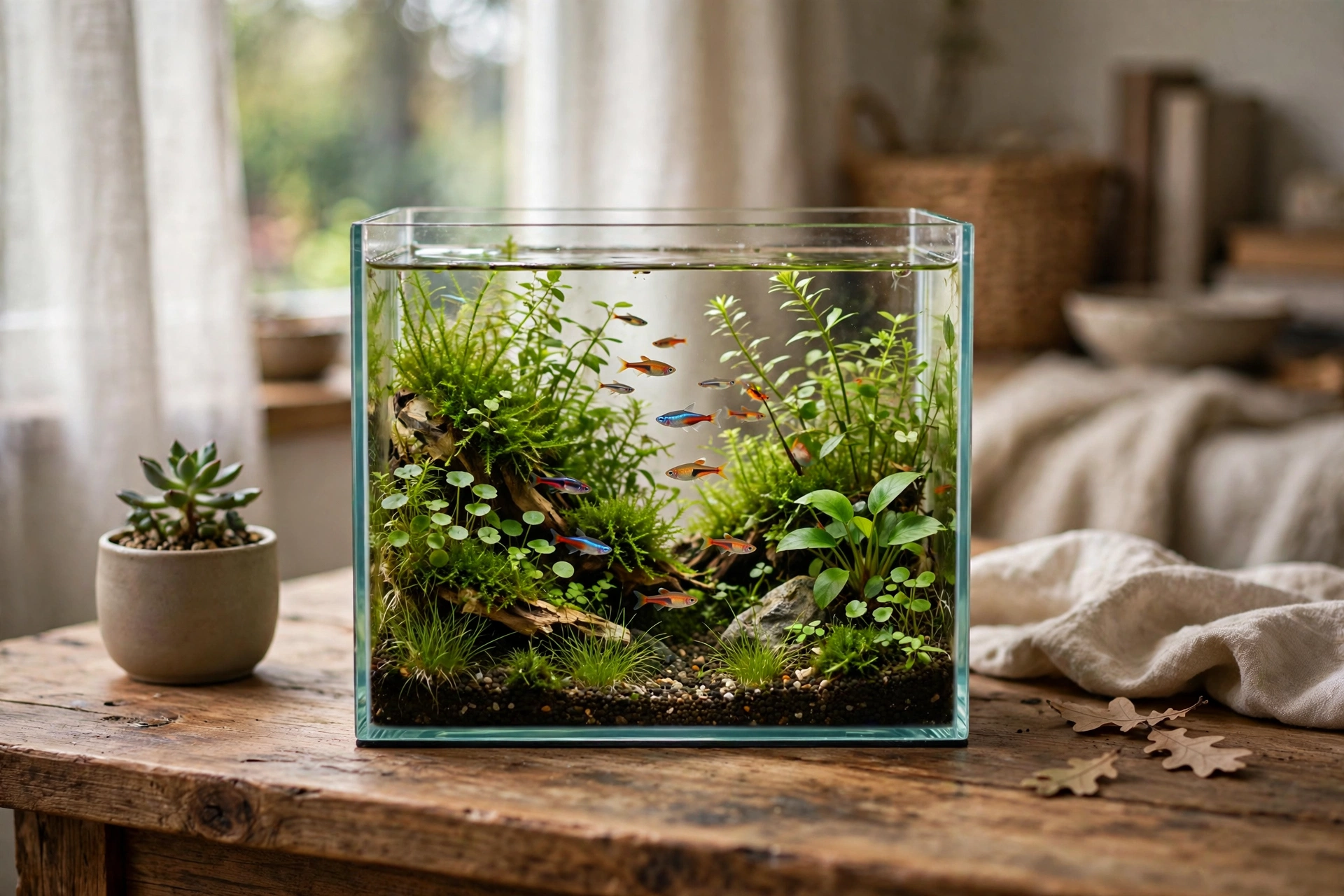
Nano Fish Tank: The Complete Setup & Stocking Guide
Nano fish tank? If you’re picturing a tiny aquarium on your desk holding a miniature underwater world, you’re exactly right — and nano tanks are one of the most rewarding corners of the hobby. They prove you don’t need 50 gallons to keep a thriving aquarium. But small water volumes forgive nothing: the same mistakes a big tank shrugs off will crash a nano tank in days. Here’s how to do it right, from tank size to stocking to the maintenance rhythm that keeps small tanks stable.
What Is a Nano Fish Tank?
The hobby generally calls anything under 10 gallons a nano tank, with the sweet spot sitting at 5 to 10 gallons. Below 5 gallons you’re in pico territory — beautiful, but genuinely difficult to keep stable because there’s almost no water volume buffering your mistakes. A 5.5-gallon or 10-gallon tank gives you enough volume to absorb a missed water change while still fitting on a desk or bookshelf.
Nano tanks aren’t just shrunken big tanks. Everything scales differently at small volumes: temperature swings faster, waste concentrates quicker, and your stocking choices narrow dramatically. The upside is real too — they cost less to set up, take minutes to maintain, and you can build a complete aquascape in a single afternoon.
The Best Fish for a Nano Fish Tank
This is where most beginners go wrong — not every small fish belongs in a small tank. A neon tetra is tiny, but it’s an active schooling fish that needs swimming room and a proper group. Here’s what actually thrives in nano setups:
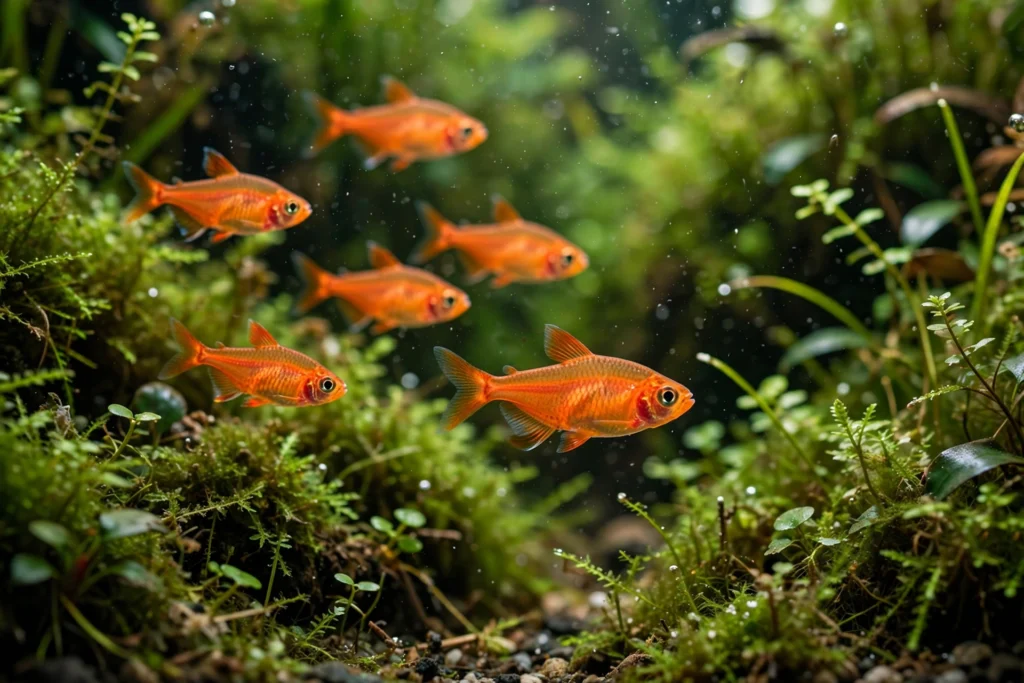
Chili rasboras — The nano fish poster child. Barely an inch long, peaceful, and stunning in groups of 8–10. Perfect for 5+ gallons and one of the few schooling fish genuinely suited to small tanks.
Ember tetras — Glowing orange schooling fish, hardy and calm. A group of 8 or more in a 10-gallon looks spectacular and they tolerate a wide range of water conditions.
Endler’s livebearers — Tiny, colorful, endlessly active. Males stay under an inch long. A trio works in 5 gallons, but they breed readily, so have a plan for the fry.
Celestial pearl danios — Shy but gorgeous spotted nano fish. They do best in planted tanks with calm tankmates; 10 gallons is ideal for a group of 6–8.
Scarlet badis — A true micro-predator for species-only nano tanks. Males are territorial, so keep one male per 5 gallons and expect him to claim it all.
What to avoid: bettas in anything under 5 gallons (they need the space and the temperature stability), any schooling fish you can’t keep in a proper group of 6+, and “cleaner fish” like otocinclus in brand-new tanks — they starve without established algae and biofilm.
Shrimp and Snails: The Nano Tank Dream Team
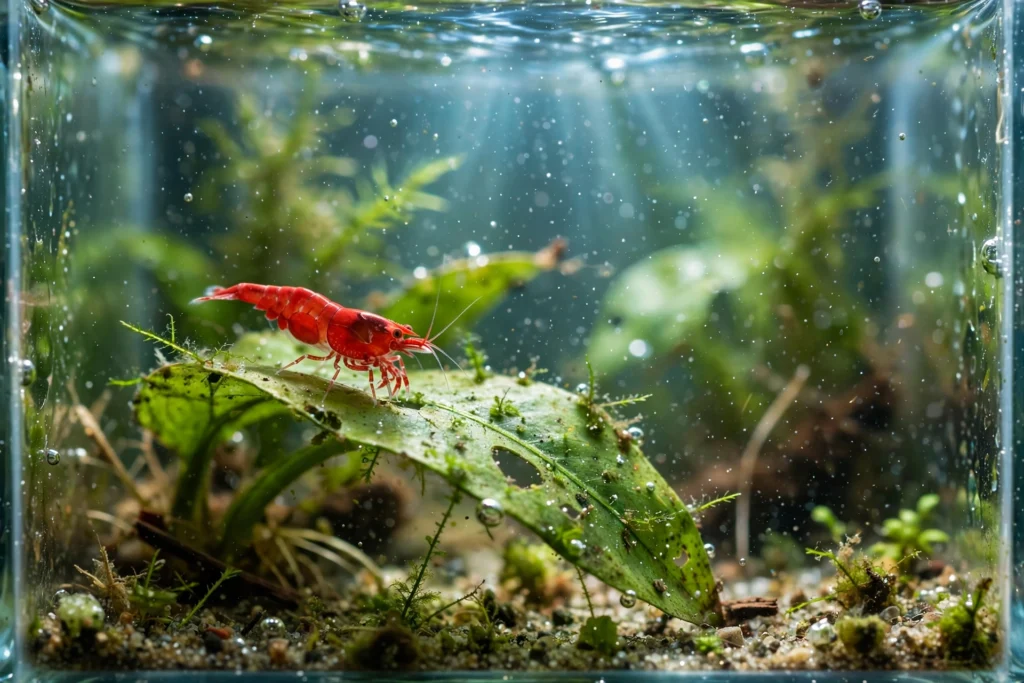
Honestly, some of the best nano tanks contain no fish at all. Shrimp colonies are made for small tanks:
Cherry shrimp — Breed freely, come in a dozen color varieties, and graze algae all day. Start with 10 in a 5-gallon and you’ll have a hundred within months.
Amano shrimp — Larger algae-eating machines. Three or four will handle a 10-gallon’s algae load without breaking a sweat.
Nerite snails — The best algae-eating snail in the hobby, and they can’t reproduce in freshwater, so there’s no population explosion. One per 5 gallons is plenty.
A shrimp-only nano tank with healthy plants is arguably the easiest aquarium you can keep — and one of the most entertaining to watch. If you’re nervous about your first tank, start here.
Nano Tank Equipment: What Fits and What Doesn’t
Filtration: A gentle sponge filter is the nano tank gold standard — cheap, nearly impossible to harm small livestock with, and the sponge surface doubles as grazing ground for shrimp. Small hang-on-back filters work too, but baffle the outflow; nano fish hate fighting strong current. Whatever you choose, cycle it fully before adding livestock. A nano tank with no beneficial bacteria is a death trap, and the nitrogen cycle works exactly the same at small scale — see our full walkthrough on how to cycle a fish tank.
Heating: Most nano fish are tropical and need 74–78°F. A 25-watt adjustable heater handles 5 gallons; 50 watts covers 10. Skip the preset “mini” heaters — their thermostats drift. Small tanks lose heat fast in cool rooms, so a reliable heater matters more here, not less.
Lighting: A small clip-on LED is plenty for a nano tank. If you want live plants — and you should, because they stabilize nano tanks enormously by absorbing nitrates — get a light rated for planted tanks rather than the cheapest white LED on the shelf.
Substrate: Fine gravel or aquasoil both work. Aquasoil buffers pH and feeds plants, but it leaches ammonia for the first few weeks — factor that into your cycling timeline rather than fighting it.
Stocking Rules for Small Tanks
The old “one inch of fish per gallon” rule is garbage at any tank size, but nano tanks demand an even stricter mindset: one inch of adult fish per two gallons is a safer starting point, and schooling fish count as a group commitment, not individuals.
Practical stocking for the common nano sizes:
- 5 gallons: 1 betta (alone), OR 8–10 chili rasboras, OR a cherry shrimp colony of 10+, OR 1 scarlet badis plus shrimp
- 10 gallons: 8–10 ember tetras plus 6 pygmy corydoras plus shrimp, OR 6–8 celestial pearl danios plus a shrimp colony
The golden rules: stock lightly at first and add livestock slowly over weeks, not all at once. Never trust a pet store’s “this stays small” without checking the adult size yourself. And remember that bioload matters as much as length — a messy eater pollutes far more than a clean grazer of the same size.
Nano Tank Maintenance: Smaller Water, Bigger Swings
Here’s the paradox of nano tanks: every maintenance task takes five minutes, but you can’t skip weeks the way big-tank owners sometimes do.
- Water changes: 20–30% weekly, non-negotiable. In a 5-gallon that’s barely a bucket. Use a small gravel vacuum made for nano tanks so you don’t drain half the tank by accident.
- Testing: Test ammonia, nitrite, and nitrate weekly for the first two months, then every two weeks. In small volumes, one missed water change shows up on the test kit fast.
- Topping off: Evaporation concentrates minerals and swings parameters in small tanks. Top off with dechlorinated water between changes — mark a fill line with tape on the glass so you notice the drop.
- Feeding: The number one nano tank killer is overfeeding. Feed only what disappears in 60 seconds, once or twice daily. Uneaten food in 5 gallons becomes an ammonia spike by morning.
- Temperature: Glance at the thermometer when you feed. Small tanks can swing 4–5°F overnight near a window or an AC vent, and that stress alone can trigger disease.
Common Nano Tank Mistakes
Starting with a 2.5-gallon. It looks adorable empty. It’s a chemistry nightmare once stocked. Start at 5 gallons minimum — your future self will thank you.
Skipping the cycle. “It’s just a betta” or “it’s just shrimp” doesn’t exempt you. Cycling matters more in small tanks, not less, because beneficial bacteria are your entire life-support system.
Overstocking on day one. Add half your planned livestock, wait two weeks, test the water, then add the rest. Patience is the cheapest equipment in this hobby.
No lid. Small tanks evaporate fast and nano fish jump. A simple glass lid prevents both problems for a few dollars.
Mixing a betta with everything. Bettas work in nano tanks only as solo residents in 5+ gallons, or with carefully chosen shrimp and snails. A betta plus a school of anything in 5 gallons is a fight waiting to happen.
A nano fish tank done right is the best value in the hobby: low cost, minutes of weekly maintenance, and a living ecosystem on your desk. Start at 5 gallons or more, cycle it properly, stock lightly with true nano species, and respect the water changes. Do that, and your tiny tank will outperform aquariums five times its size.