
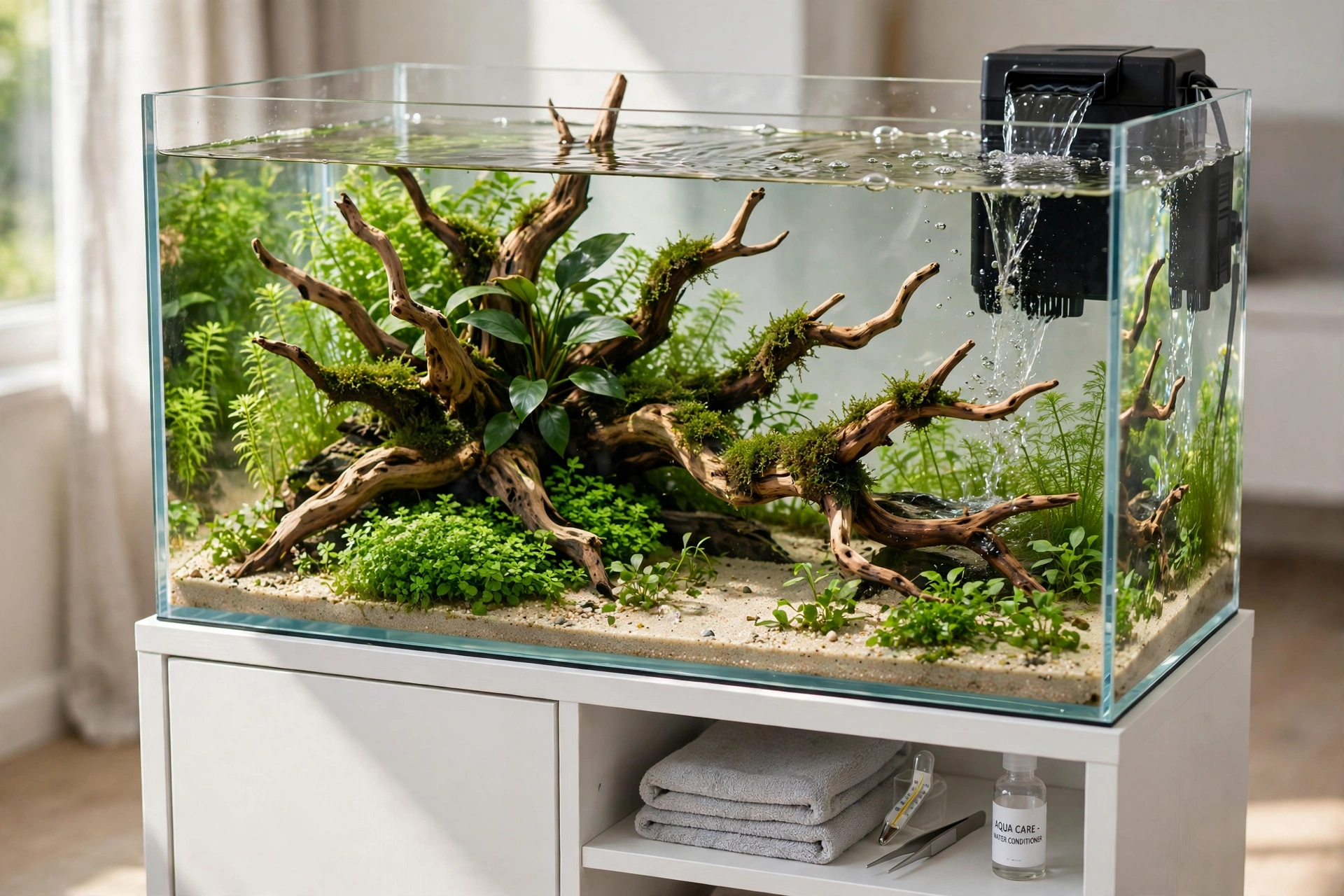
How to Cycle a Fish Tank: A Beginner’s Step-by-Step Guide
If you’re setting up your first aquarium, you’ve probably heard that you need to “cycle” the tank before adding fish. But what does that actually mean — and how do you do it without killing your first fish in a week?
Cycling a fish tank is the single most important step in setting up an aquarium, and it’s the one beginners skip most often. This guide walks you through exactly how to cycle a fish tank, step by step, in plain language. No chemistry degree required.
What Does It Mean to Cycle a Fish Tank?
Cycling a fish tank means growing a colony of beneficial bacteria in your filter and on tank surfaces before fish move in. These bacteria are the cleanup crew of your aquarium — they convert toxic fish waste into much safer compounds.
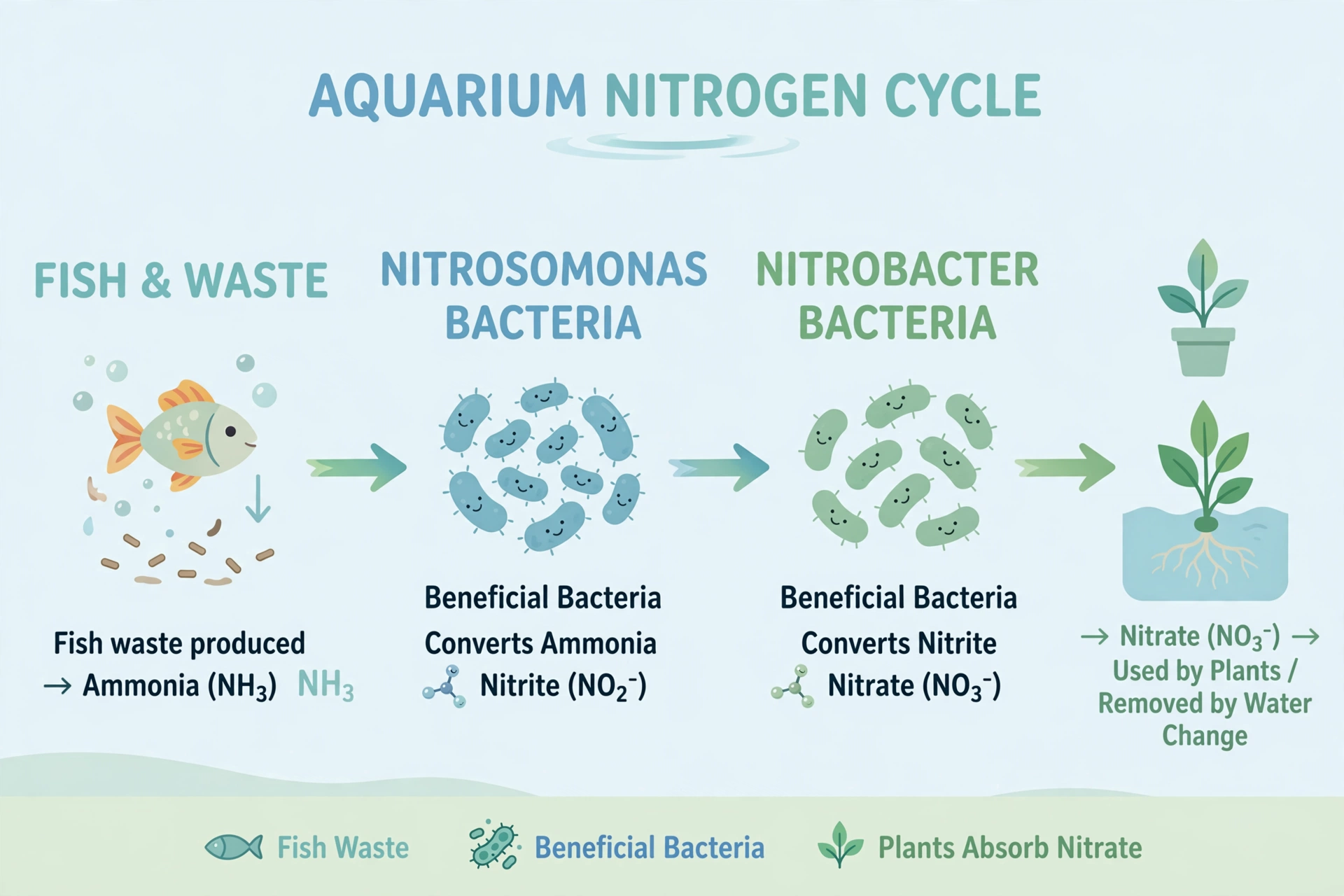
Here’s the short version of what’s happening in your tank, known as the nitrogen cycle:
- Fish produce ammonia through waste and uneaten food. Ammonia is highly toxic to fish, even in tiny amounts.
- Beneficial bacteria convert ammonia into nitrite. Nitrite is still toxic, but less so.
- A second group of bacteria converts nitrite into nitrate. Nitrate is far less harmful and gets removed with regular water changes.
A “cycled” tank is simply one where this bacterial colony is large enough to process all the waste your fish produce. Without it, ammonia spikes and fish get sick or die — the classic “my fish died in the first week” story.
How Long Does It Take to Cycle a Fish Tank?
A full cycle typically takes 4 to 8 weeks if you’re starting from scratch. That sounds like a long time, but most of it is just waiting while bacteria multiply on their own schedule.
A few things affect the timeline:
- Temperature: Bacteria grow faster in warmer water (around 78–82°F / 25–28°C).
- Seeded media: Adding filter media, gravel, or decorations from an established healthy tank can cut the time dramatically — sometimes to under two weeks.
- Bottled bacteria products: These can help, but results vary. They speed things up; they don’t instantly cycle a tank despite what the label claims.
There’s no shortcut that reliably cycles a tank in 24 hours. Anyone telling you otherwise is selling something.
What You Need Before You Start
Gather these before day one: your tank filled with dechlorinated water, a running filter, a heater set to around 80°F, a liquid water test kit, pure unscented ammonia (for fishless cycling), and patience.
How to Cycle a Fish Tank: The Fishless Method (Recommended)
Fishless cycling is the kindest and most reliable method. You feed the bacteria with pure ammonia instead of live fish, so no animal suffers through the toxic spikes.
Step 1: Set Up the Tank Completely
Fill the tank, install the filter, heater, and substrate, and get everything running exactly as it will be when fish arrive. Add dechlorinator to the water. Set the heater to about 80°F to encourage bacterial growth.
Step 2: Add Ammonia
Add enough pure ammonia to bring the level to 2–4 ppm as measured by your test kit. Start small — you can always add more. Important: use only pure, unscented ammonia with no added surfactants, fragrances, or detergents. If it foams when you shake the bottle, don’t use it.
Step 3: Wait and Test Every Few Days
Test ammonia every 2–3 days. For the first week or two, nothing much will seem to happen — that’s normal. Eventually you’ll see ammonia start to drop. That’s your first sign the cycle is working.
Step 4: Watch for Nitrite, Then Nitrate
Once ammonia drops, test for nitrite — it should start rising. Then nitrite will fall and nitrate will appear. This is the full nitrogen cycle establishing itself in order.
Step 5: Confirm the Cycle Can Handle a Full Load
When both ammonia and nitrite read 0 ppm within 24 hours of dosing ammonia to 2 ppm, your tank is cycled. Do a large water change (50–70%) to bring nitrates down, and you’re ready for fish.
Step 6: Add Fish Slowly
Add just a few fish at first, then wait a week or two before adding more. Dumping a full stocking list in on day one can overwhelm the young bacterial colony.
The Fish-In Method (If You Already Have Fish)
If you already have fish in an uncycled tank: feed sparingly once a day, test water daily, do water changes whenever ammonia or nitrite reads above 0.25 ppm, use a water conditioner that detoxifies ammonia with each change, and don’t add more fish until ammonia and nitrite consistently read zero. Fish-in cycling takes 6–8 weeks and requires real diligence.
How Do You Know When the Cycle Is Done?
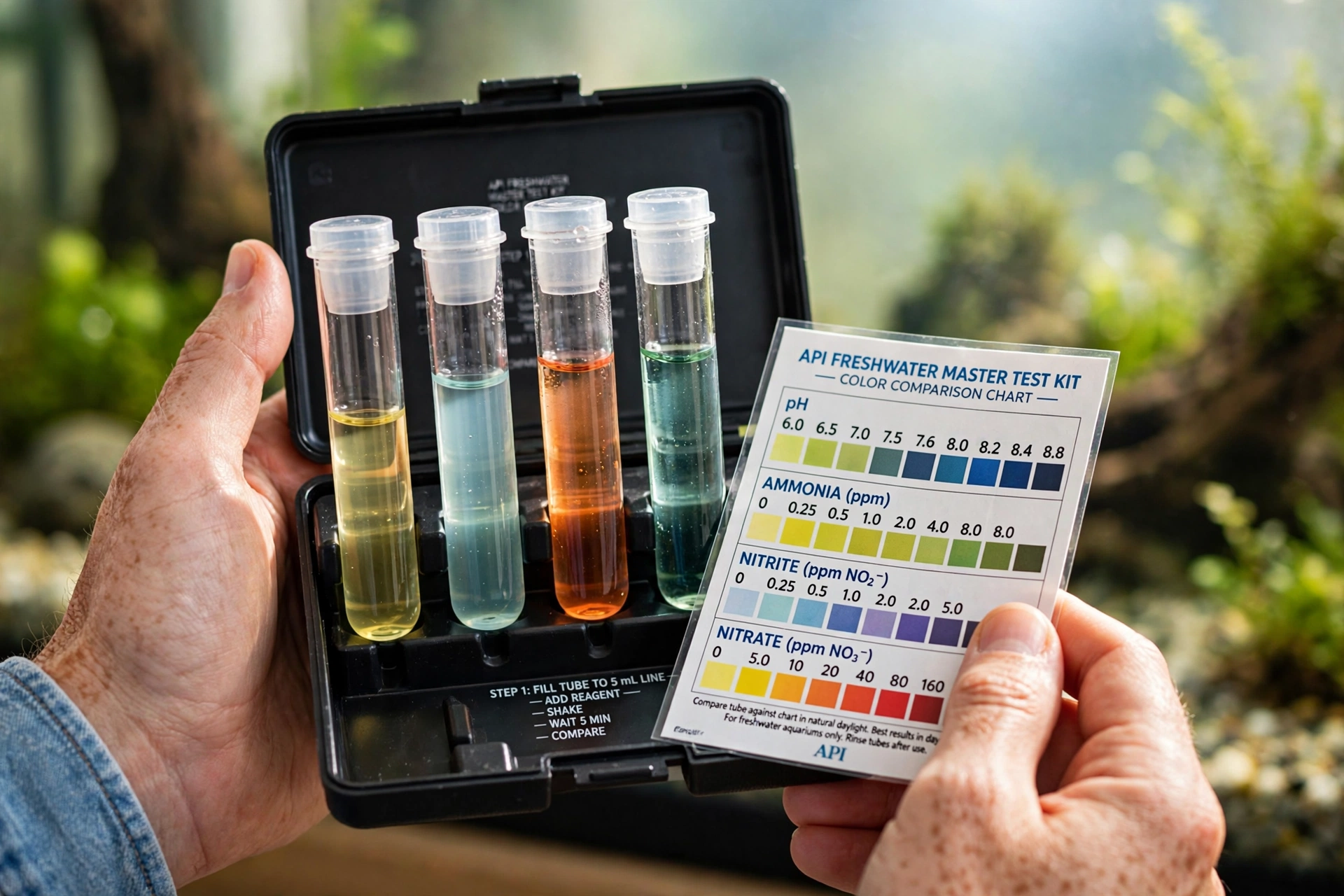
Your tank is fully cycled when ammonia reads 0 ppm, nitrite reads 0 ppm, nitrate reads above 0 ppm (usually 5–40 ppm), and these readings hold steady for several days in a row. Don’t guess, and don’t go by time alone — the test kit is the only reliable judge.
Troubleshooting a Stalled Cycle
Ammonia won’t drop after 3+ weeks: check your pH — below 6.5, bacterial growth slows to a crawl. A partial water change often restarts things. Nitrite stuck high for weeks: the second bacterial group is slower to establish — be patient and avoid water changes unless nitrite goes off the chart. pH crashed: do a water change; bacterial activity consumes carbonate hardness.
Common Cycling Mistakes Beginners Make
Adding fish on day one. Changing all the filter media at once (it holds your bacteria colony — rinse gently in old tank water only). Turning off the filter at night (it runs 24/7, forever). Overdosing ammonia above 5 ppm, which can stall the cycle. Trusting test strips instead of a liquid test kit.
Frequently Asked Questions
Can I cycle a tank faster with plants? Live plants absorb some ammonia, which helps, but they don’t replace the bacterial colony. Do I need to cycle a betta tank? Yes — even a 5-gallon betta tank needs a proper cycle. Should I do water changes during fishless cycling? Generally no, unless pH crashes. How often should I test while cycling? Every 2–3 days for fishless; daily for fish-in.
Cycling isn’t glamorous, but it’s the foundation everything else in your aquarium depends on. Take the weeks now, and your tank will practically run itself later.