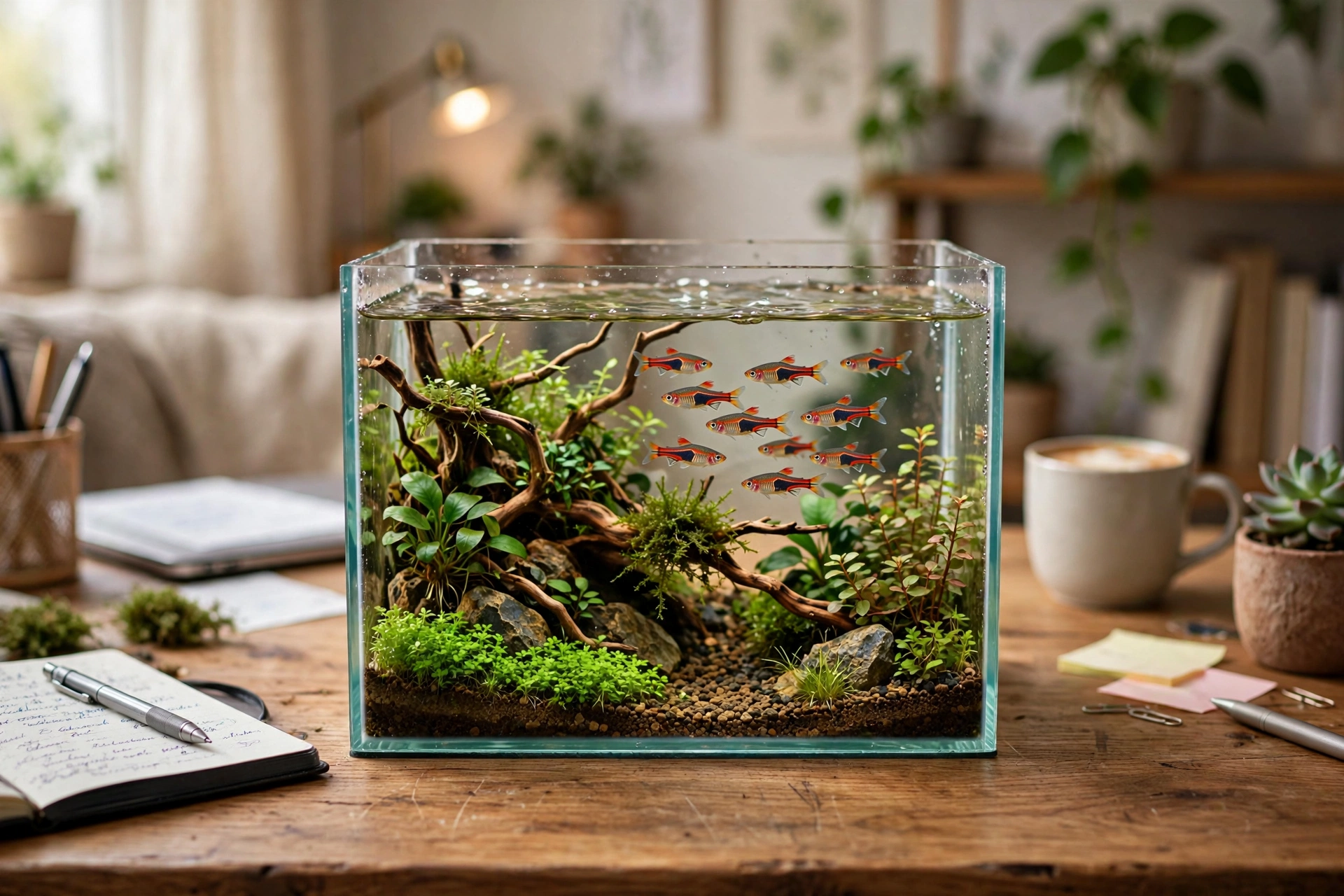
Nano Fish Tank Guide: Setup, Stocking & Best Fish
A nano fish tank — typically anything under 10 gallons — is the most popular way to enter the hobby and the easiest way to fail at it. Small tanks are less forgiving: less water means faster parameter swings, and every mistake hits harder. But set up correctly, a nano fish tank is a stunning, low-maintenance slice of underwater life. Here’s how to do it right.
What Counts as a Nano Fish Tank?
Generally 2.5 to 10 gallons. Below 2.5 gallons isn’t a fish tank — no fish thrives in one long-term. The sweet spot for beginners is 5 to 10 gallons: small enough for a desk, large enough to stay stable.
The Best Fish for a Nano Tank
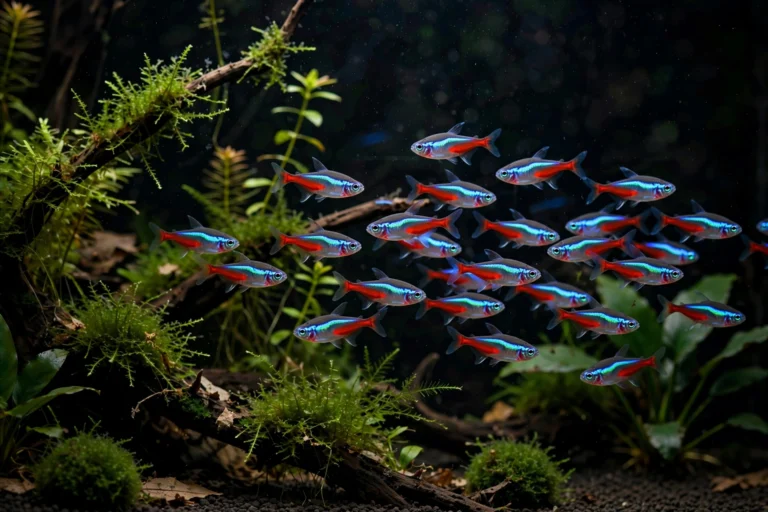
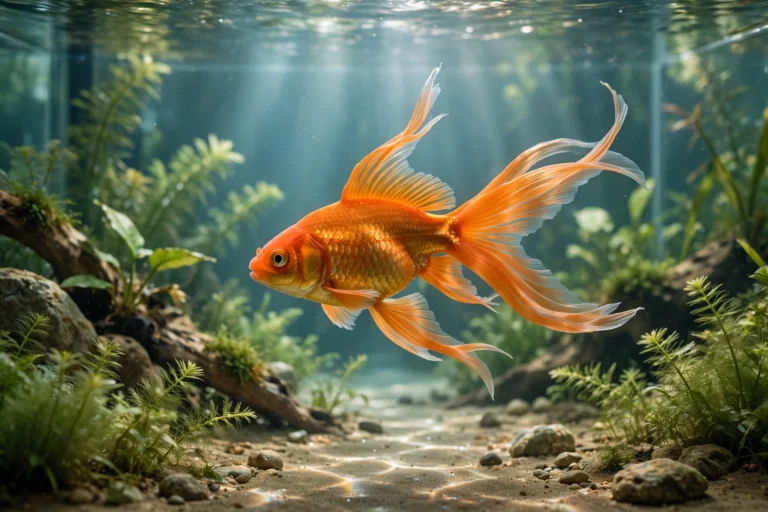
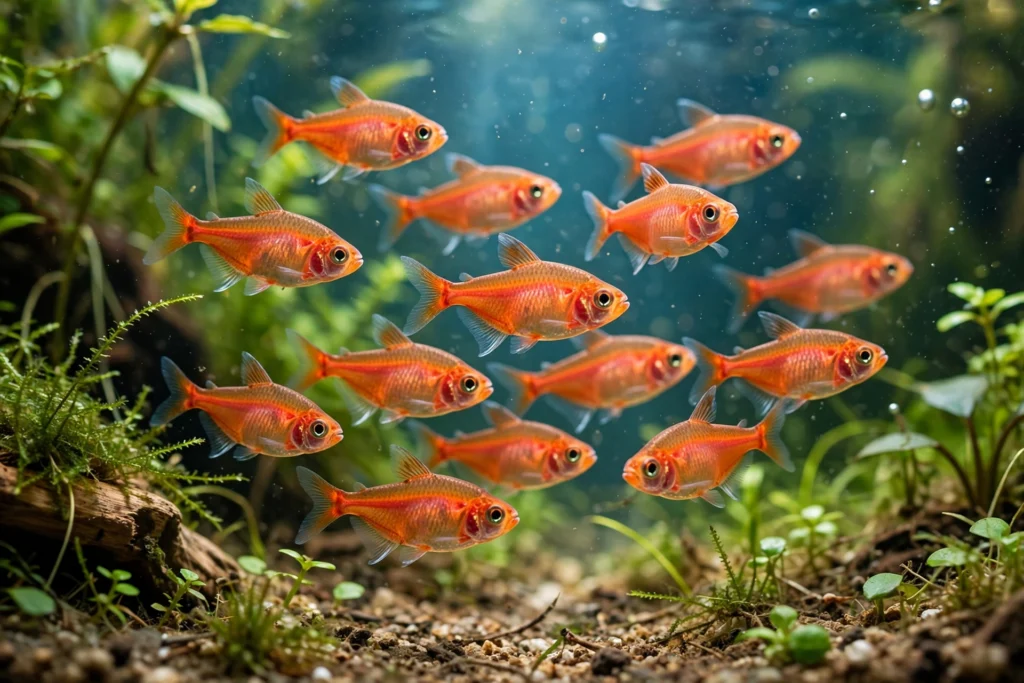
Small tank means small fish — and fewer of them. The best nano fish: Betta fish (one betta owns a 5-gallon beautifully). Chili rasboras (tiny, peaceful, stunning in groups of 8–10). Ember tetras (hardy, glowing orange, schools of 8+). Endler’s livebearers (colorful, active, great for beginners). Pea puffers (personality in a 1-inch package, but species-only). Shrimp and snails (cherry shrimp colonies and nerite snails are ideal nano citizens). What doesn’t belong: goldfish, or anything that grows to 6 inches.
How Many Fish Fit in a Nano Tank?
For a 5-gallon: one betta, OR 6–8 chili rasboras or ember tetras, OR a shrimp colony with 2–3 nerites. For a 10-gallon: double that, or one betta plus 6 small schooling fish. When in doubt, understock. A lightly stocked nano tank practically runs itself; an overstocked one is a part-time job.
Essential Nano Tank Equipment
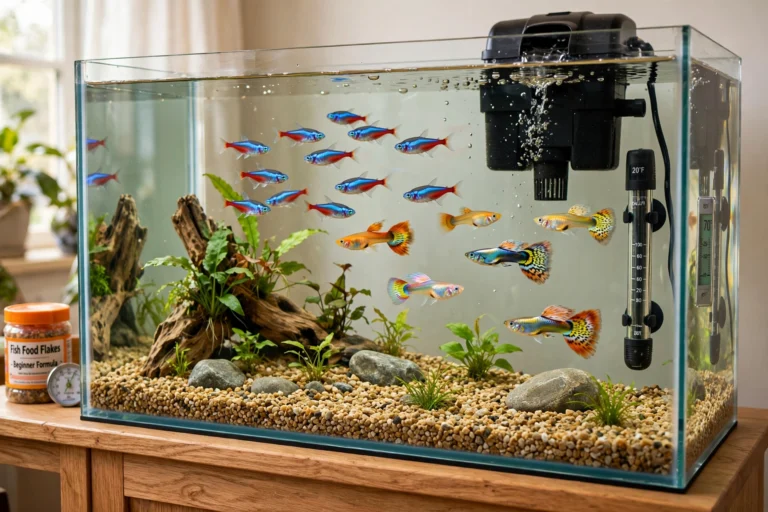
Filter: small sponge filter or nano hang-on-back with adjustable flow — gentle current is critical. Heater: 25–50W adjustable (preset heaters are unreliable). Light: small LED on a timer, 6–8 hours daily. Thermometer: get a glass or digital one, not the stick-on kind. Test kit: non-negotiable in a nano tank — ammonia spikes fast with so little water.
Why Live Plants Matter More in Nano Tanks
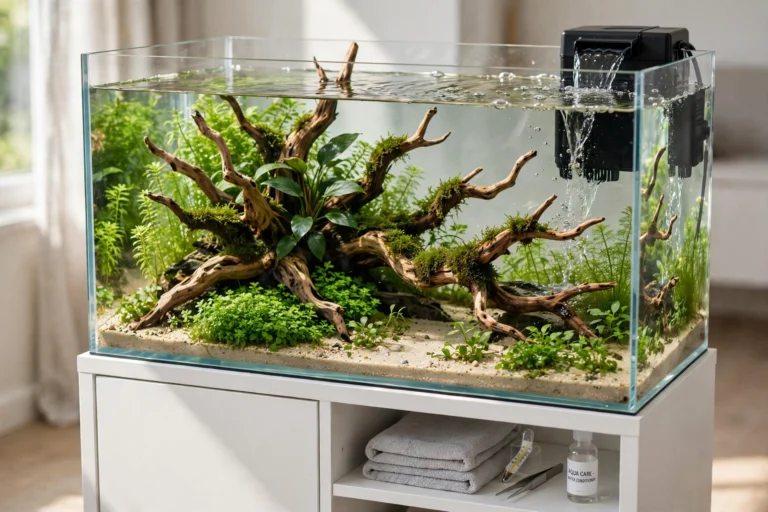
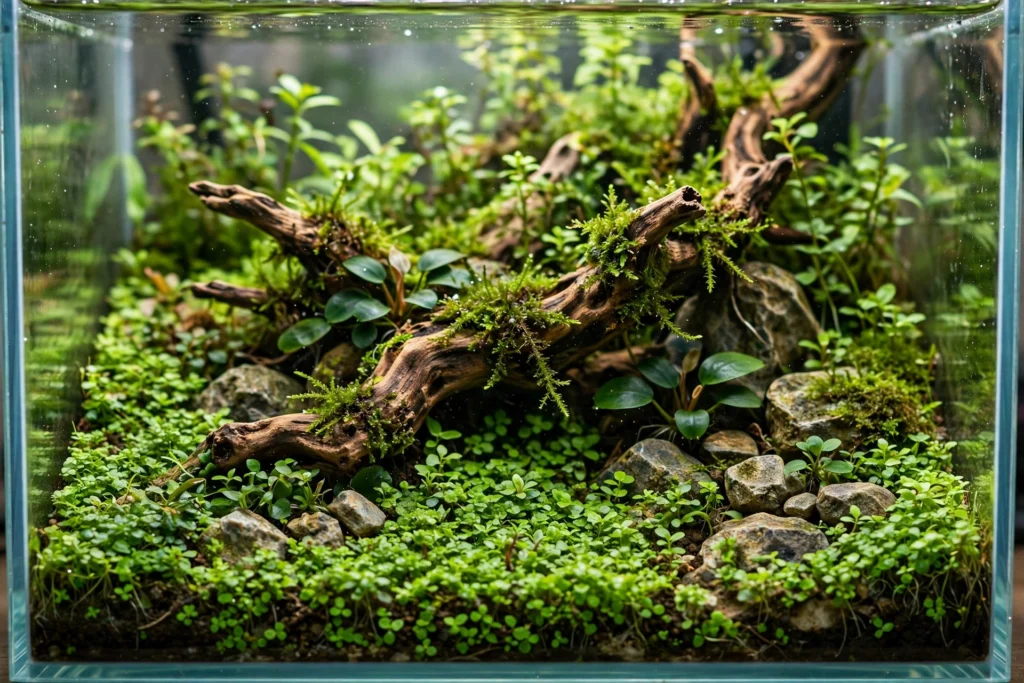
In a nano tank, plants are life support. Fast-growing plants like anubias, java fern, hornwort, and floating frogbit absorb ammonia and nitrate directly, buffering the parameter swings that crash small tanks. Start planted from day one.
Cycling a Nano Tank
Same nitrogen cycle, but dose ammonia lightly (target 1–2 ppm, not 4) since the small volume spikes faster. The cycle often completes in 2–4 weeks. Test every couple of days — small tanks move fast in both directions.
Mistakes That Crash Nano Tanks
Overstocking (the number one killer). Skipping the heater (small tanks lose heat fast). Overfeeding (one overfeeding fouls 5 gallons measurably). Too much light (algae loves nano tanks — timer at 6–8 hours). Infrequent water changes (25–30% weekly baseline). No lid (fish jump, water evaporates).
Nano Tank Maintenance Schedule
Daily: 30-second visual check. Weekly: 25–30% water change, glass wipe. Monthly: rinse filter sponge in old tank water, trim plants. About 20 minutes a week once established.
A nano fish tank rewards restraint: fewer fish, less food, less light, less fiddling. Master the small water volume and you’ll have a thriving ecosystem on your desk.