
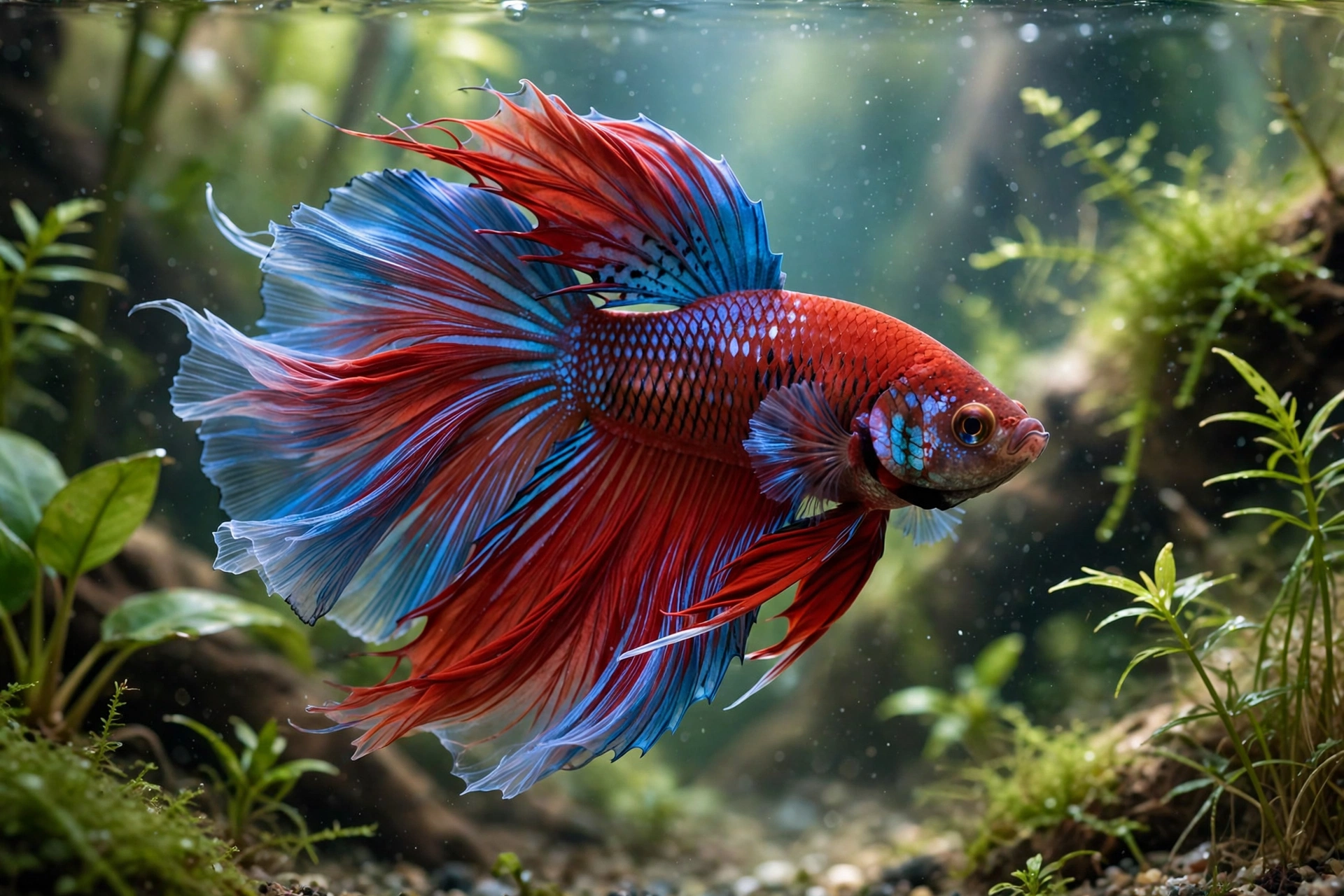
How Long Can Betta Fish Go Without Food? (And How Often to Feed Them)
Going on vacation? Missed a feeding or two? Every betta owner eventually wonders: how long
can betta fish go without food — and am I starving mine right now?
The short answer: a healthy adult betta can survive up to 2 weeks without food. But surviving isn’t thriving, and there’s a big difference between what a betta can endure and what you should actually do. Here’s the full picture.
How Long Can Betta Fish Go Without Food?
A healthy adult betta fish can go 10 to 14 days without eating and survive. Bettas are labyrinth fish native to slow-moving waters in Southeast Asia, where food isn’t always reliable — they evolved to handle lean periods.
But several factors change that number:
- Age: Young, growing bettas need food far more regularly than adults. Fry (baby bettas) can only go hours, not days.
- Health: A sick or stressed betta burns through energy reserves faster.
- Water temperature: In warm water (78–80°F), metabolism runs faster and reserves deplete quicker.
- Body condition: A well-fed betta with good reserves lasts longer than an underweight one.
Two weeks is the maximum survival window, not a feeding schedule. Regularly pushing it causes organ stress, weakened immunity, and a shorter lifespan.
How Often Should You Feed a Betta Fish?
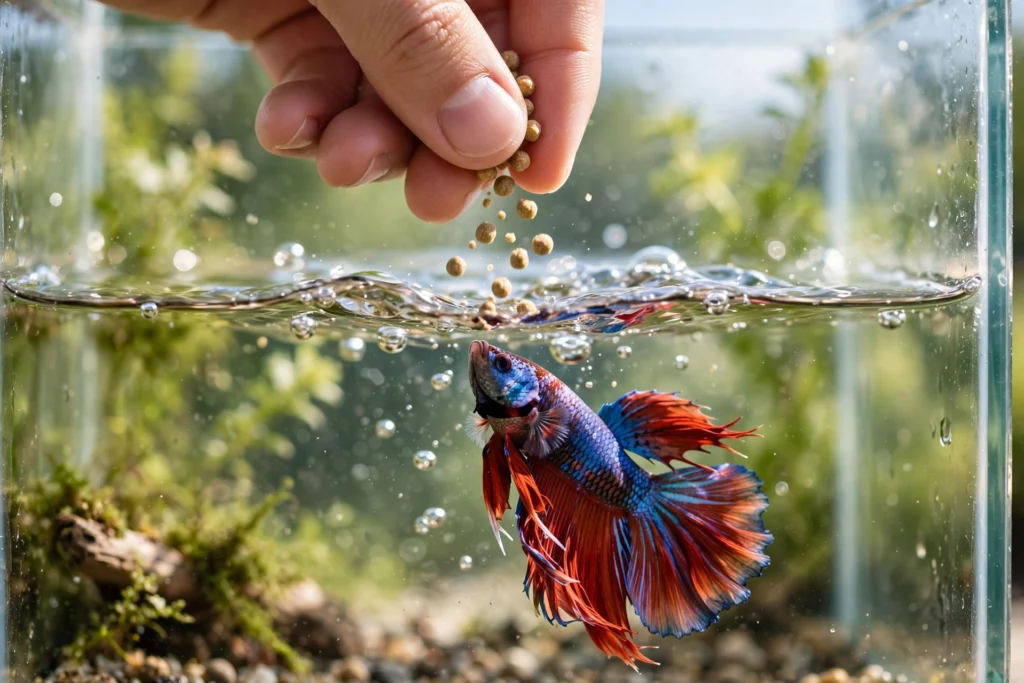
Feed your betta twice a day, morning and evening. Each feeding should be only what they can eat in about 2 minutes — for most bettas, that’s 2–4 small pellets or a small pinch of food per meal.
This is where most beginners go wrong, and it’s always in the same direction: overfeeding. A betta’s stomach is roughly the size of its eye.
Signs you’re overfeeding: uneaten food sinking to the bottom, bloated belly after meals, cloudy water between changes, your betta ignoring food.
What Do Betta Fish Eat?
In the wild, bettas are carnivores. Your tank betta needs the same high-protein diet:
- Betta pellets (staple — look for 35%+ protein, fish meal as first ingredient)
- Freeze-dried bloodworms or brine shrimp (2–3 times a week as a treat)
- Frozen foods like daphnia or mysis shrimp (excellent variety)
Avoid tropical fish flakes as a staple (too much filler) and any food where wheat or soy is the first ingredient. Pro tip: fast your betta one day a week — it prevents bloating and constipation.
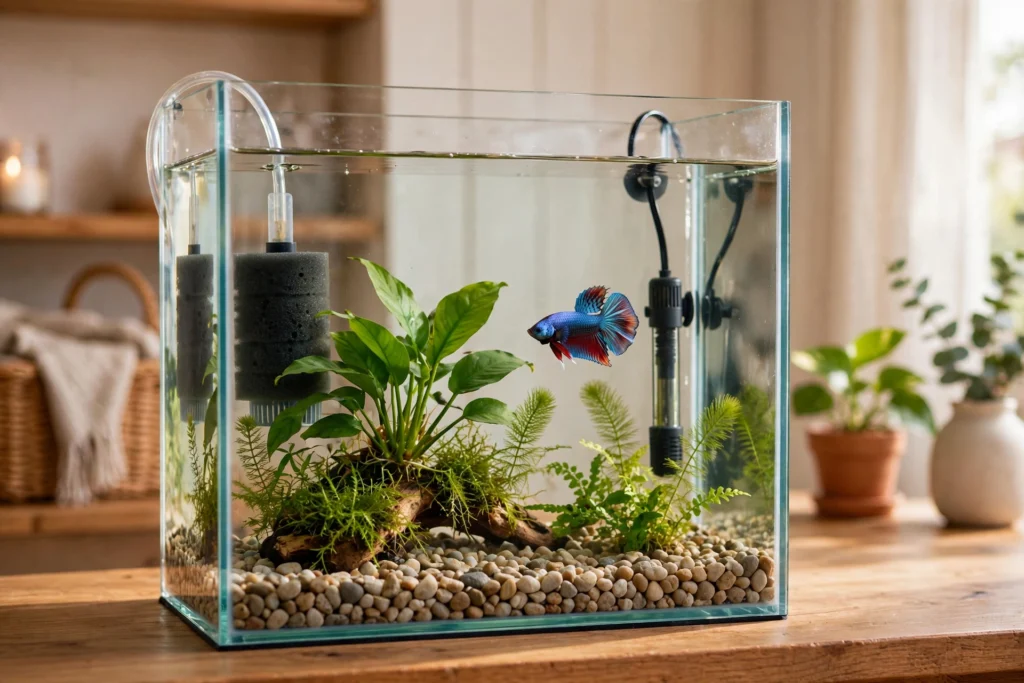
Going on Vacation? Here’s What to Do
For trips up to 7 days: do nothing special. Feed normally before you leave, do a water change, and your healthy adult betta will be fine.
For trips of 7–14 days: have someone check in once mid-trip if possible. Leave pre-portioned food in a pill organizer — never trust a well-meaning friend with the whole container.
What NOT to use: those white “vacation feeder” blocks — they foul the water and most bettas won’t eat them. Automatic feeders work for longer trips, but test them for days before you leave.
Why Is My Betta Not Eating?
Common causes: new tank stress (normal for 2–3 days), water too cold (below 74°F kills appetite), poor water quality (test for ammonia/nitrite), boredom with food (switch it up), or illness (refusal beyond 4–5 days with lethargy or spots needs investigation).
Frequently Asked Questions
How long can a betta fish go without food in a new tank? Same 10–14 days, but an uncycled new tank’s bigger danger is ammonia — test and change water as needed. Can bettas eat goldfish food? In a pinch yes, but it’s nutritionally incomplete for a carnivore long-term. Do betta fish need a filter? They survive without one, but a gentle filter keeps water far more stable.
Feed twice daily, skip one day a week, and don’t panic over a missed meal. The real danger was never the occasional fast — it’s the daily overfeeding most beginners do without realizing.