Wisconsin Dog Treats Recalled Over Salmonella: The Bully Bites Lots to Check
A Wisconsin dog treats recall pulled a small number of dog chews from stores in late 2025 after federal testing found Salmonella in the product. The recall is narrow, and that narrowness is exactly why it deserves a careful read: only four lots of one product are affected, only one bag size is involved, and the treats were sold in one state. If you bought bully bites in Wisconsin after late September 2025, the lot number on the bottom tag of the bag is the only detail that decides whether your bag is part of this recall.
The product is Nature’s Own Pet Chews Bully Bites, made by Best Buy Bones, Inc., of Mount Morris, Michigan. The company recalled four lots of the one-pound bags after samples collected by the U.S. Food and Drug Administration tested positive for Salmonella. No dog illnesses had been reported in connection with the recalled treats at the time of the announcement. The company stopped production and distribution of the product while the FDA and the company continued investigating what caused the contamination.
This is not a brand-wide recall, and it is not a warning about all bully sticks or all dog chews. It is a four-lot recall of a single product sold through retail stores in Wisconsin. The rest of this report lays out the exact identifiers to check, what Salmonella does to dogs and people, and what to do if you find a matching bag at home.
Which Dog Treats Were Recalled in Wisconsin
The Wisconsin dog treats recall covers exactly this product:
- Product: Nature’s Own Pet Chews Bully Bites
- Maker: Best Buy Bones, Inc., Mount Morris, Michigan
- Size: 16-ounce (one-pound) resealable plastic bags
- UPC: 739598900750
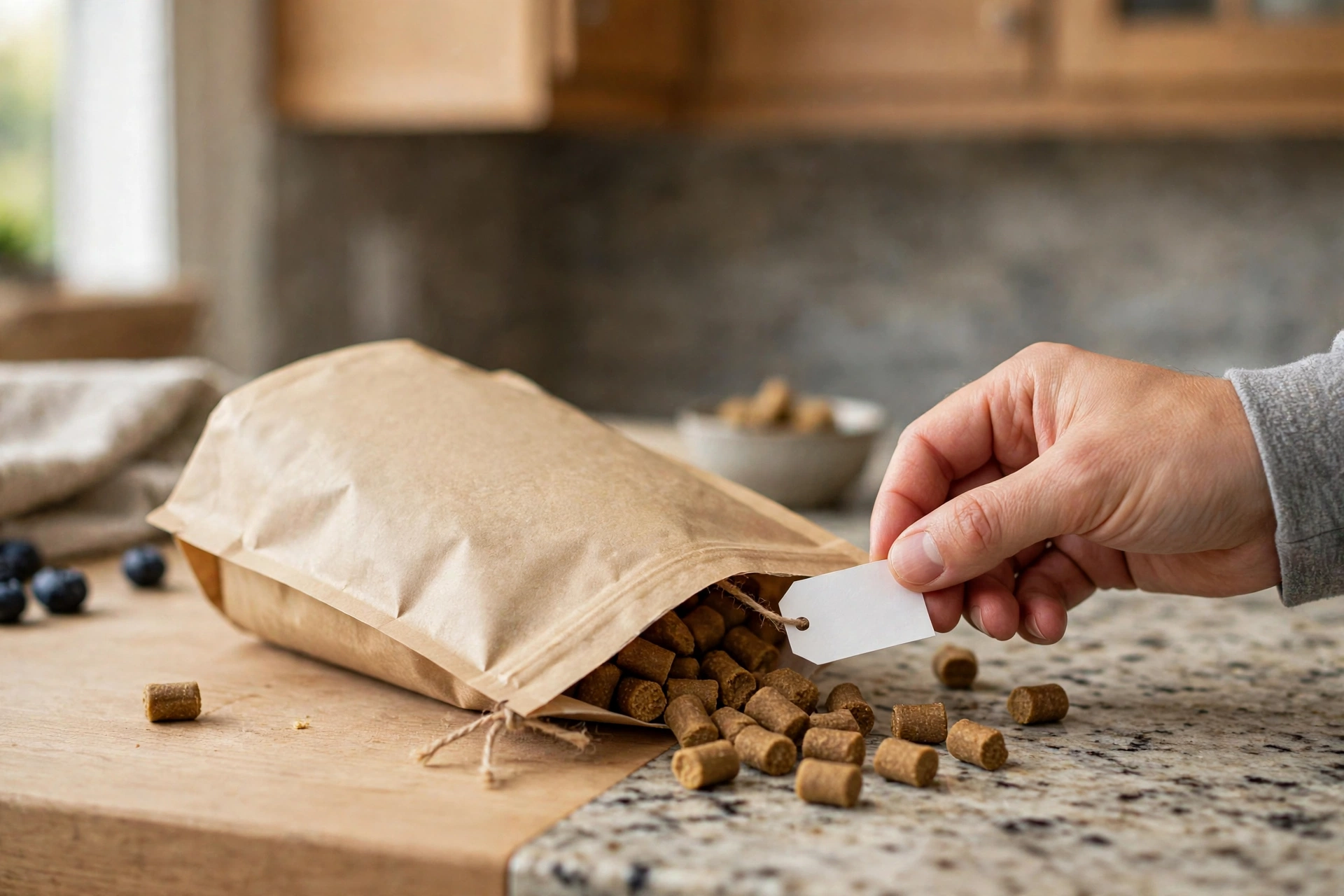
- Best by date: September 2027, printed on the bottom tag of the pouch
- Lot numbers: 19379, 19380, 19381, 19382
- Hazard: Potential Salmonella contamination
- Announcement: October 2025, following FDA sample testing
The recalled treats were distributed from Minnesota and sold through retail stores in Wisconsin after September 23, 2025. A total of 34 bags of the one-pound treats were distributed in that channel, according to the FDA notice. That small distribution number matters for two reasons. First, it means most dog owners will not have a recalled bag, even if they buy bully bites regularly. Second, it means the owners who do have one may not hear about the recall through a big national news cycle, because the footprint is so small. A quick check of the bag beats assuming either way.
Only bags matching all of the identifiers above are part of the recall: the Nature’s Own Pet Chews Bully Bites name, the 16-ounce bag, the UPC, the September 2027 best-by date, and one of the four lot numbers. A different brand of bully bites, a different size, or a different lot number is not included. If the lot number is smudged or unreadable, treat the bag as a match and stop feeding it. That is the cautious choice, and it costs nothing compared with the risk of feeding a contaminated chew.
How the Contamination Was Found
The recall began with routine federal testing, not with a report of a sick dog. The FDA collected and tested samples of Nature’s Own Pet Chews Bully Bites on September 11, 2025, and the samples tested positive for Salmonella. After those results, the company recalled the four affected lots, ceased production and distribution of the product, and cooperated with the FDA’s ongoing investigation into the source of the contamination.
That sequence is typical of how pet treat recalls work, and it is worth understanding because it explains why a recall can appear even when no pet has fallen ill. Salmonella testing of finished products catches contamination before illnesses pile up, and a voluntary recall at that stage is the system working as intended. It does not mean the risk is theoretical, though. Salmonella in a dog chew is a live hazard in the home, because dogs carry the chew around the house, drop it on floors, and leave bacteria on bowls, bedding, and hands.
The timeline also explains the gap between the sale dates and the announcement. The treats were sold in Wisconsin after September 23, 2025, and the recall was announced in early October 2025. A bag bought in that window could already be open, half-eaten, or stored in a treat jar by the time the news arrived. That is why checking bags already in the home matters more than watching for new shelf stock: the recalled bags are the ones already sold, not ones still sitting in a warehouse.
What Salmonella Does to Dogs
Salmonella infection in dogs does not always look dramatic, and that is part of the danger. Some infected dogs show clear symptoms, while others carry the bacteria and spread it without looking sick at all. Dog owners should watch for these signs after a dog has eaten a recalled treat:
- Lethargy or unusual tiredness
- Diarrhea, sometimes bloody
- Fever
- Vomiting
- Loss of appetite or decreased appetite
- Abdominal pain
Infected but otherwise healthy pets can be carriers, shedding the bacteria and infecting other animals or people in the household even while they seem fine. That carrier risk is why the advice for a recalled treat is to stop feeding it immediately, even if the dog has already eaten some and looks perfectly healthy. A healthy-looking dog is not proof that the bag is safe, and a dog that ate from a recalled lot should be watched for symptoms in the days afterward.
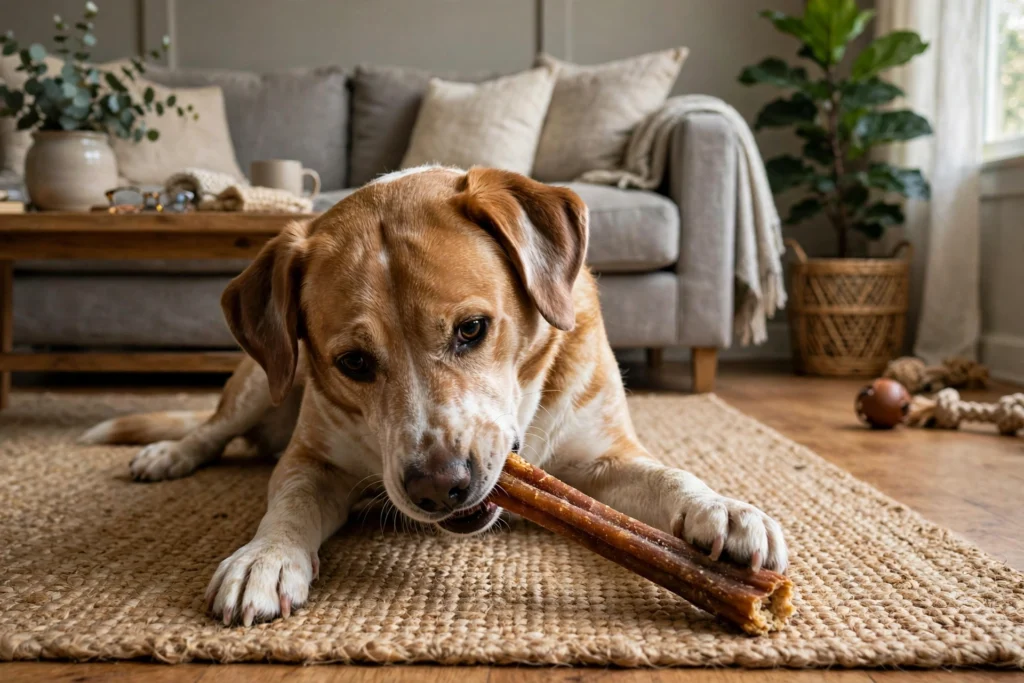
If a dog that ate the recalled treats shows any of these symptoms, the owner should contact a veterinarian. It helps to bring the bag, or at least a photo of the lot number and best-by date, so the vet can see exactly which product and lot the dog ate. Vets may want to test for Salmonella, and they can advise on cleaning up the home environment to protect other pets.
Puppies, older dogs, and dogs with weakened immune systems face a higher risk of serious illness from Salmonella, just as young children, older adults, and immunocompromised people do. In a multi-pet household, a recalled chew should be kept away from every animal, not just the dog that usually gets the treats, because a dropped chew or a shared water bowl can spread bacteria between pets.
What Salmonella Does to People
People handling contaminated pet treats face a real risk too, especially if they do not wash their hands or clean surfaces after contact. Salmonella infection in healthy adults can cause nausea, vomiting, diarrhea (sometimes bloody), stomach cramps, and fever. In rare cases, the infection can lead to more serious problems, including arterial infections, endocarditis, arthritis, muscle pain, eye irritation, and urinary tract symptoms.
Children, older adults, and people with weakened immune systems are particularly vulnerable. That vulnerability matters in a home with dog treats because treats are often handled by children, stored in kitchens, and left on floors where toddlers crawl. A bully bite is not just a dog’s snack; it is an object that moves through the shared living space, and Salmonella on its surface can transfer to hands, countertops, and other food.
Anyone who develops symptoms after handling the recalled treats should contact a healthcare provider. As with the veterinary advice, keeping the bag or a photo of its lot code helps, because it lets the clinician connect the illness to a known contaminated product rather than guessing at a cause.
What to Do If You Have a Recalled Bag
If your bag matches the recalled product, lot numbers, and best-by date, stop feeding it right away. The FDA notice advises consumers to return the treats to the store where they were bought, or to dispose of them in a way that ensures children, pets, and wildlife cannot reach them. Do not sell the treats, do not donate them, and do not feed them to any animal. A treat that is unsafe for one dog is unsafe for a shelter dog too.
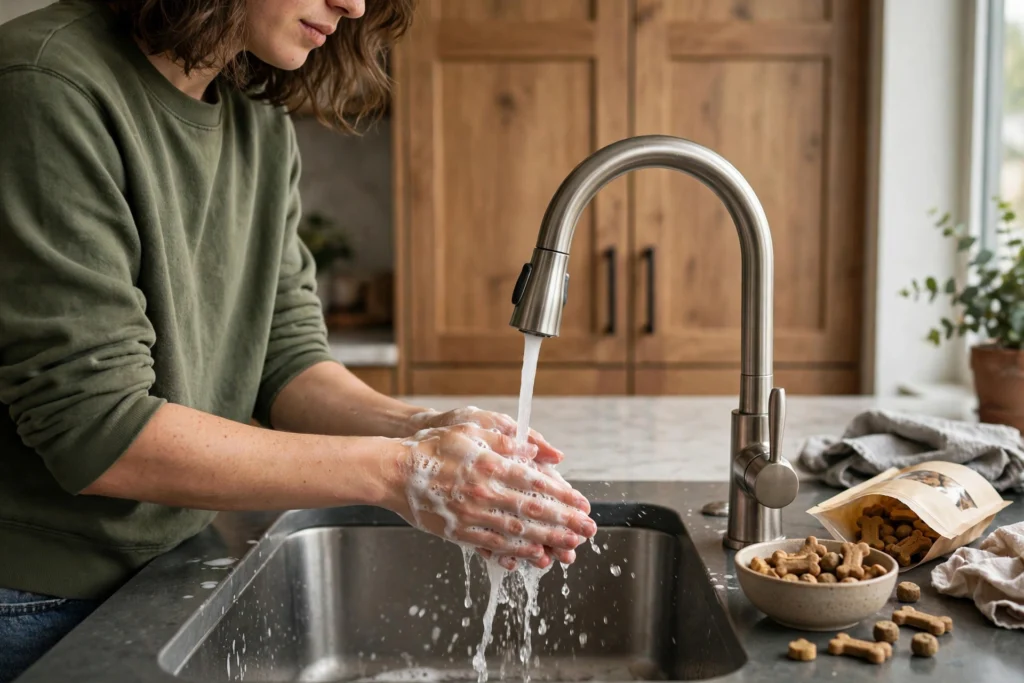
After removing the treats, clean up thoroughly. Wash your hands with soap and water after handling the product. Sanitize the dog’s bowl, treat jar, storage containers, and any surfaces the treats touched. Wash bedding or blankets the chew rested on. These steps sound basic, but they are the main defense against a household Salmonella spread, because the bacteria survive on surfaces and transfer easily to hands and other objects.
If the dog has already eaten some of the treats, do not panic, but do watch closely. Note the date the dog ate them, keep the bag for reference, and call the veterinarian if any symptoms appear. If no symptoms appear, the dog may still be a carrier for a time, so keep up the handwashing and surface cleaning, and keep other pets away from the dog’s bowls and bedding until a vet advises otherwise.
If your bag does not match the recall, no action is needed. Keep the lot-check habit, though. Recalls of this size are easy to miss, and the next one may involve a product sitting in your own pantry. Checking the lot code takes less than a minute, and it is the only check that counts.
Why Small Recalls Still Matter
A 34-bag recall can look trivial next to recalls involving millions of pounds of pet food, but small recalls carry their own risk. They get less coverage, so fewer owners hear about them. They involve products already in homes, not products that can be pulled from shelves before sale. And they involve treats, which are handled more casually than main meals: a chew is handed over, dropped, picked up, and stored without the same attention given to a bag of kibble.
The Wisconsin dog treats recall is also a reminder that geography in a recall notice is about distribution, not about where the danger stops. The treats were sold in Wisconsin, but a bag bought there can travel home to another state, be given as a gift, or be carried on a trip. The lot number, not the state line, defines the recall. Anyone holding a bag with one of the four lot numbers should act on it, wherever they live now.
For dog owners, the practical lesson is simple: keep treat bags until they are finished, so the lot code is available if a recall appears, and check the code against recall notices rather than relying on brand or product name alone. For the pet food industry, the lesson is that routine FDA sampling works. A positive sample in September became a recall in October, before any dog was reported ill. That is the outcome every recall system aims for.
Source: FDA company announcement, October 2025. For related coverage of Salmonella in dog treats, see our report on the Canada salmonella outbreak linked to dog treats.
How to Check Any Dog Treat Recall
The habit that protects a household is the same for every recall, large or small. First, find the lot code and best-by date on the package. Second, compare them exactly against the recall notice, including the UPC and bag size. Third, if anything matches, stop feeding the product and follow the return or disposal instructions in the notice. Fourth, clean hands, bowls, and surfaces. Fifth, watch the dog and contact a veterinarian if symptoms appear.
It also helps to keep a photo of each new treat bag’s lot panel on a phone. If a recall is announced weeks later, the photo lets an owner check without hunting for a bag that may already be thrown away. That single habit turns a confusing news story into a thirty-second answer.
The Wisconsin bully bites recall will not dominate pet news, and it should not. Four lots, 34 bags, no reported illnesses, and a fast voluntary recall are about as contained as a recall gets. But contained is not the same as irrelevant. For the handful of households holding one of those bags, the check matters, and for everyone else, it is a useful rehearsal of the habit that matters when the next recall is bigger.