Quest Cat Food Recall Expanded to All Products Over Low Thiamine
Go Raw LLC has expanded its Quest cat food recall far beyond the single lot it first pulled in February 2026. The company has now recalled additional lots of Quest Cat Food Chicken Recipe Frozen Diet and enacted a stop sale of all Quest products after testing found thiamine (Vitamin B1) levels below what a feline diet requires. If you feed your cat Quest — frozen or freeze-dried — this expansion changes what you need to check.
One illness was reported in connection with the original recall, and the affected cat recovered after veterinary treatment. The expansion followed further testing that found the same low-thiamine problem in more products.
What Changed in the Quest Cat Food Recall Expansion
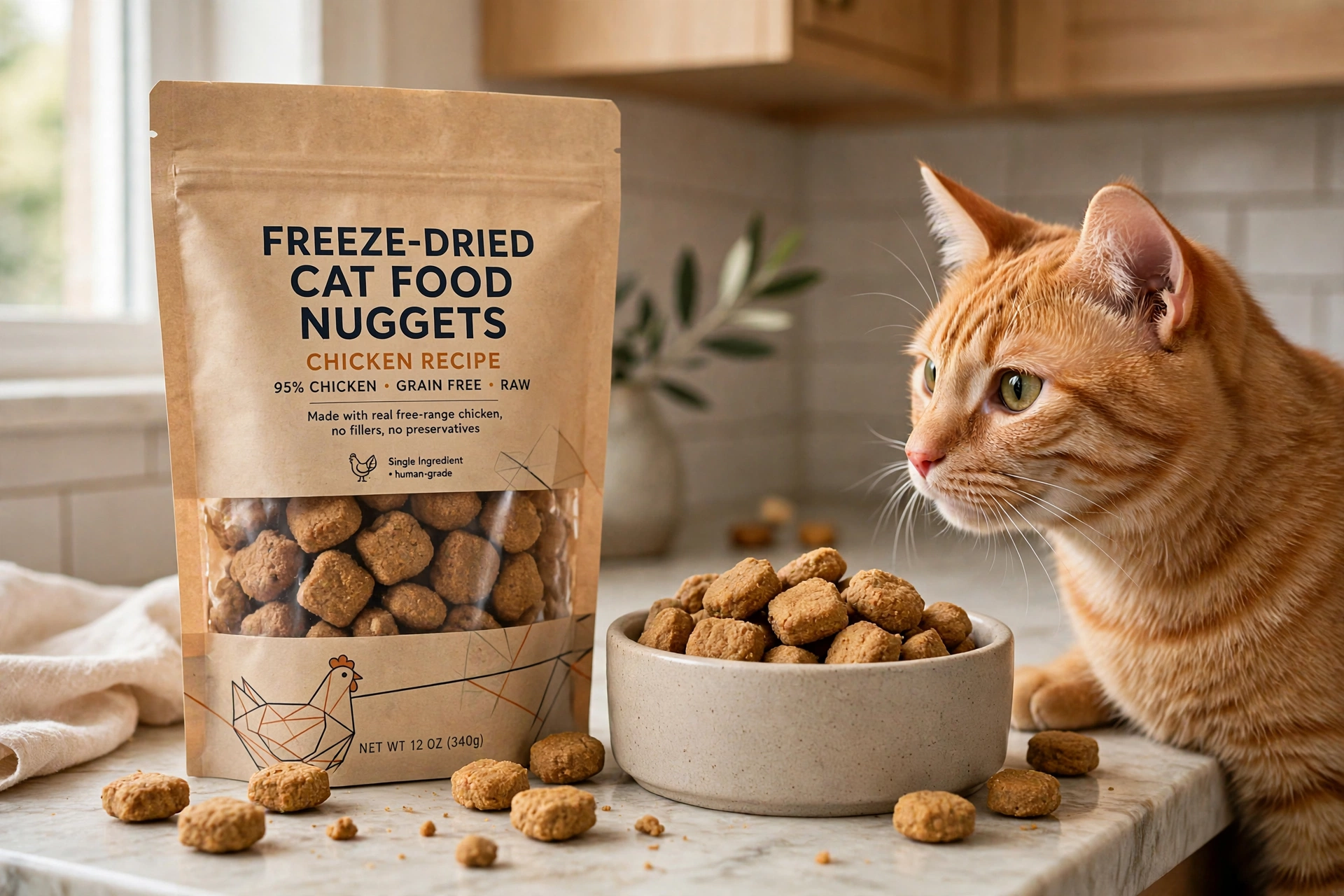
The original recall, announced February 17, 2026, covered a single lot of Quest Cat Food Chicken Recipe Freeze Dried Nuggets (10 oz bag, lot C25288, UPC 6-91730-18103-1, best by 10/15/2027), distributed across ten states. That recall followed a confirmed illness report and testing that revealed thiamine levels below the required amounts.
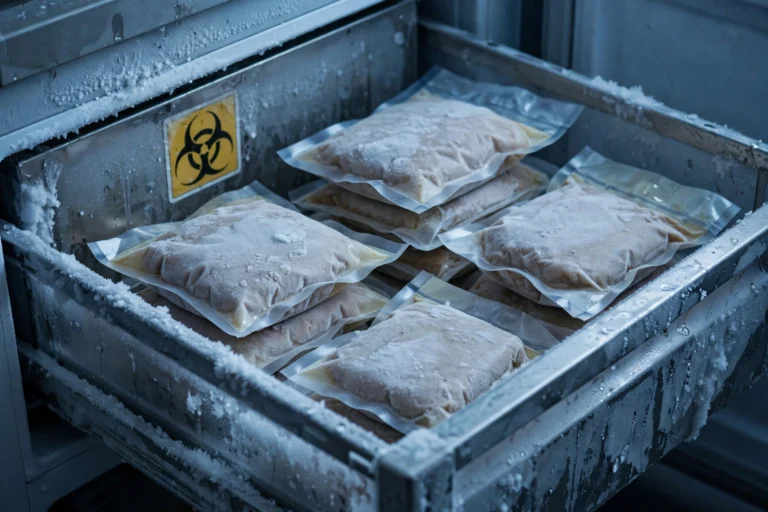
On February 26, 2026, Go Raw expanded the recall to include two additional lots of Quest Cat Food Chicken Recipe Frozen Diet:
- Quest Cat Food Chicken Recipe Frozen Diet (2 lb bag, lot MCD25350, UPC 6-91730-17104-9, best by 6/16/2027)
- Quest Cat Food Chicken Recipe Frozen Diet (2 lb bag, lot MCC25321, UPC 6-91730-17104-9, best by 5/17/2027)
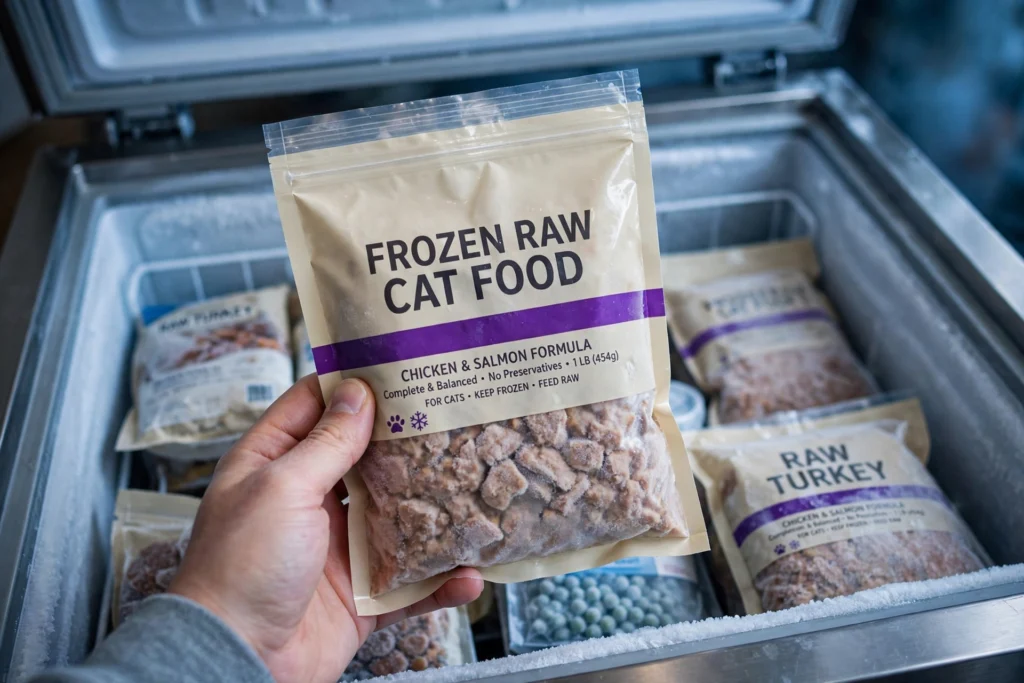
The frozen diet is sold in a beige zip-lock 2 lb bag with a purple stripe, and the lot code and best-by date are printed on the front of the bag. Note that this product is frozen — check your freezer, not just the pantry. The expanded recall also widened distribution to retail stores in CO, UT, WA, OR, PA, RI, MI, CA, TX, IL, GA, NC, SC, FL, MN, NY, OH, WI, ID, and MT, and the company stopped sale of all Quest products while it addressed the issue.
Why Low Thiamine Is Serious for Cats
Thiamine, or Vitamin B1, is not optional for cats — it is biologically essential, and cats cannot compensate for a deficiency on their own. Their bodies store very little of it, so a diet that consistently falls short can cause problems surprisingly fast.
Prolonged thiamine deficiency in cats can lead to gastrointestinal and neurological symptoms, including loss of appetite, vomiting, weakness, and in severe cases, seizures or loss of coordination. The risk grows with exclusive, long-term feeding of an affected diet — a cat that eats Quest as its main food every day is far more exposed than one that gets it as an occasional treat.
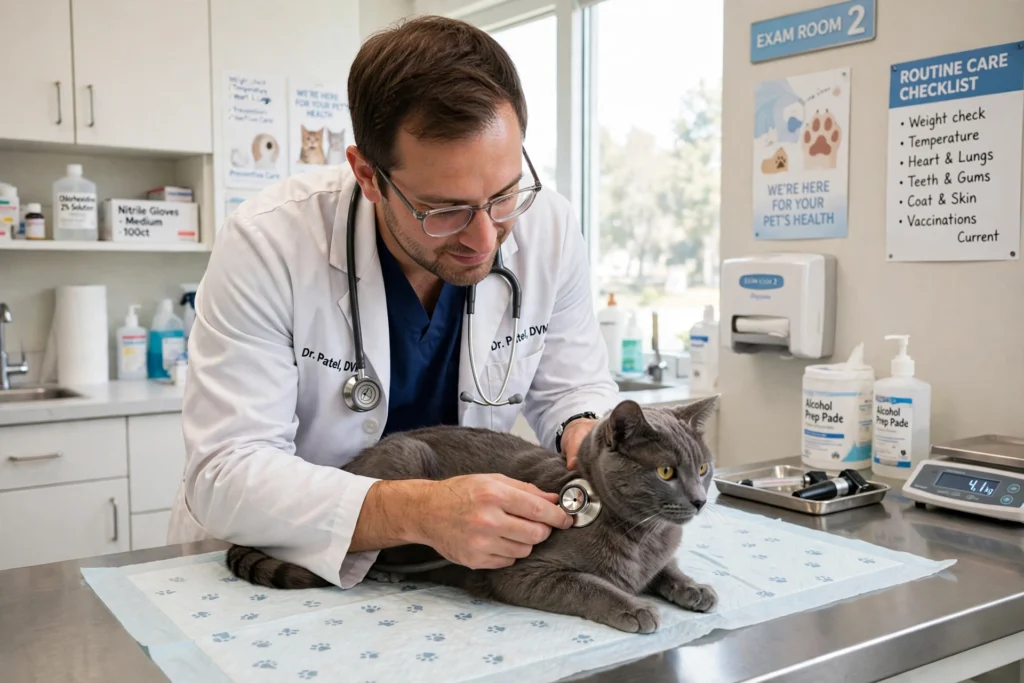
The good news is that thiamine deficiency is treatable when caught early. A cat showing symptoms after eating recalled Quest food should see a veterinarian promptly; thiamine supplementation typically reverses the deficiency if it has not progressed too far.
What to Do If You Feed Quest Cat Food
- Check every Quest product in your home — frozen and freeze-dried — against the lot codes and UPCs above, including bags already in the freezer.
- Stop feeding any matching product immediately, even if your cat seems fine.
- Return it to the retailer for a full refund; keep the packaging with the lot code visible.
- Watch for symptoms — appetite loss, vomiting, weakness, wobbliness, or unusual behavior — and call your veterinarian if any appear, mentioning the Quest recall by name.
- Do not switch to another Quest product while the stop sale is in effect; the recall now covers the brand’s full range, not just the named lots.
Future Quest formulas will include a natural Vitamin B complex to keep thiamine levels above nutritional standards, with reformulated foods expected in late March — but until the company confirms the new supply is in stores, treat all Quest stock as covered by the recall.
How a Single-Lot Recall Grows
Recalls often expand like this one: an initial finding in one lot triggers wider testing, which finds the same problem in more production runs. That is why the first announcement is rarely the last word — if you checked your Quest food in February and it was not in the original lot, check again now. The expanded lots, the stop sale, and the wider state list all came after that first notice, and a cat owner who stopped following the story in February would have missed them.
Source: Go Raw LLC recall notice via FDA, February 26, 2026