What Fish Is This? How to Identify Your Aquarium Fish
What fish is this? If you just brought home a fish on impulse, inherited a tank from someone, or simply forgot what the pet store label said, you’re not alone — misidentified aquarium fish are one of the hobby’s most common problems. And it matters: a fish’s care needs, adult size, temperament, and tankmate compatibility all depend on knowing exactly what species you’re keeping. Here’s how to figure out what fish this is, using the same clues experienced keepers use.
What Fish Is This? Start With These 4 Clues
Before guessing, observe your fish for a few minutes and note four things:
- Body shape. Is it torpedo-shaped (tetras, danios), deep-bodied and disc-like (angelfish, discus), elongated (loaches, kuhlis), or flat-bottomed (corydoras, plecos)? Body shape alone eliminates most wrong answers.
- Markings and color. Stripes, spots, iridescence, fin color — write down exactly what you see. “Blue stripe, red tail” is already enough to separate a neon tetra from a dozen lookalikes.
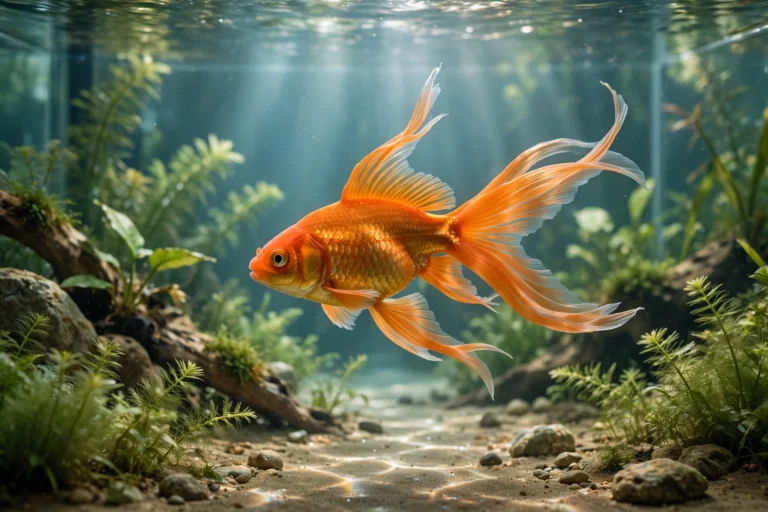
- Fins. Long flowing fins (bettas, fancy guppies), forked tails (danios), sucker mouths (plecos, otos), or barbels/whiskers (corydoras, loaches) are all diagnostic.
- Behavior. Does it school midwater, hug the bottom, gulp air at the surface, or claim a territory? Behavior confirms what appearance suggests.
Take a clear photo from the side in good light — you’ll need it for comparison, and it captures details your memory will blur.
The Most Commonly Confused Aquarium Fish
These are the mix-ups pet stores and beginners make constantly. Find your fish below.
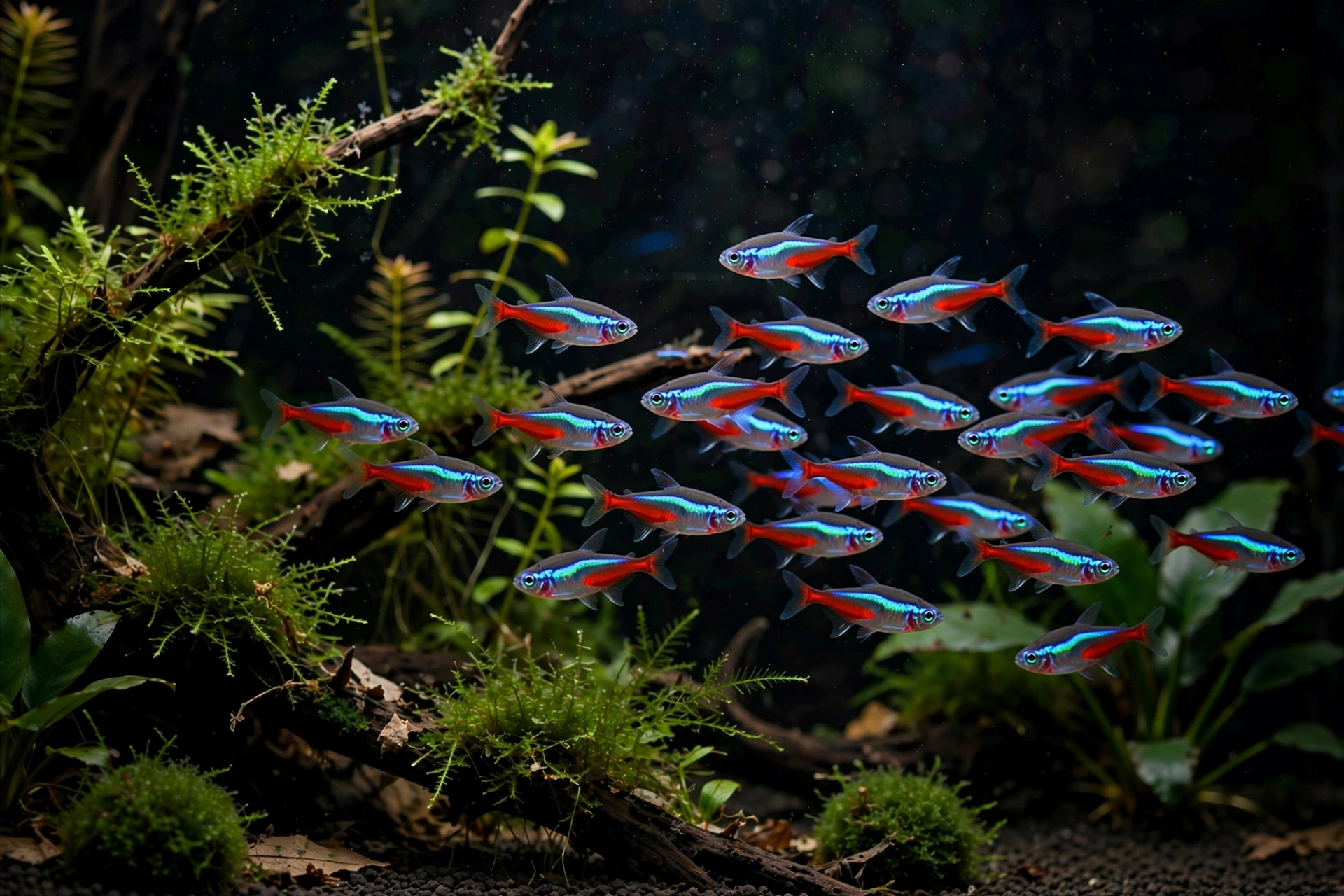
Neon Tetra vs. Cardinal Tetra
The classic confusion. Both are small, schooling, and sport a blue stripe — but look closer:
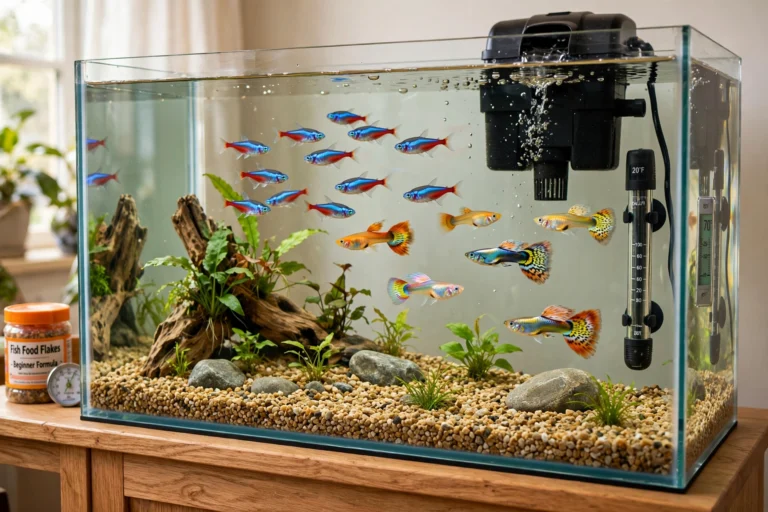
- Neon tetra: the blue stripe runs the full body length, but the red underside covers only the rear half. Slightly smaller, hardier, and cheaper.
- Cardinal tetra: the red underside runs the FULL length of the body, from gill to tail. Larger, more striking, and needs warmer, softer water.
If the red goes all the way forward, it’s a cardinal. This matters because cardinals prefer 78–82°F while neons are comfortable cooler.
Guppy vs. Endler’s Livebearer
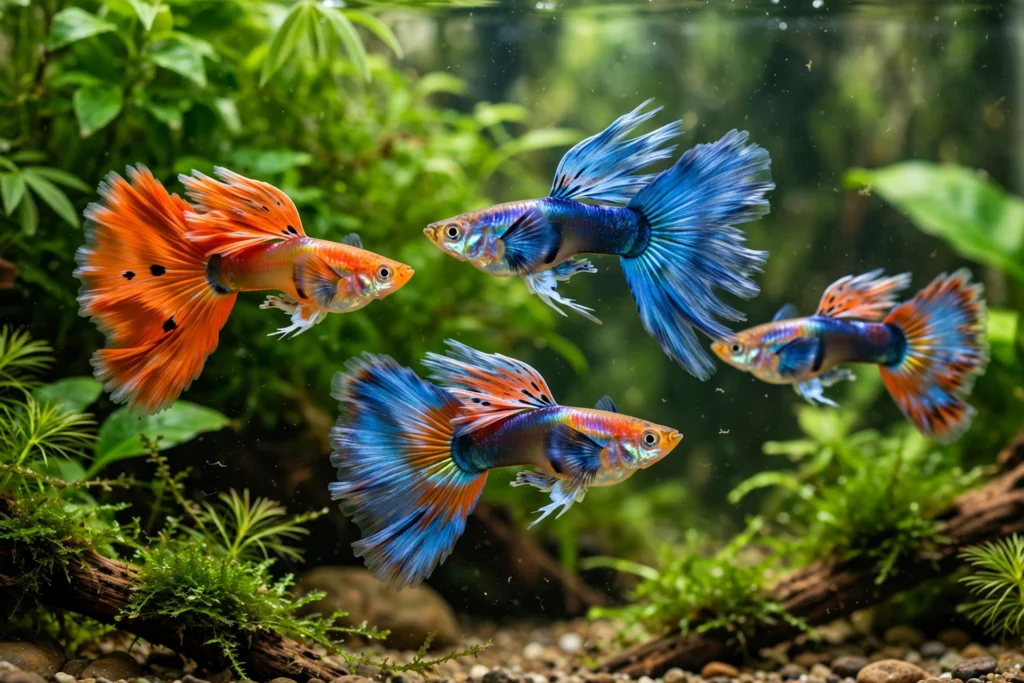
- Guppy: larger (males up to 1.5 inches), huge flowing tails in every color, calm swimmers.
- Endler’s: males stay under an inch, smaller tails, wilder neon patterns, far more active and skittish.
Endlers are often sold as “fancy guppies” or mixed into guppy tanks. Both are easy livebearers with similar care, but endlers breed even faster and jump more.
Molly vs. Platy vs. Swordtail
The livebearer trio confuses everyone:
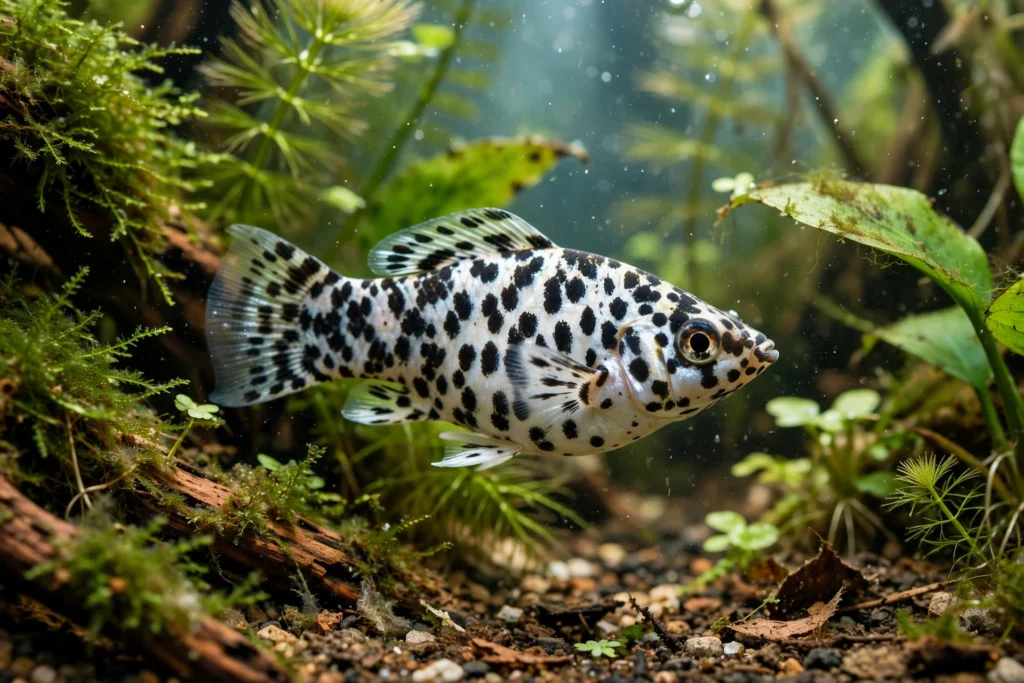
- Molly: the largest of the three (up to 4–5 inches), with a distinctive upturned mouth. Many varieties are black, dalmatian-spotted, or sailfin. Prefer slightly hard, even brackish-tolerant water.
- Platy: smaller (2–2.5 inches), rounder body, endless color varieties, no sword. The most peaceful and beginner-friendly of the three.
- Swordtail: males grow a long “sword” extension on the lower tail fin — unmistakable once you know it. Females look like large platies.
Zebra Danio vs. Leopard Danio
These are actually the same species — the leopard danio is just a spotted color morph of the zebra danio. Same care, same size, same hyperactive schooling behavior. If your “zebra” has spots instead of stripes, congratulations: mystery solved, nothing changes.
The “Algae Eater” Problem
“Algae eater” on a pet store tank is not a species — it’s a job description, and the fish behind the label matters enormously:
- Otocinclus: small (1.5 inches), peaceful, schooling. The good one — but needs groups of 6+ and established algae.
- Chinese algae eater: looks similar as a juvenile, but grows to 10+ inches, turns aggressive, and stops eating algae as an adult. The one to avoid.
- Common pleco: sold as a 2-inch baby, grows to 2 feet. If your “algae eater” is getting big fast with armored plates, it’s a pleco — and it needs a pond-sized tank or a rehoming plan.
Check the mouth: otos have small sucker mouths and stay tiny; Chinese algae eaters develop a distinctive protruding mouth with age.
Corydoras: Which One?
Cory cats come in dozens of species that all share the same whiskered bottom-dweller shape. The common ones:
- Bronze/albino cory: the standard pet store cory, 2.5 inches, bulletproof.
- Peppered cory: mottled dark pattern, prefers cooler water.
- Panda cory: white body with black eye-mask and tail spot — unmistakable.
- Pygmy cory: barely an inch, schools midwater unlike its cousins.
All need groups of 6+ and sand or smooth substrate — gravel wears down their barbels.
Behavior Clues That Narrow It Down
When two fish look alike, behavior breaks the tie:
- Schools tightly midwater, darts as a group: tetras, rasboras, danios
- Hugs the bottom, sifts substrate with barbels: corydoras or loaches
- Stays at the surface, gulps air: bettas, gouramis (labyrinth breathers), or hatchetfish
- Clings to glass and decor: plecos, otocinclus, hillstream loaches
- One fish chases everything else relentlessly: likely a territorial male — betta, dwarf gourami, or scarlet badis
- Constantly pregnant-looking females: livebearers (guppies, mollies, platies, swordtails)
Still Not Sure What Fish This Is? Get a Positive ID
If the walkthrough above didn’t settle it, don’t guess — a wrong ID leads to wrong care. Take your clear side-view photo to a dedicated local fish store (not a big-box pet aisle) and ask the livestock staff; they identify mystery fish daily. Fishkeeping forums and aquarium social media groups also run informal ID threads where experienced keepers weigh in within hours — post your photo with the fish’s size, where you got it, and how it behaves. Between a good photo and one knowledgeable keeper, nearly every pet-store fish gets named correctly.
What to Do Once You Know What Fish This Is
Identification is only useful if you act on it. Run this checklist for your newly identified species:
- Check adult size. The number one shock in this hobby is discovering your 2-inch purchase becomes an 8-inch adult. If the adult size exceeds your tank, start planning a rehome now — not when it’s stunted.
- Check group needs. Schooling fish kept solo get stressed, sick, and aggressive. If yours needs 6+ companions, that’s your next purchase.
- Check water parameters. Temperature, pH, and hardness ranges differ by species. A cardinal tetra and a white cloud minnow cannot both be comfortable in the same water.
- Check compatibility. That peaceful community fish might be a fin-nipper, or your “community” fish might eat anything that fits in its mouth.
- Confirm your tank is cycled for its bioload. A misidentified fish is often also an overstocked tank — run through how to cycle a fish tank if there’s any doubt about your water quality.
When Identification Matters Most
Some situations make ID urgent rather than casual:
- The fish is growing fast. Juvenile plecos, iridescent sharks, and bala sharks are sold tiny and become tank-busters. Identify early, rehome early.
- Aggression appeared suddenly. A fish that “turned mean” is often a misidentified territorial species, or a male of a species where males fight.
- You’re medicating. Treatments dose by species sensitivity — scaleless fish (loaches, many catfish) and invertebrates react badly to medications that tetras tolerate fine.
- You’re buying tankmates. Compatibility charts are species-specific. “Peaceful community fish” covers everything from neon tetras to angelfish, and those two should never share a tank.
“What fish is this” is the right question to ask before every other question in fishkeeping — because the answer determines the tank size, the water, the food, and the friends. Identify first, then build the care around the species. Your fish will tell you the rest.