How Much Does It Cost to Open a Restaurant in 2026? The $375,000 Median — and Why Owners Underestimate by 25%
First-time restaurant owners underestimate their opening costs by 25 to 35 percent, with the average overrun running $63,598 beyond the owner’s own projection. The most-quoted median cost to open an independent restaurant is $375,000 — but that figure comes from a 2018 survey, so treat it as a floor, not a 2026 price.
How Much Does It Cost to Open a Restaurant? The Short Answer
So, how much does it cost to open a restaurant in 2026? For most full-service concepts, expect $175,000 to $750,000 all-in, including the lease deposits, build-out, kitchen equipment, licences and a working-capital reserve.
The most-quoted figure is a median of $375,000 to open an independent restaurant, or about $113 per square foot and $3,586 per seat. It comes from a RestaurantOwner.com survey of more than 350 independent restaurant owners, and it is repeated in almost every 2026 guide because it is one of the few numbers based on a real survey of real owners rather than an estimate. Source: RestaurantOwner.com survey.
But here is the caveat that matters more than the number itself: that survey was conducted in 2018. Construction labour, commercial kitchen equipment and commercial rents have all climbed sharply since then, so the $375,000 median should be read as a floor for a modest independent restaurant in 2026, not as a price you can plan around today. Pair it with DoorDash’s September 2026 ranges instead: quick-service and fast-casual openings run $80,000 to $600,000, and full-service casual dining $175,000 to $1 million or more. Source: DoorDash for Merchants, September 2026.
The honest answer is that the cost depends on three things: the type of restaurant, the condition of the space, and the city. A small counter-service spot in a second-generation space in a mid-size market can open for well under $200,000, while a ground-up full-service restaurant in a major city can pass $2 million before the first guest sits down.
Restaurant Startup Costs by Type
The concept you choose is the single biggest driver of the total. A counter-service restaurant needs less dining-room build-out, fewer staff and a smaller kitchen than a full-service dining room, and the numbers reflect that. The table below gives the typical all-in range for each format, including build-out, equipment and first-year operating cash where noted.
| Restaurant type | Typical startup cost | Key cost driver |
|---|---|---|
| Quick-service restaurant (QSR) | $200,000–$400,000 | Small footprint and counter service keep build-out and staffing lean |
| Fast casual | $250,000–$500,000 | Mid-size dining room plus a full commercial kitchen |
| Full-service casual dining | $500,000–$2 million+ | Large dining room, full bar and a bigger front-of-house team |
| Fine dining | $900,000–$5 million+ | Premium build-out, high-spec kitchen and extensive staffing |
| Bar or gastropub | $200,000–$500,000 | Liquor licensing can add tens of thousands on its own |
Those ranges are planning bands, not quotes, and different sources count different things. DoorDash’s 2026 directional estimates tell the same story from a different angle: a small quick-service or fast-casual footprint runs $80,000 to $175,000, a medium one $175,000 to $350,000, and a large one $350,000 to $600,000. Full-service casual dining runs $175,000 to $400,000 for a small footprint, $400,000 to $650,000 for a medium one, and $650,000 to $1 million or more for a large one. Source: DoorDash for Merchants, September 2026.
If your concept is smaller than a full restaurant, the numbers drop fast — but this guide covers full restaurants only. For the smaller formats, see our breakdown of how much it costs to open a coffee shop and our guide to starting a food truck.
The Space You Choose Sets Your Budget
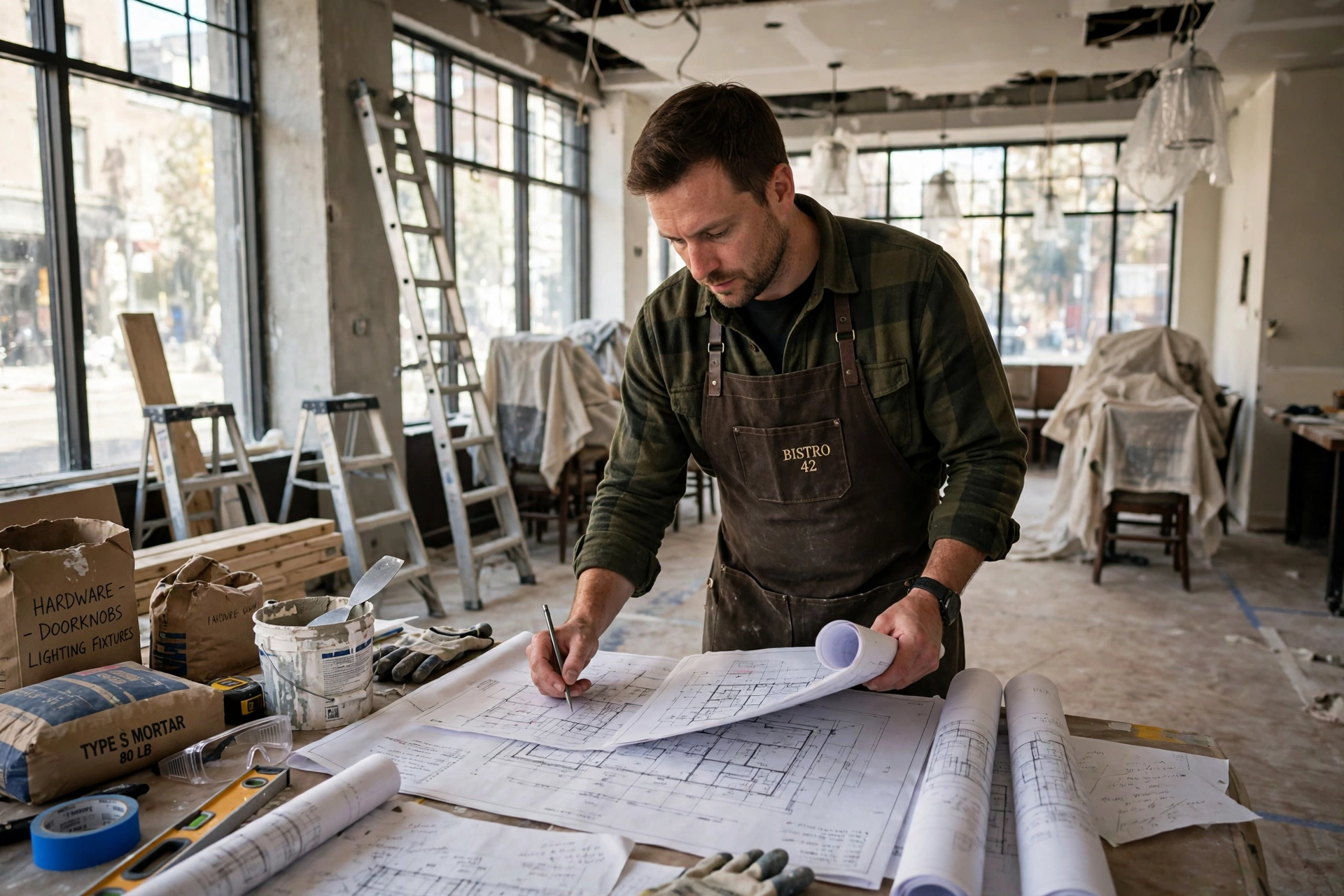
More than the menu, more than the location, the condition of the space decides what opening a restaurant costs. The same 2018 owner survey broke the median down by what the owner started with: remodelling an existing restaurant cost a median of $275,500, converting a space that was never a restaurant cost $425,500, and building new from the ground up cost $650,000 — before the cost of the land itself. Source: RestaurantOwner.com survey.
The gap between those three numbers is the gap between inheriting a working kitchen and building one from concrete. A second-generation restaurant space already has the expensive bones: commercial ventilation, a grease trap, gas lines, plumbing rough-in, electrical service sized for kitchen equipment and a walk-in cooler. Taking over a recently closed restaurant can save $50,000 to $200,000 against a conversion, because you are buying someone else’s sunk build-out at a discount.
Converting a retail shop or office into a restaurant is where budgets go to die. Commercial ventilation alone runs $15,000 to $60,000 installed, before the grease trap, plumbing, electrical upgrade and fire-suppression system. Build-out costs generally run $100 to $800 per square foot, and a full new build pushes $200 to $500 per square foot once land, architecture, engineering and site work are counted.
That is why experienced operators repeat the same advice: fall in love with a space that was already a restaurant, and walk it with a contractor before you sign the lease, not after.
The Full Cost Breakdown
A restaurant budget has about ten buckets, and the build-out is only the first. Here is what each one typically costs, using DoorDash’s 2026 planning ranges where available.
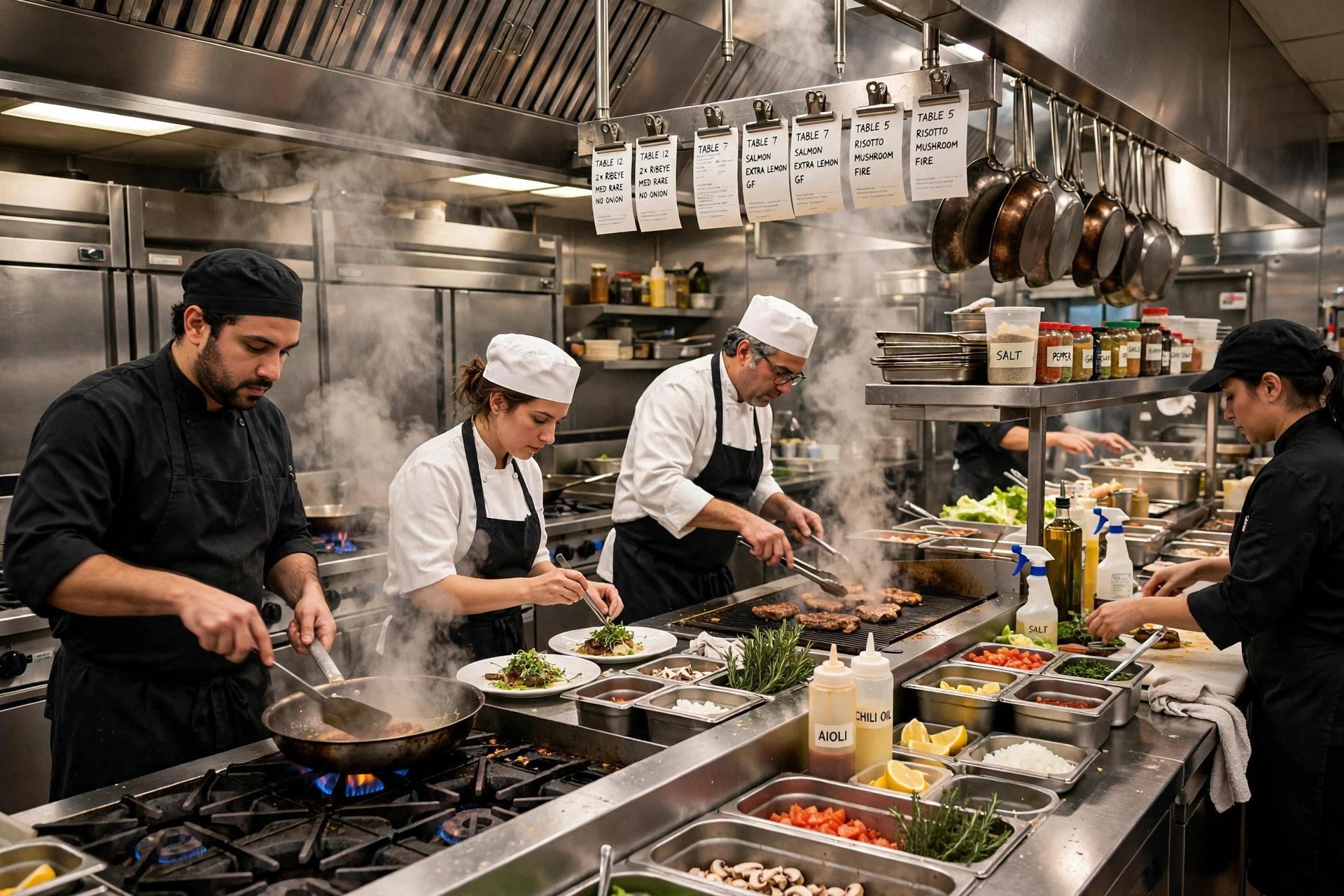
Lease, build-out and real estate: $100,000 to $500,000-plus. This is usually the single biggest line. Most landlords want a security deposit plus the first month’s rent upfront, and monthly rent commonly runs $2,000 to $12,000 or more depending on the city, size and foot traffic.
Kitchen equipment: $40,000 to $150,000. A full commercial kitchen — ranges, ovens, fryers, refrigeration, prep tables, dish machine and smallwares — is the second-biggest hard cost. Buying used equipment from restaurant auctions and going-out-of-business sales can cut $20,000 to $80,000 off this line, and it is one of the few places where saving money rarely hurts quality.
Furniture, fixtures and tabletop: $20,000 to $80,000. Tables, chairs, booths, lighting, tableware and decor. Fast-casual concepts sit at the low end; fine dining, with custom furniture and high-end tableware, sits at the high end.
Licences and permits: $2,000 to $25,000. Business registration, health permits, fire inspection, signage permits and food-handler certification. The wildcard is the liquor licence: in some states it costs a few hundred dollars, while in quota states such as Florida and New Jersey, buying one on the resale market can cost $100,000 or more. Check your state’s rules before you budget a single dollar for it.
POS system and technology: $2,000 to $15,000 upfront, plus $200 to $1,000 or more a month. Point-of-sale hardware, kitchen display systems, online ordering and reservation software. Delivery platforms deserve a line of their own in your operating budget: third-party delivery commissions run 25 to 30 percent of every delivery order.
Initial food and beverage inventory: $5,000 to $25,000. Two to four weeks of projected usage. A high-end restaurant with an extensive wine list can spend $25,000 or more before opening day; a small casual concept may spend closer to $5,000.
Pre-opening payroll and training: $5,000 to $30,000. Hiring and training the team before the doors open, including paid soft-opening shifts. Most restaurants budget labour at roughly 25 to 35 percent of revenue once operating, so this line is a preview of your largest ongoing cost.
Marketing and soft opening: $2,000 to $15,000. Signage, branding, a launch campaign and the cost of comped food during friends-and-family and soft-opening service. A soft opening is not a party; it is a paid rehearsal.
Working capital reserve: $30,000 to $150,000-plus. Three to six months of operating expenses held in an account the build-out cannot touch. This is the most underestimated line in the entire budget, and it gets its own section below.
Contingency: 10 to 15 percent of everything above. Add it last, on top of the total — not inside it. If your budget has no contingency line, it is not a budget; it is a wish.
Why Owners Underestimate by 25 to 35 Percent
First-time owners underestimate the total cost of opening a restaurant by 25 to 35 percent. Lightspeed puts the average overrun at $63,598 beyond the owner’s own projection — real money, and usually the exact amount that decides whether the restaurant survives its first year. Source: Lightspeed.
The overrun rarely comes from one big mistake. It comes from a dozen small ones that nobody budgeted for: the grease trap the health department requires, the electrical panel that cannot carry a second oven, the two extra months of rent while permits crawl through the city, the walk-in cooler that fails its first inspection. Every month of delay is a month of rent, loan interest and payroll with zero revenue coming in.
There is also a psychological trap. Owners budget for the restaurant they can picture — the dining room, the kitchen, the menu — and forget the restaurant they cannot see: the reserve that pays the staff while the dining room is still half empty in month three. The build-out is visible and exciting; the working capital is invisible and boring. Guess which one gets cut when the budget gets tight.
Working Capital: The Line That Closes Restaurants
Most first-year restaurant failures are cash-flow deaths, not concept deaths. The food can be good and the dining room can be full on Friday night, and the restaurant can still close — because the money ran out on a Tuesday in month four.
The rule every current guide agrees on is to hold three to six months of full operating expenses in reserve, separate from the build-out budget. For a mid-size restaurant spending $40,000 a month on rent, utilities, labour, food and overhead, that is $120,000 to $240,000 sitting untouched until it is needed. Most restaurants do not reach break-even until month three to six, and cash flow is negative in the months before opening, when training, hiring and inventory are already being paid for.
The stakes are high. The National Restaurant Association’s 2026 State of the Restaurant Industry report found that 42 percent of operators reported being unprofitable in 2025, even as the industry is projected to reach $1.55 trillion in sales in 2026. Source: National Restaurant Association, 2026 State of the Restaurant Industry report. A new restaurant enters that market with no regulars, no reviews and no rhythm — and the reserve is what buys the time to build all three.
How to Open a Restaurant With Less Money
A smaller budget does not mean a worse restaurant. It means a more disciplined one. These are the levers that actually move the number down.
Take over a second-generation space. As covered above, inheriting a former restaurant’s kitchen, ventilation and plumbing is the single biggest saving available — often $50,000 to $200,000 against a conversion.
Buy used equipment. Commercial kitchen equipment depreciates brutally. Restaurant auctions, closures and used-equipment dealers sell commercial-grade kit at a fraction of new prices, and a used range cooks exactly like a new one.
Start smaller than the dream. Open with a shorter menu, fewer seats and a smaller team, then expand as revenue grows. A phased opening can cut the initial build-out substantially.
Test the concept first. A pop-up, a market stall or a shared ghost kitchen lets you prove the menu and build a customer base before committing to a dining room.
Consider a franchise. Opening a franchise restaurant costs $200,000 to $500,000 for a typical quick-service concept, plus a franchise fee of $20,000 to $45,000 — but it buys a proven system, brand recognition and franchisor support that can lower the risk of the build-out. It is not cheaper, exactly, but it is more predictable, and for a first-time owner that predictability has real value.
Lease equipment instead of buying it. Leasing spreads the equipment cost over monthly payments and preserves cash for the working-capital reserve. It costs more over the life of the equipment, but cash in month one is worth more than cash in year three.
None of these shortcuts remove the need for a reserve. A cheaper opening with no working capital fails just as fast as an expensive one — it simply fails cheaper.
What About Funding?
Most first-time owners fund the opening with a mix of personal savings, a small-business loan and, increasingly, an SBA-backed loan. The SBA 7(a) loan programme is the most commonly used route for restaurant openings because it can cover leasehold improvements, equipment and working capital in a single loan. Whatever route you choose, lenders will want to see the same thing this guide is built around: a line-by-line budget with a contingency and a three-to-six-month reserve.
FAQ
How much does it cost to open a restaurant?
Opening a restaurant costs $175,000 to $750,000 for a typical full-service concept with a leased space, and the most-quoted median is $375,000 from a RestaurantOwner.com survey of more than 350 owners. A fast-casual or counter-service restaurant costs $250,000 to $500,000, and a fine-dining restaurant with a full build-out can cost $500,000 to $2 million or more. Those totals include lease deposits, construction and build-out, commercial kitchen equipment, furniture and fixtures, licences and permits, initial inventory, pre-opening payroll and working capital for the first three to six months.
What is the biggest cost when opening a restaurant?
The biggest costs are leasehold improvements and build-out, commercial kitchen equipment and the working-capital reserve — together they usually account for 70 to 80 percent of the total startup cost. Lease, build-out and real estate alone run $100,000 to $500,000 or more, kitchen equipment runs $40,000 to $150,000, and the working-capital reserve adds another $30,000 to $150,000-plus. The build-out is the most visible cost, but the reserve is the one owners most often forget — and the one that decides whether the restaurant survives its first six months.
How much working capital do I need to open a restaurant?
You need three to six months of projected operating expenses in working capital before you open. If your restaurant will cost $30,000 a month to operate, that means $90,000 to $180,000 in reserve beyond your build-out and equipment costs; at $40,000 a month, the reserve is $120,000 to $240,000. Most restaurants do not reach break-even until month three to six, and cash flow is negative in the months before opening while training, hiring and inventory are already being paid for. Undercapitalisation is the single most common reason new restaurants fail in year one.
How can I open a restaurant with less money?
You can open a restaurant with less money by taking over an existing restaurant space with equipment already in place, which saves $50,000 to $200,000 on build-out and equipment. Other proven routes include buying used commercial kitchen equipment, starting with a shorter menu and fewer seats and expanding as revenue grows, testing the concept as a pop-up or ghost kitchen first, and leasing equipment instead of buying it outright. Starting with less capital is possible, but you still need a working-capital cushion to survive the slow early months.