How Much Does It Cost to Start a Vending Machine Business in 2026? $3,000–$5,000 per Location
How much does it cost to start a vending machine business? $3,000 to $5,000 all-in for one location in 2026. That covers a professionally refurbished machine, first inventory, a card reader, permits, insurance and a small reserve. The machine alone is not the business.
Search the question online and you will find answers from $2,000 to $15,000. Most are technically correct — they are just answering different questions. One person quotes a used machine on a classifieds site. Another quotes a brand-new smart machine, delivered, installed, stocked and insured. This guide separates those numbers and prices every piece of a real launch.
How much does it cost to start a vending machine business?
How much does it cost to start a vending machine business? Starting one location at a time, budget $3,000 to $5,000 all-in per location in 2026. Buying an established route instead is a six-figure move, at roughly $300,000 for a real, running route. The gap is the difference between two different businesses that happen to sell snacks from the same kind of box.
The bootstrap door is the one most beginners walk through. You buy one machine, find one location willing to host it, stock it, and learn the trade with a few thousand dollars at risk. The route-buying door is the opposite: you walk in on day one with machines, locations and revenue already flowing, because you are buying someone else’s years of work. An experienced operator puts the price of a solid established route at around $300,000. That is a financing-or-capital play, not a bootstrap.
Vending machine startup cost breakdown
Here is what a single-location launch actually costs, item by item. The table is a budget to plan around, not a quote — your city, machine type and location agreement will move individual lines. What should not move is the structure: the machine is the biggest line, but never the only line.
| Startup cost item | Typical cost |
|---|---|
| Professionally refurbished machine | $2,000–$3,500 |
| New machine (standard snack or drink) | $3,000–$10,000 |
| New specialty or smart machine | $13,000–$16,000 |
| First inventory fill | $200–$1,000 |
| Card reader hardware | $200–$600 |
| Card reader installation | $50–$100 |
| Delivery and installation | $100–$500 |
| Permits and business registration | $50–$400 |
| Liability insurance (first year) | $200–$1,200 |
| Repair and operating reserve | $200–$750 |
| Lean launch total (refurbished machine) | $3,000–$5,000 |
| Balanced launch total (better used or entry-level new) | $5,000–$8,500 |
| Higher-end launch total (new machine, full setup) | $8,500–$15,000+ |
The lean launch and the higher-end launch differ by roughly $10,000, and almost all of that difference is the machine. A refurbished snack machine, a modest first fill and a card reader gets you trading for $3,000 to $5,000. A new machine with a bigger fill, fuller insurance and a fatter reserve pushes you past $8,500. Neither is wrong. What is wrong is budgeting for the machine and forgetting everything under it.
Reserve at least 20% of your budget for location fees, inventory and unexpected repairs. That is the operator rule the glossy guides skip. If your total budget is $5,000, roughly $1,000 stays untouched until the machine is earning. A budget that spends itself to zero on the day the machine arrives is not a launch plan. It is a gamble.
The machine itself: new vs refurbished
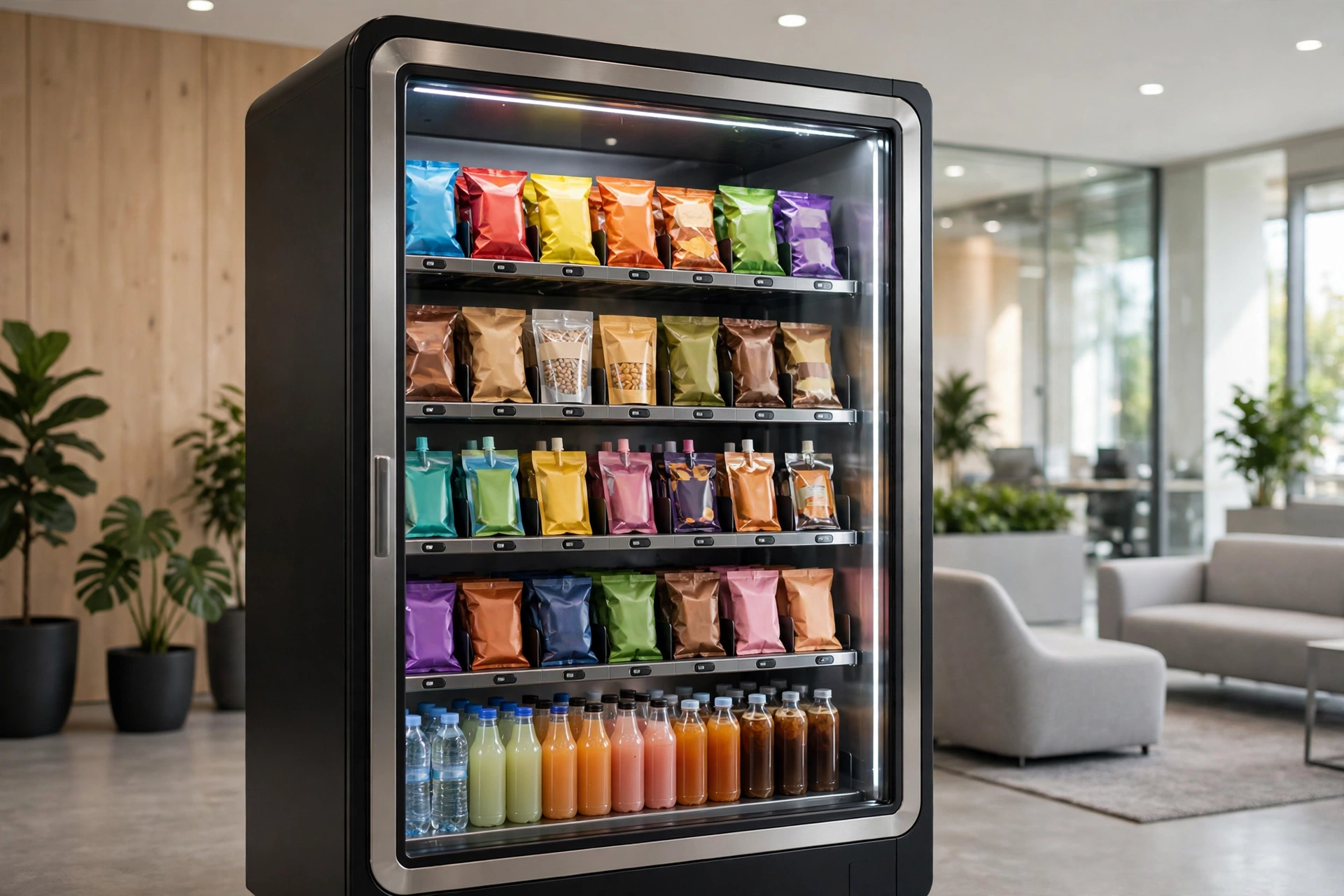
The machine is the biggest single cost, and it is where beginners lose the most money. New standard snack and drink machines typically run $3,000 to $10,000, depending on size, capacity and refrigeration. Specialty machines — refrigerated smart machines, elevator-delivery systems, large touchscreen units and custom kiosks — climb higher, and an experienced operator puts new machines at $13,000 to $16,000. For a beginner that is almost impossible to justify, because a new machine does not earn a cent more than a good refurbished one. It vends the same products to the same customers at the same prices.
Professionally refurbished machines are the smart play. A solid, reliable refurbished machine runs $2,000 to $3,500. Other 2026 guides put used machines slightly wider, at roughly $1,200 to $3,000 at the cheapest end and $1,500 to $4,500 for cleaner used units. Whichever range you use, the point is the same: a refurbished machine from a reputable seller, inspected before you buy it, vends product exactly as well as a new one and costs roughly a quarter of the price.
That does not mean buying the cheapest machine you can find. A bargain machine can become expensive fast if it has cooling problems, a faulty bill acceptor, damaged boards or worn vend motors. Trusted workhorse brands include Crane, Royal, Dixie Narco and BevMax. Let the location decide the machine type, not the catalogue: an office with 40 staff and no nearby shop wants snacks and drinks, while a gym wants drinks and healthier snacks.
First inventory: what the first fill really costs
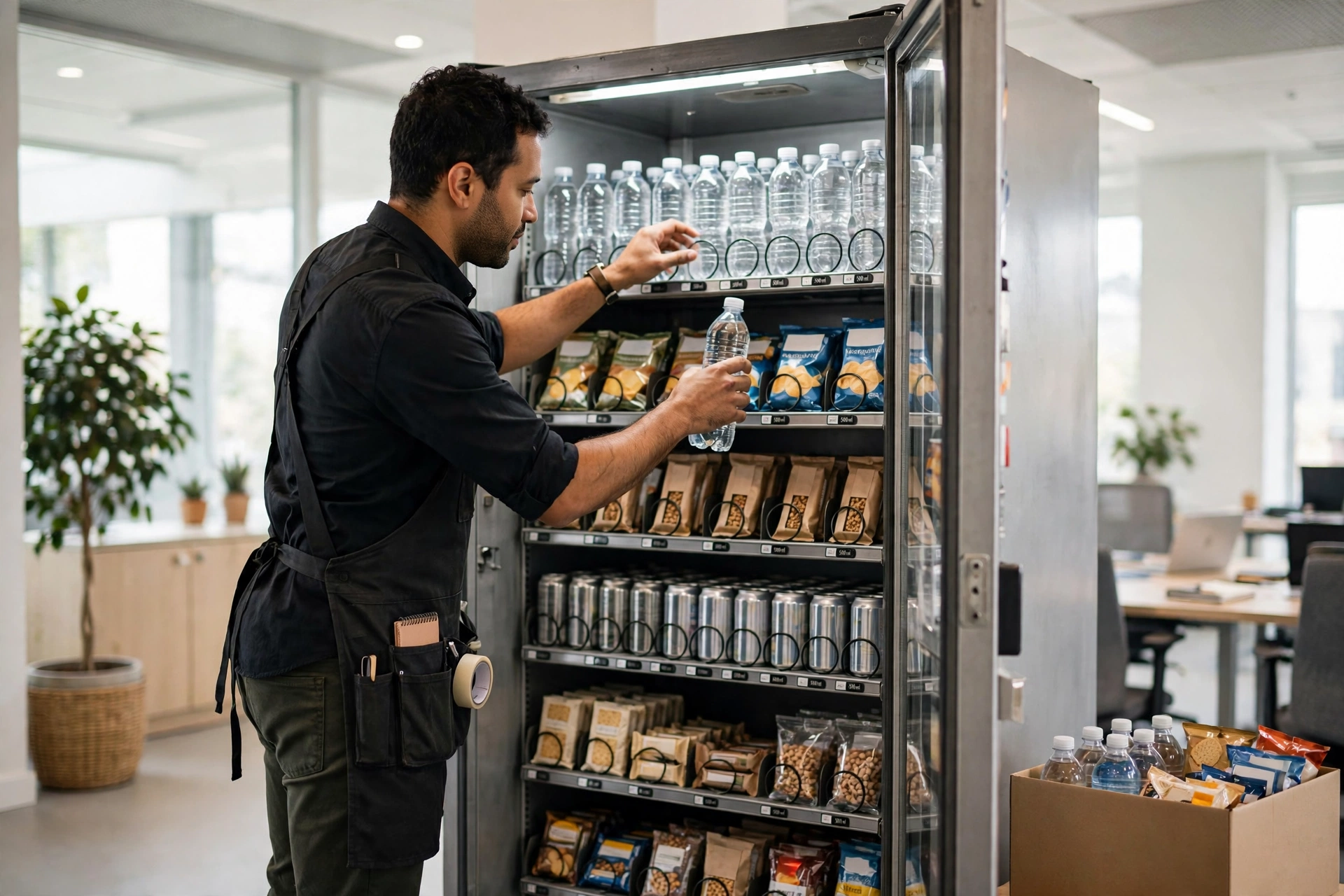
First inventory for one machine typically runs $200 to $1,000. A small snack machine with a modest fill sits near the low end, while a combo machine or a drink machine loaded more aggressively pushes toward the high end. The range depends on whether you are stocking snacks, drinks or both, how many selections the machine has, and whether you are loading light to test the location or filling it completely.
Load light on purpose for the first fill. You do not yet know what this location’s customers actually buy, and every slow-moving product on a shelf is cash sitting still. Buy a spread of proven sellers, watch what moves in the first two weeks, then double down on the winners and drop the losers. You also need money for the first restock, product swaps and price testing. A practical reserve of $200 to $750 for small fixes and operating cushion is smart, especially with used equipment. Source: operator guides, 2026.
Card readers and cashless payments
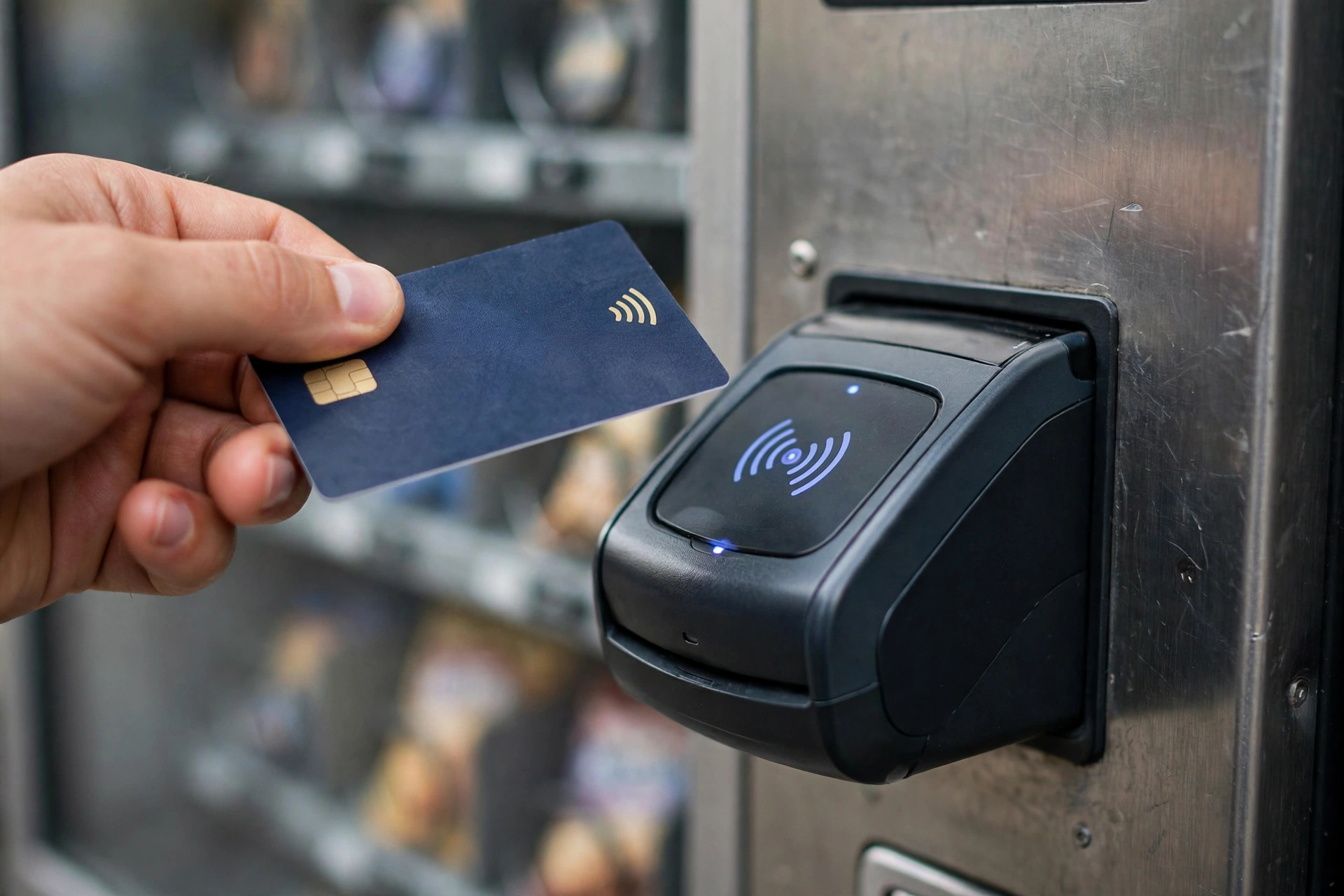
A card reader costs $200 to $600 per machine, plus $50 to $100 for installation, and then $10 to $30 a month in service and wireless fees, with transaction fees of roughly 3% to 5% on card sales on top. That is the honest price of taking cards in 2026, and it is no longer optional in most good locations. Customers expect to tap a card or a phone, and a cash-only machine in a modern office or gym loses sales every day to the machine down the hall that takes cards.
The monthly fee is the part beginners forget. The reader hardware is a one-off cost, but the $10 to $30 a month and the per-transaction percentage are forever costs, and they come out of every sale. That does not make card readers a bad buy — the extra sales usually cover the fees several times over — but it does mean the reader belongs in the operating budget, not just the startup budget. Our guide to credit card processing fees explains how those fees are structured for a small business.
Location fees and commissions: the cost nobody budgets for
Landing a location is the entire game, and it is a cost line many first budgets leave out completely. Expect to pay the location either a commission of 10% to 25% of gross sales, or a flat monthly rent of $100 to $500. Some prime spots demand both. Either way, the location gets paid before you do, and the commission comes off the top of every sale.
Do the maths before you sign anything. A machine doing $500 a month in gross sales at a 20% commission hands $100 a month to the location before product costs, card fees and your time. The same machine at a $200 flat rent hands over $200 whether it sells well or badly — worse in a slow month, better in a strong one. Neither structure is automatically better. A great location with a 25% commission beats a dead location at 0% every time, because 75% of real sales is worth more than 100% of nothing.
Getting the location is also the hardest part of the business. Operators with eight years in the trade say the same thing: the machines are easy to buy, the accounts are hard to land. The work is unglamorous — a real web presence so local businesses can find you, and a lot of cold calling. Budget time for that, not just money, because a machine with no location earns exactly zero.
Permits, licences and insurance
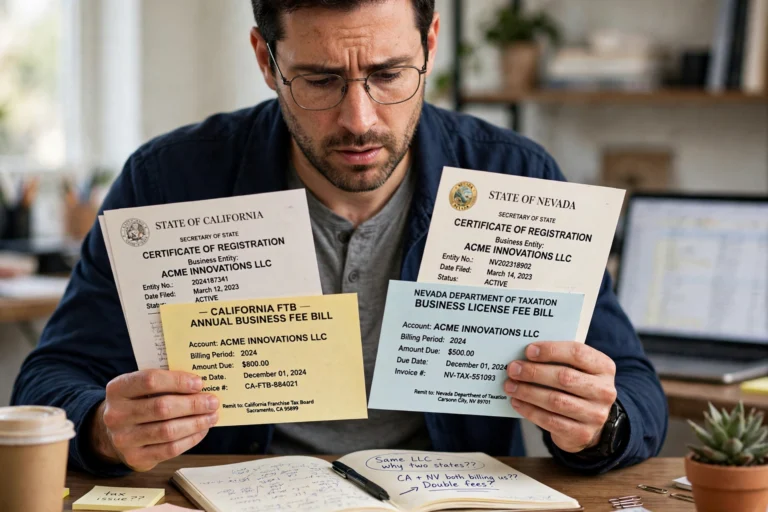
Permits and business registration typically cost $50 to $400, depending on your city, county and state. You may need a local business license, state business registration, a sales tax registration, a vending-specific permit, and food-related permits in some areas. The cost belongs in the budget before you place a machine, not discovered afterwards.
Liability insurance for a small vending operation commonly runs $200 to $600 a year at the low end, and $300 to $1,200 a year depending on coverage type, business structure, number of machines, location requirements and liability limits. Some locations will ask for proof of insurance before approving you. Our breakdown of general liability insurance costs for a small business covers the factors that move the price.
Delivery, installation and the repair reserve
Delivery and installation cost $100 to $500, depending on distance, machine size and site access. Some machines need a dolly and two people; specialty machines may need a freight elevator. Check access before delivery day, not on it. A refrigerated machine that cannot reach power is a very expensive cupboard.
Then there is the repair reserve, and this is where the 20% rule earns its keep. Set aside 5% to 10% of the machine’s cost annually for maintenance, and hold $200 to $750 for small fixes and operating cushion from day one, especially with used equipment. Bill validators jam, vend motors wear out and cooling units fail, and a machine that stops vending stops earning until it is fixed. The operators who survive are the ones who can pay for the repair the same week it happens.
Is a vending machine business passive income?
Is a vending machine business passive income? No — not when you run it yourself. Solo, it is constant, physical machine-filling: loading a van, driving a route, restocking machines and fixing faults. It only becomes hands-off once you are big enough to pay route drivers and managers, which is a whole different scale of business.
This is the myth that causes the most beginners to quit. The videos promise you set the machine up and forget it while money rolls in. The reality is relentless, repetitive machine-filling, and it is hard on your body. If you cannot do the physical grind and cannot yet afford to hire someone who can, this probably is not your business.
How many vending machines do you need to make a living?
How many vending machines do you need to make a living? Roughly 15 good locations can support you, depending on your cost of living — but location quality matters more than machine count. A handful of strong accounts beats a pile of weak ones.
The number is a marker, not a promise. Fifteen locations at $300 to $500 a month in gross sales each is $4,500 to $7,500 a month in revenue, and after product, commission, fees and running costs, a meaningful share of that can be income. But the spread is enormous. Below roughly fifteen locations, treat the business as a side hustle that is building. Above it, with good locations, it turns into a genuine full-time income. Most operators start with one machine and fund each new machine from the earnings of the ones before it.
Mistakes that blow the budget
Most vending failures are not bad luck. They are the same five budgeting mistakes, repeated by every new cohort of operators. The first is buying the machine before securing the location. The second is spending the whole budget on the machine and keeping no reserve, so the first breakdown or slow month ends the business. The third is skipping the card reader to save $200 to $600, then losing far more in sales from customers who do not carry cash. The fourth is signing a location agreement without doing the maths on the commission. The fifth is not tracking anything — no record of what each machine earns or what each product costs — until the business is a dozen machines deep and guessing.
Before you commit, compare vending with the other low-capital, food-adjacent startups. If you are weighing vending against a mobile food business, our guide to starting a food truck prices that option the same way, item by item. A food truck costs far more to start and earns more per sale.
FAQ
How much does it cost to start a vending machine business?
It costs $3,000 to $5,000 all-in per location to start a vending machine business in 2026, using a professionally refurbished machine. That covers the machine at $2,000 to $3,500, first inventory of $200 to $1,000, a card reader at $200 to $600, permits, insurance and a small operating reserve. Buying an established route instead costs roughly $300,000. Source: operator guides, 2026.
Is a vending machine business passive income?
No, a vending machine business is not passive income when you run it yourself. It is physical, repetitive work — loading a van, driving a route, restocking machines and fixing faults — every week. It only becomes hands-off once the business is big enough to employ route drivers and managers.
How many vending machines do you need to make a living?
You need roughly 15 good locations to make a living from a vending machine business, depending on your cost of living. Location quality matters more than machine count: fifteen strong accounts beat thirty weak ones, because the gap between a great location and a dead one is enormous.
Should I buy new or used vending machines?
You should buy used, professionally refurbished vending machines. A reliable refurbished machine costs $2,000 to $3,500, versus $13,000 to $16,000 for a new machine, and it earns exactly the same money. Buy from a reputable seller, inspect and test the machine before paying, and favour trusted brands such as Crane, Royal, Dixie Narco and BevMax.
A vending machine business is very doable — but do it with your eyes open. Budget $3,000 to $5,000 per location, buy a refurbished machine, keep 20% of your budget in reserve, put a card reader on the machine, and obsess over the location, because the location is the business. Track every machine from day one and add locations one at a time. Source: operator guides, 2026.