
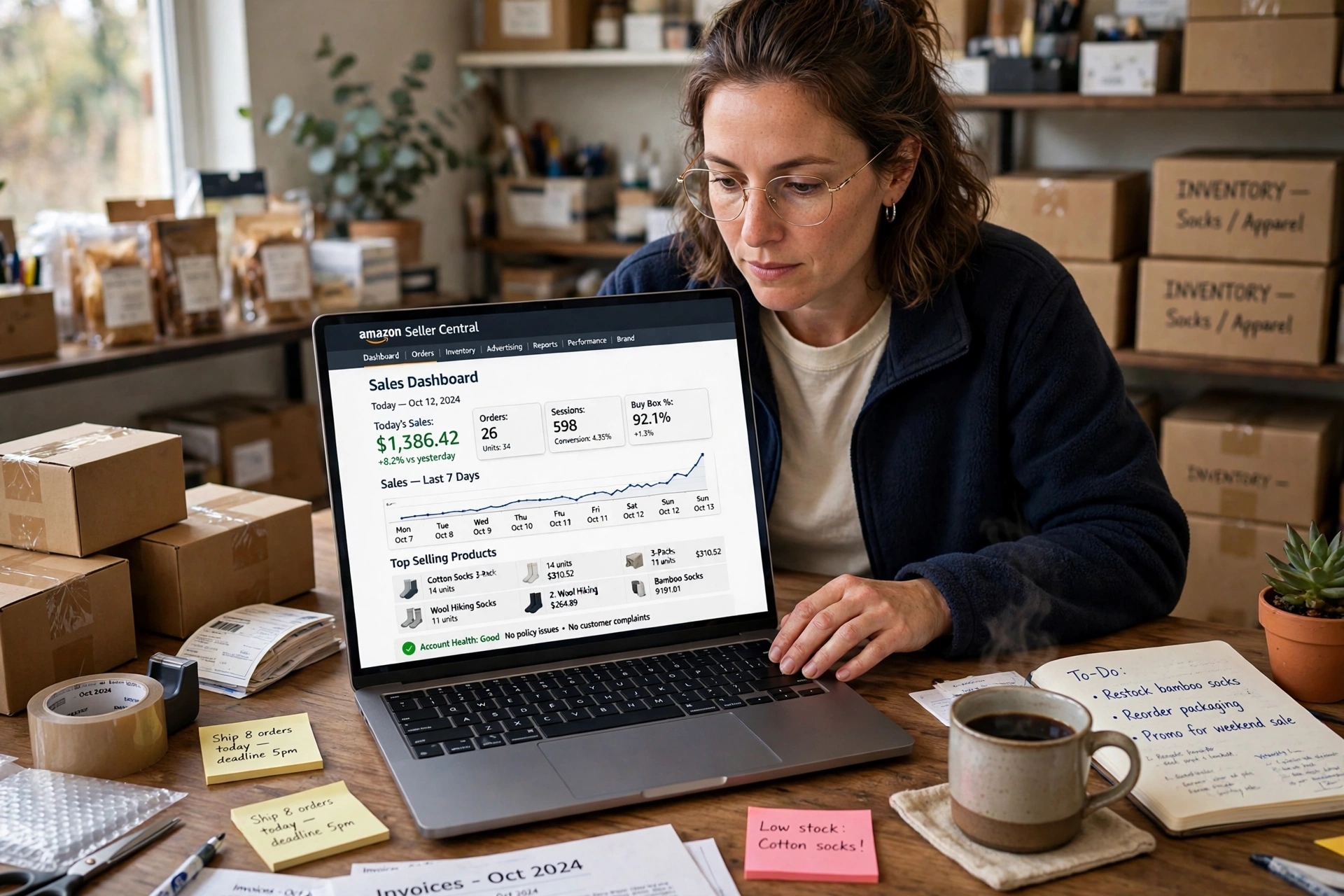
How Much Does It Cost to Sell on Amazon? Plans, Referral Fees and FBA Charges, With Real Examples
Amazon is the biggest shop window in American e-commerce, and it charges for the privilege in about a dozen separate fee lines, not one. A new seller asking “how much does it cost to sell on Amazon” usually gets a single number — $39.99 a month — and that number is the least important part of the bill. The real cost is a stack: a selling plan, a referral fee on every sale, and, if you use Fulfillment by Amazon, a fulfillment fee, a storage fee, and a surcharge that arrived in 2026.
For most FBA products, Amazon takes about 15 percent of the price plus a fulfillment fee — roughly a fifth of the sale on a $100 item, and closer to 40 percent on a heavy $40 one. This guide works through every fee line with 2026 figures, then runs two real products through the full stack so the numbers add up to a checkable total.
The Selling Plan: $0.99 a Sale or $39.99 a Month
Every seller picks one of two plans. The Individual plan has no monthly fee and charges $0.99 for every unit sold. The Professional plan costs $39.99 a month with no per-item fee. Both plans pay the same referral and FBA fees; the plan only changes the fixed part of the bill.
The break-even point is about 40 units a month. At $0.99 per item, 40 items cost $39.60 — just under the Professional subscription. At 41 items you have paid $40.59, which is more than the $39.99 subscription. Sell fewer than 40 units a month and Individual is cheaper; sell more and Professional pays for itself. Professional also unlocks advertising tools and bulk listing features that Individual sellers do not get, which is why almost every serious seller is on Professional even in a slow month.
The Referral Fee: Amazon’s Commission on Every Sale
The referral fee is the fee that matters most for almost everyone. It is a percentage of the total amount the buyer pays — item price plus any delivery charges and gift wrap, not counting the sales tax Amazon calculates — and it applies to every unit sold on either plan.
Rates run from 8 percent to 45 percent depending on category, and several categories use tiered pricing that changes at price thresholds. Most generalist categories — Home and Kitchen, Toys and Games, Sports and Outdoors, Office Products, and the catch-all “Everything Else” — pay 15 percent. Computers and Consumer Electronics pay 8 percent. Amazon Device Accessories pay 45 percent. Most categories also carry a minimum referral fee of $0.30 per item. Media products — Books, DVDs, Music, and Video Games — add a $1.80 variable closing fee on top of the referral fee.
Referral rates were frozen in 2025 and did not change in 2026, which is one of the few parts of the fee stack that stayed still. But the fee is charged on the total the shopper pays, including shipping you charge, so a product with paid shipping costs you more in referral fees than the same product with free shipping at the same item price.
FBA Fees: What Amazon Charges to Store and Ship
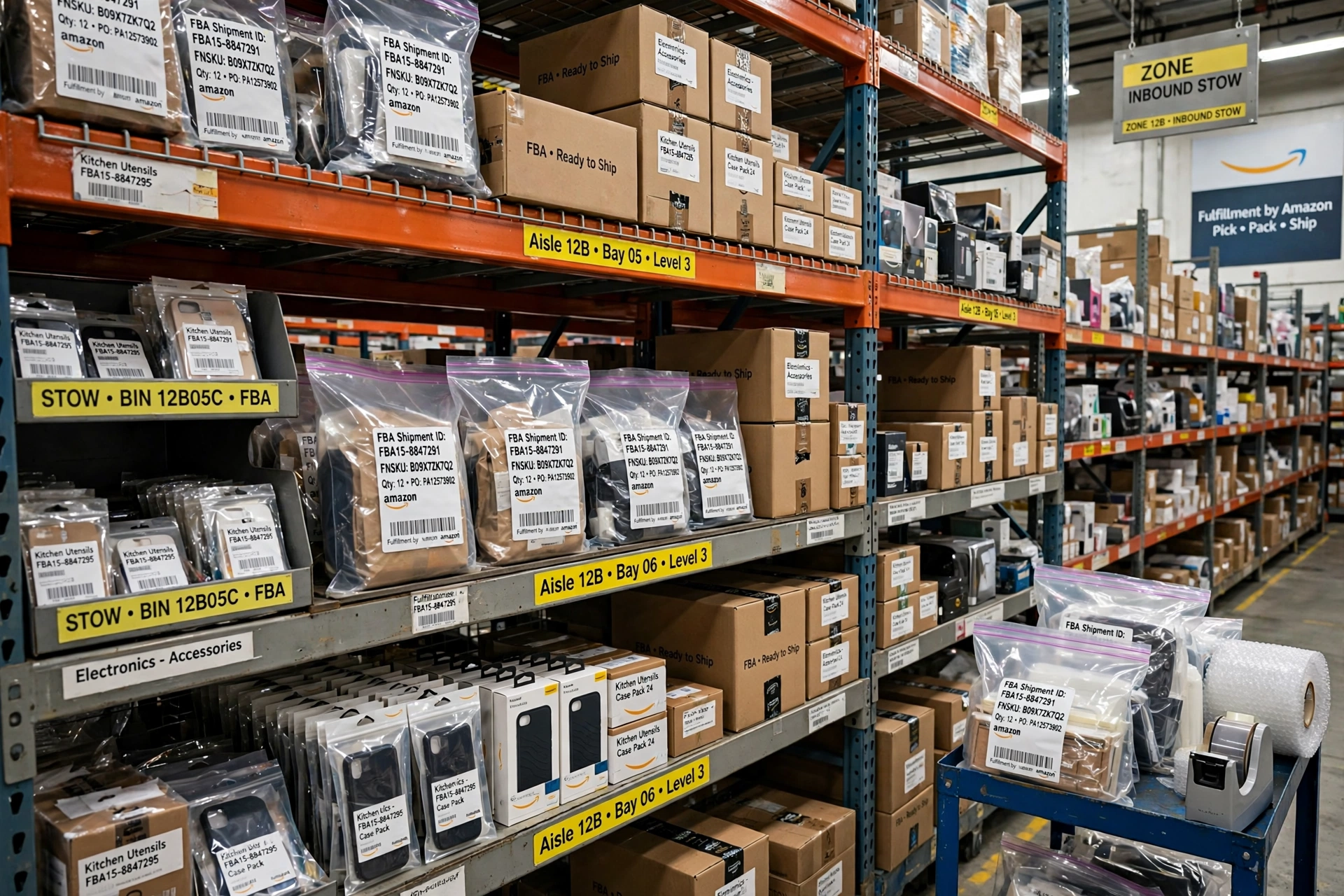
If Amazon stores and ships your product, you pay a fulfillment fee on every unit sold, on top of the referral fee. The FBA fulfillment fee varies by the item’s category, size, and weight, and starts at about $2.43 per unit in 2026 for a small standard item of two ounces or less priced under $10. A small standard item priced between $10 and $50 costs $3.32, and over $50 it costs $3.58. Larger and heavier items climb from there — a large standard item of 1.5 to 2 pounds costs $5.69 in the $10 to $50 band.
Amazon raised FBA fees by an average of $0.08 per unit in January 2026, which it puts at under half a percent of an average item’s selling price, and it promised no new FBA fee types in 2026. The biggest 2026 change to the rate card was a new Small Bulky tier for products 18 to 37 inches on the longest side or weighing 20 to 50 pounds.
Then there is the surcharge. Starting April 17, 2026, Amazon adds a 3.5 percent fuel and logistics-related surcharge to FBA fulfillment fees in the US and Canada. That surcharge is not included in the published rate card figures, so every fulfillment fee in the table above costs 3.5 percent more in practice.
Storage is a separate monthly charge: $0.56 to $2.40 per cubic foot per month, depending on size tier and season, with higher rates in the October to December peak. On top of that, up to five conditional surcharges can trigger: excess returns, low inventory levels, single-warehouse shipments, long-term storage, and non-SIPP bulky packaging. Most new sellers will never see most of these, but the returns surcharge is the one to watch — a product with a high return rate pays extra on every unit.
The 2026 Changes, in One Place
Three changes landed in 2026 that a seller pricing products today needs to know. First, FBA fees rose by an average of $0.08 per unit from January 15, 2026, with at least 90 days’ notice. Second, the 3.5 percent fuel and logistics surcharge arrived on April 17, 2026. Third, Amazon changed its payment timing: from March 12, 2026, funds for FBA orders are held until seven days after delivery confirmation, not after shipment — so cash arrives about a week later than it used to. Peak-season FBA rates run from October 15, 2026 to January 14, 2027, and holiday rates add roughly $0.30 per unit to the non-peak fulfillment fee.
None of these changes is large on its own. Together they mean a product priced in 2025 is earning a little less per unit in 2026, and a seller who has not repriced since last year is absorbing the difference.
The Worked Examples: A $25 Sale and a $100 Sale
Example one: a $25 kitchen gadget, about a pound, sold through FBA on the Professional plan, outside the holiday peak. The referral fee is 15 percent of $25, which is $3.75. The FBA fulfillment fee for a small standard item in the $10 to $50 band is about $5.30. The 3.5 percent surcharge on that fulfillment fee adds about $0.19. The Professional plan costs $39.99 a month spread across everything you sell, so it does not belong in a per-unit figure. Total to Amazon on this sale: about $9.24, or roughly 37 percent of the price — before the cost of the product itself, shipping it to Amazon, and storage.
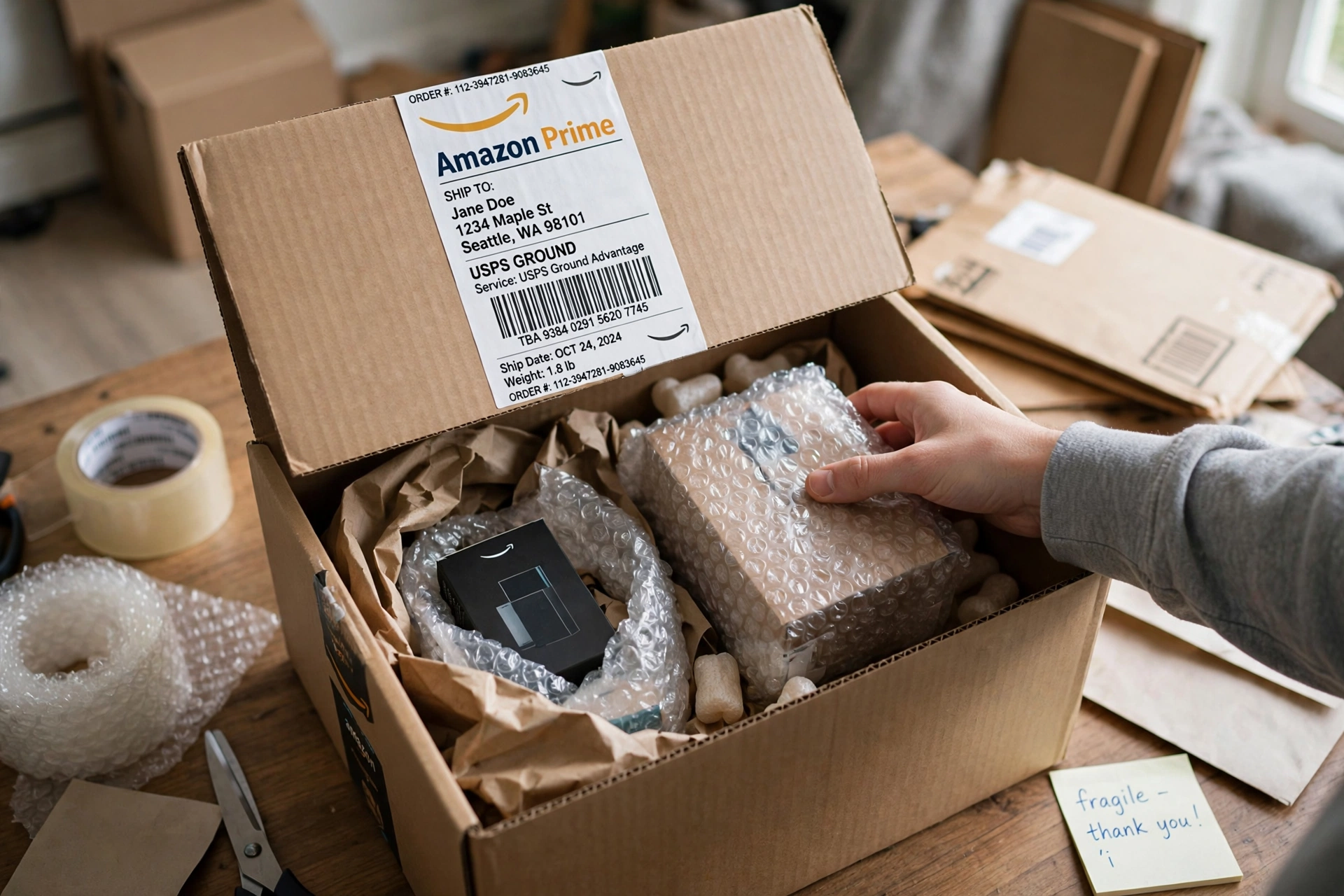
Example two: a $100 home product weighing just over a pound, same plan, same season. The referral fee is 15 percent of $100, which is $15.00. The FBA fulfillment fee is $5.30, and the surcharge adds $0.19. Total to Amazon: $20.49, or about a fifth of the sale price. The same product in the holiday peak pays $20.80, because the peak fulfillment fee is $5.60 instead of $5.30.
The pattern is the point. On a $100 item, Amazon takes about 20 percent. On a $25 item, it takes about 37 percent, because the fulfillment fee is mostly fixed and does not shrink with the price. Cheap, heavy products are the worst combination on Amazon: a heavy $40 item can lose close to 40 percent of its price to Amazon before the seller has paid for the product, the inbound shipping, or the storage. That is why low-price FBA exists — reduced fulfillment fees for items at or below $20 in some categories — and why sellers of cheap goods so often choose to fulfill orders themselves instead.
FBA or Fulfilled by Merchant?
You do not have to use FBA. Fulfilled by Merchant means you store the stock and ship each order yourself, and you pay no fulfillment fee, no storage fee, and no surcharge — only the selling plan and the referral fee. On the $100 example above, that saves $5.49 a sale. What you lose is the Prime badge, which is the single biggest conversion advantage on the platform, and the Buy Box, which Amazon gives preferentially to FBA offers. Most sellers who can afford FBA use it for their bestsellers and fulfill the slow or oversized lines themselves.
The honest way to decide is to run your own numbers through Amazon’s Revenue Calculator, which prices your specific product by size, weight, and category. The fee tables in this guide are the published 2026 rates; the calculator is the number that applies to your product.
What Selling on Amazon Costs Per Month
A seller doing 100 units a month of the $100 home product above pays $39.99 for the Professional plan, $1,500 in referral fees, and about $549 in fulfillment fees and surcharges — $2,088.99 to Amazon before storage, advertising, or the cost of goods. The same seller on the Individual plan would pay $99 in per-item fees instead of $39.99, which is why Professional wins above 40 units.
Advertising is the optional line that most sellers end up paying. Sponsored Products ads are pay-per-click, and a typical small seller spends 5 to 15 percent of revenue on them in the first year. It is not a required fee, but a new listing without ads on a competitive keyword is close to invisible, and the sellers who treat advertising as optional usually discover that the hard way.
The Bottom Line
Selling on Amazon costs $39.99 a month on the Professional plan, or $0.99 per item on Individual, plus a referral fee of 8 to 45 percent on every sale — 15 percent in most categories — plus FBA fulfillment fees from $2.43 a unit, a 3.5 percent surcharge since April 2026, and monthly storage. On a $100 FBA sale Amazon takes about $20.49; on a $25 sale it takes about $9.24. Price your product with the full stack, not just the subscription, and run the Revenue Calculator before you list anything — the fee that surprises new sellers is never the $39.99. It is the 15 percent plus $5.49 that comes off every single order.
If you sell on more than one marketplace, compare this with eBay selling fees explained — the two platforms take a very different cut.