Albright’s Raw Pet Food Recall: The One Chicken Lot to Check
If you feed a raw diet, your freezer deserves a second look this week. Albright’s Raw Pet Food has voluntarily recalled a single lot of its Chicken Recipe for Dogs after routine testing by the U.S. Food and Drug Administration found Salmonella in a sample from that lot. It is a narrow recall — one lot, one product, one lot code — and that narrowness is exactly why the lot code matters. If your bricks do not carry that code, this recall does not touch them. If they do, stop feeding them, even if your dog looks perfectly fine.
What Was Recalled
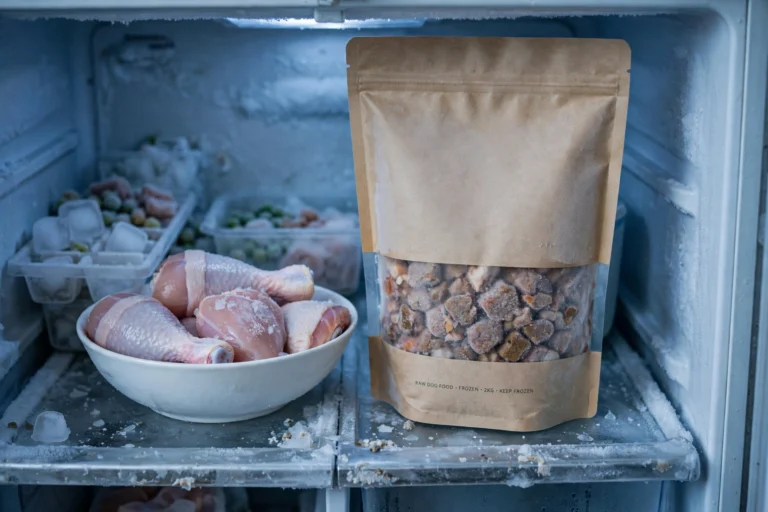
The recall covers Albright’s Raw Pet Food Chicken Recipe for Dogs, Complete and Balanced formula, sold as frozen 1-pound bricks in clear vacuum packaging, generally distributed in 30-pound cases. The recalled lot is lot C001730, with UPC 20855404008367 and a best-by date of April 28, 2027. The company, based in Fort Wayne, Indiana, announced the recall on May 6, 2026, and the FDA published the announcement on May 7, 2026.
No other Albright’s product, lot, or size is included. That point is worth repeating because raw-food recalls are often misread online as brand-wide bans. They are not. A recall notice is a precise document: brand, product, size, lot code, and date. When all of those details match what is in your freezer, act. When even one differs, the notice does not apply to that package — though it is still smart to keep watching for updates, since recalls are sometimes expanded when more testing comes back.
The recall was triggered by routine FDA sampling. Samples from the lot were screened for Salmonella, Listeria monocytogenes, and E. coli, and one composite sample from lot C001730 tested positive for Salmonella. The company said it was recalling the lot out of an abundance of caution while it continued its investigation, including third-party laboratory testing, to better understand the finding.
Why Salmonella in Raw Dog Food Is Taken So Seriously
Salmonella is not a rare or exotic hazard in raw pet food. It is the single most common reason raw and freeze-dried products get recalled, and it is taken seriously for two reasons at once: it can make dogs sick, and it can spread to the people who handle the food, the bowls, and the dog.
Freezing does not kill Salmonella. A frozen brick can carry the bacteria all the way from the warehouse to your kitchen counter, and thawing gives it the chance to spread to surfaces, hands, and other foods if hygiene slips. That is why raw-food recalls always come with the same household advice, and why that advice matters even more than the recall itself: the product is only part of the risk. How it is stored, thawed, and cleaned up after is the rest.
Dogs are not the only ones at risk. Children, older adults, pregnant people, and anyone with a weakened immune system face a higher risk of serious illness from Salmonella, and they can pick it up from a contaminated bowl or a dog’s mouth or paws after the dog has eaten. This is not a reason to panic about raw feeding in general. It is a reason to treat lot codes and handwashing as part of the feeding routine, not an afterthought.
Salmonella Symptoms in Dogs and People
Most dogs that pick up Salmonella show no symptoms at all, which is one of the trickiest parts of this kind of recall. A dog can carry and shed the bacteria while looking completely healthy, which is why a matching lot code is reason enough to stop feeding the product — you cannot judge safety by how your dog looks.
When symptoms do appear in dogs, they typically include lethargy, diarrhea (sometimes bloody), fever, vomiting, decreased appetite, and abdominal pain. In people, Salmonella infection usually brings diarrhea, fever, and stomach cramps, most often starting hours to a few days after exposure. Most healthy adults recover without specific treatment, but the infection can be severe in young children, older adults, and people with weakened immune systems.
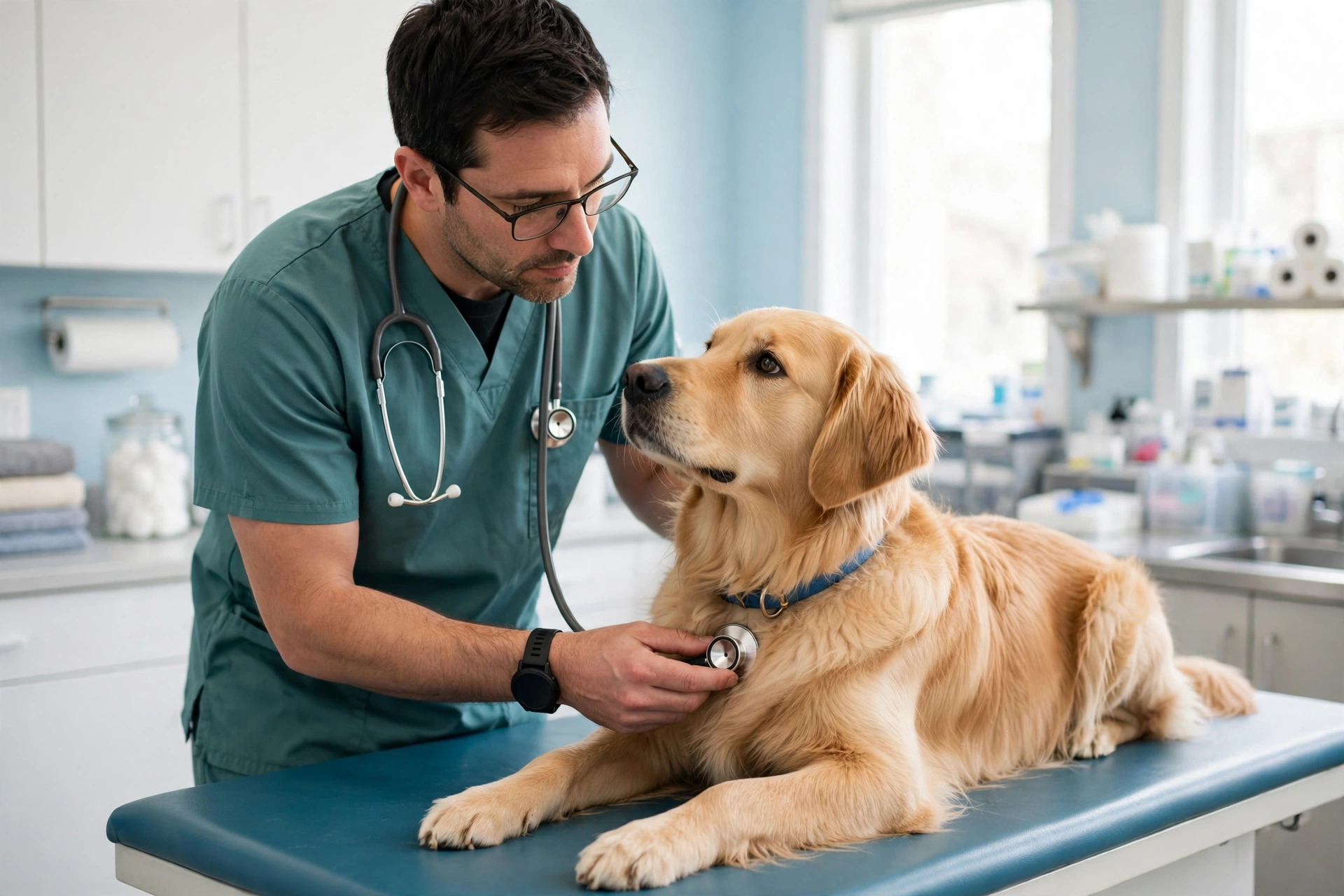
If your dog has eaten food from lot C001730 and shows any of these signs, or if you suspect an infection, contact your veterinarian and mention the recalled lot by name and number. If anyone in your household becomes ill after handling the product, contact a healthcare provider and mention the pet-food exposure. Do not wait for symptoms to get worse before calling — early advice is free, and late advice is not always as useful.
Protecting Your Household
If you find lot C001730 in your freezer, stop feeding it right away. Seal the bricks in a bag so no other animal can reach them, and follow the return or disposal instructions in the recall notice rather than donating the food or passing it on to another pet owner. Recalled food should never be donated to a shelter or handed to a neighbor; that only moves the risk somewhere else.
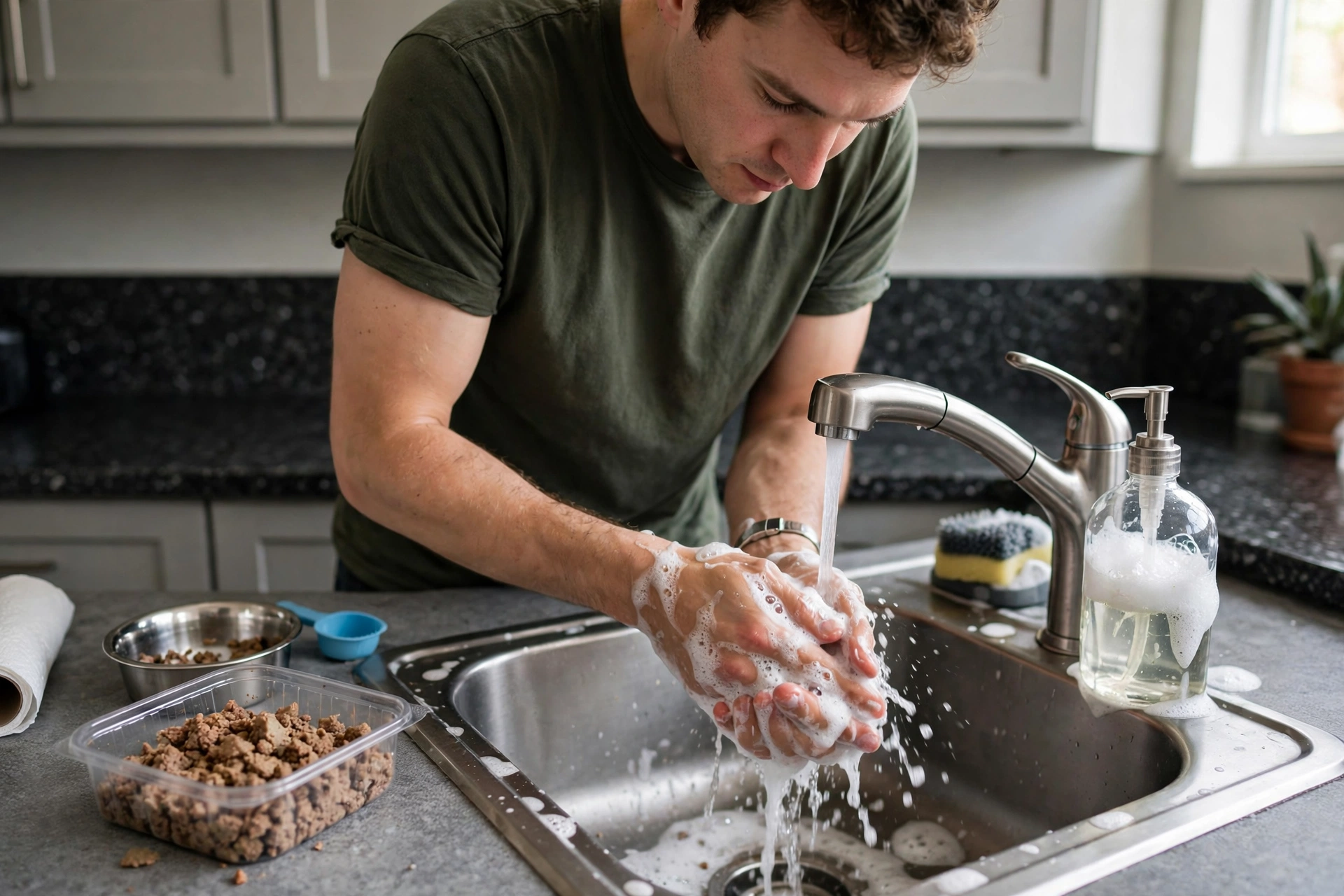
Then clean up as if the bacteria were there, because with a positive sample in the lot, it is safest to assume it was. Wash your hands thoroughly with soap and water after handling the product. Wash bowls, scoops, thawing trays, and any surface the raw food touched with hot, soapy water, and disinfect food-contact surfaces. Wash any bedding or towels that came into contact with the food or with a dog that ate it. Keep raw pet food away from human food in the freezer and the fridge, and thaw it in a sealed container on a low shelf so drips cannot reach anything else.
These steps are not extra caution for its own sake. They are the standard public-health response to a Salmonella finding in a raw product, and they are the same steps health agencies recommend after every raw-food recall, from the smallest single-lot withdrawal to the largest multi-brand event.
Raw Food Recalls Keep Repeating a Pattern
Albright’s is far from the first raw brand to face this exact scenario, and the pattern is worth knowing if you feed raw. Routine sampling finds Salmonella in one lot. The company recalls that lot. No illnesses are reported. The recall ends, and the brand carries on. Viva Raw’s Salmonella recall followed a similar shape, and so did several other raw and freeze-dried recalls in 2025 and 2026.
That pattern cuts two ways. On one hand, it shows the testing system working: sampling caught a contaminated lot before illnesses were reported, and the recall pulled it before more of it was fed. On the other hand, it shows that Salmonella contamination in raw diets is not a one-off accident. It is a recurring risk of the category itself, because raw meat is not cooked to a temperature that kills bacteria. Owners who choose raw feeding are accepting that risk and managing it with hygiene, lot-code checks, and quick action when a recall lands.
None of that means every raw product is unsafe, and none of it means a single-lot recall condemns a brand forever. It means the bargain of raw feeding includes vigilance. The owners who get caught out by recalls are rarely the ones who never heard of the brand. They are the ones who bought a case months ago, stacked it deep in the freezer, and never checked the lot code when the notice came out.
How to Check Your Freezer in Two Minutes
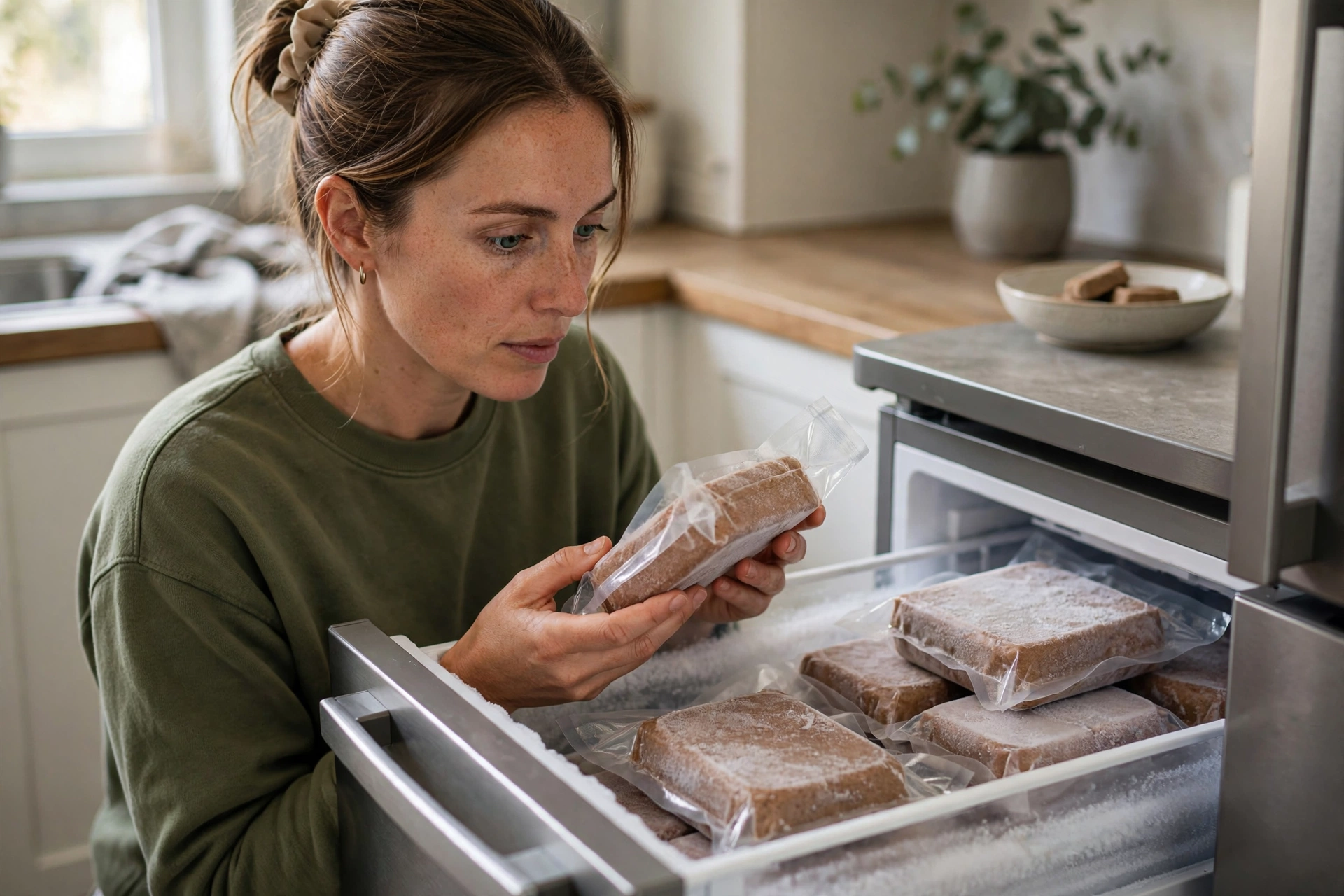
Pull out any Albright’s Chicken Recipe bricks and look for three things: the product name (Chicken Recipe for Dogs, Complete and Balanced), the lot code (C001730), and the best-by date (April 28, 2027). The lot code is the deciding detail. If it reads C001730, set that brick aside and do not feed it, whatever the date says. If the code is different, the recall does not cover it.
While you are there, it is worth photographing the lot codes on every raw product in your freezer, not just Albright’s. A quick phone photo of each label takes seconds and saves a frantic freezer dig the next time a recall notice names a lot you half-remember buying. Keep the photos in a single album so you can search them in seconds.
If you bought the recalled lot from a retailer, contact the retailer or the company about a refund or replacement, and keep the packaging until the return is sorted. If your dog ate from the lot, note the dates and the amount, and keep that note with your vet’s number. If nothing happens, you have lost nothing. If something does, you have the details your vet will ask for first.
The Bottom Line
The Albright’s raw pet food recall is small, specific, and — so far — illness-free. One lot of Chicken Recipe for Dogs, 1-pound bricks, lot C001730, best-by April 28, 2027, recalled after FDA sampling found Salmonella. Check the code, stop feeding matching bricks, clean up thoroughly, and call your vet if your dog shows symptoms. That is the whole job, and it takes about two minutes. The owners who do it promptly are the reason recalls like this one end with a notice instead of an outbreak.
Source: FDA company announcement, May 6, 2026 (published May 7, 2026).