Beginner Fish Tank: The Complete First-Tank Setup Guide
Getting your first beginner fish tank right comes down to a handful of decisions made in the right order. Most beginners fail not from lack of caring, but from doing things in the wrong sequence — buying fish before the tank is cycled, choosing the wrong size, or trusting the pet store over the nitrogen cycle. This guide puts the decisions in the right order.
Step 1: Choose the Right Tank Size
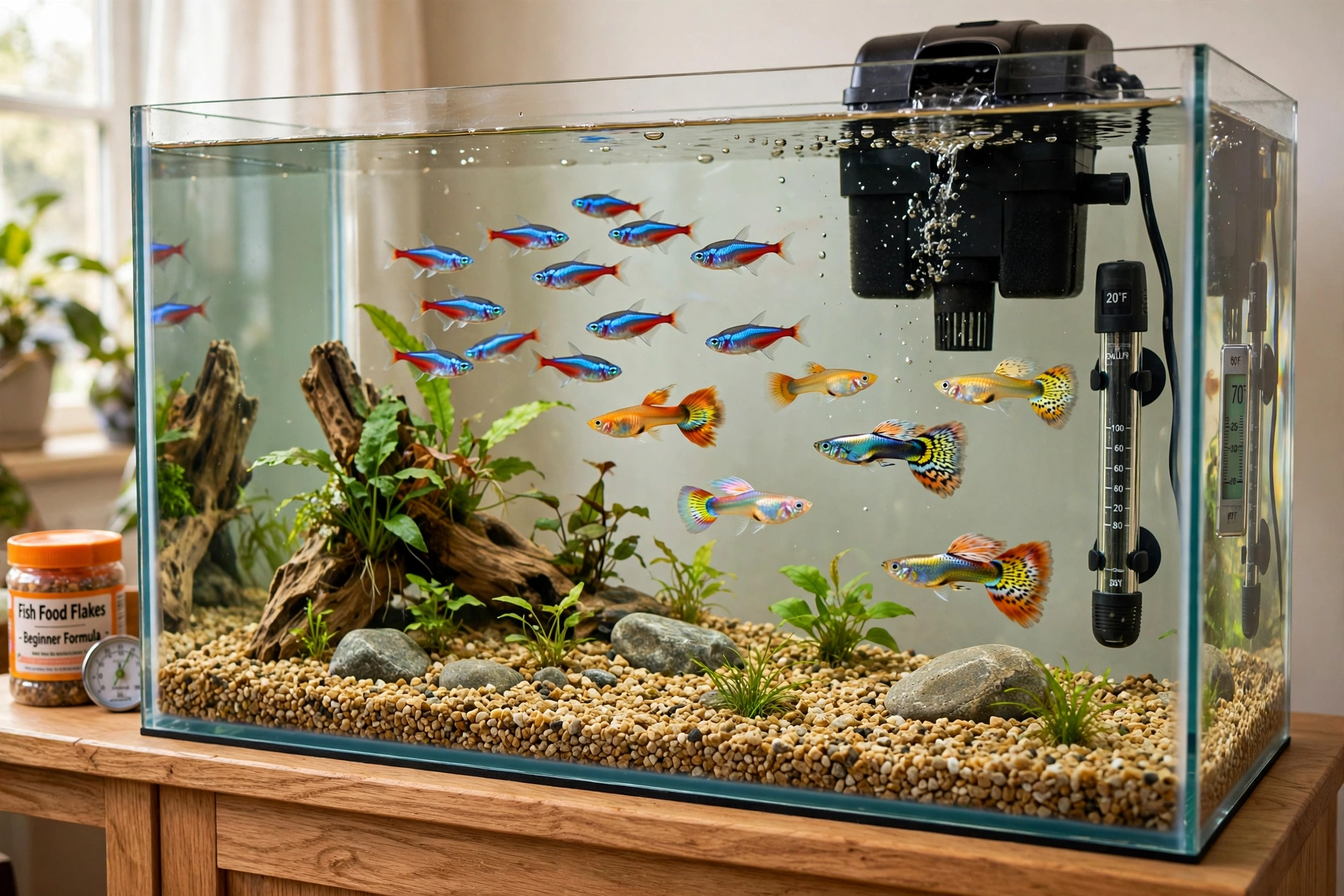
Bigger is easier. A 20-gallon tank is far more forgiving than a 5-gallon: more water dilutes mistakes and temperature stays stable. The best beginner fish tank is 10–20 gallons. A 20-gallon long is the ideal first tank: stable, affordable, and big enough for a proper community.
Step 2: Pick the Location
Flat, level, near an outlet, away from windows (direct sunlight means algae wars). The stand must hold the weight — a filled 20-gallon weighs over 200 lbs. That wobbly bookshelf won’t cut it.
Step 3: Essential Equipment
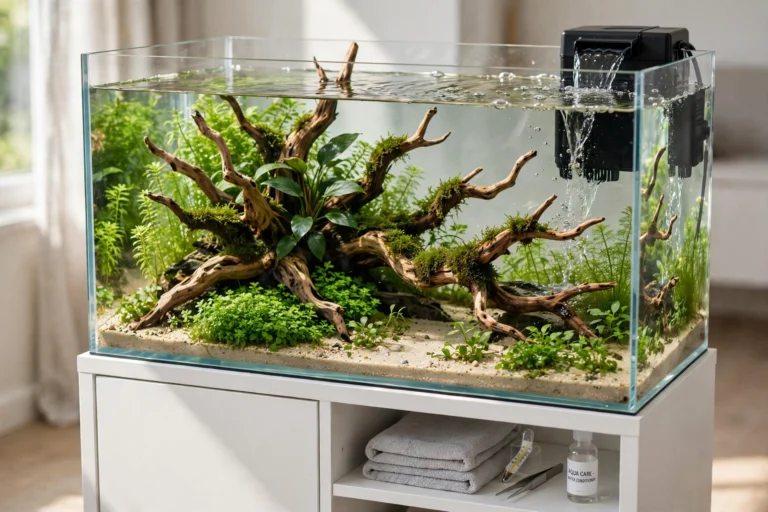
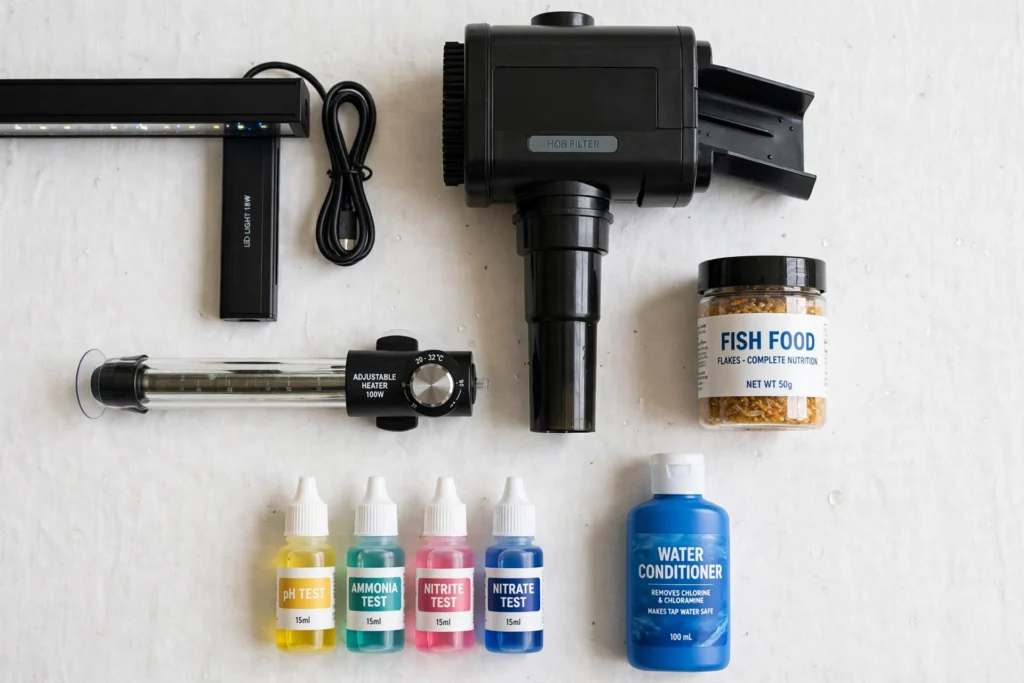
- Filter: hang-on-back rated for your tank size — the engine of your nitrogen cycle.
- Heater: adjustable, 5 watts per gallon, for 76–80°F tropical temperatures.
- Light: basic LED on a timer, 6–8 hours daily.
- Substrate: gravel or sand, 1–2 inches, rinsed before adding.
- Test kit: liquid kit for ammonia, nitrite, nitrate, pH — the most important purchase on this list.
- Dechlorinator: tap water conditioner, non-negotiable with every water change.
Step 4: Set It All Up
Rinse substrate and add it. Fill with water (a plate on the substrate prevents cratering). Install filter, heater, thermometer. Add dechlorinator. Turn everything on. Run 24 hours to check for leaks and stabilize temperature. Don’t add fish yet.
Step 5: Cycle the Tank
Cycling grows the beneficial bacteria colony that processes fish waste. Without it, ammonia spikes and fish die within days. Fishless cycling with pure ammonia takes 4–8 weeks and harms nothing. This step is the foundation of everything — don’t skip it.
Step 6: Stock Slowly
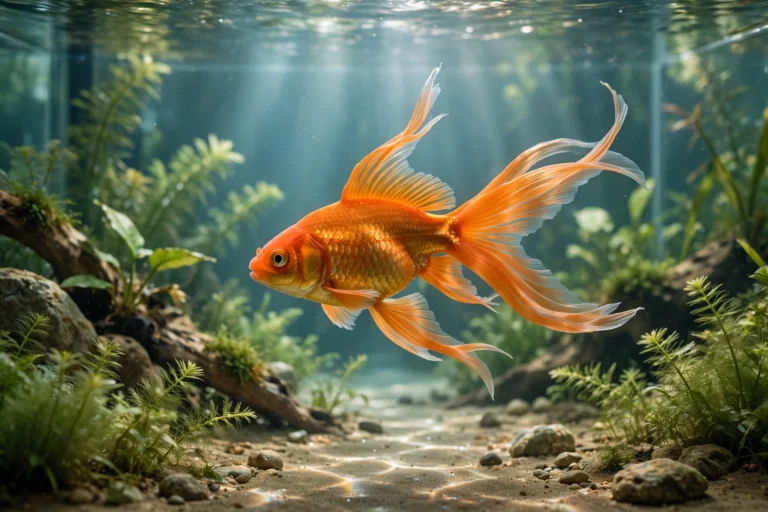
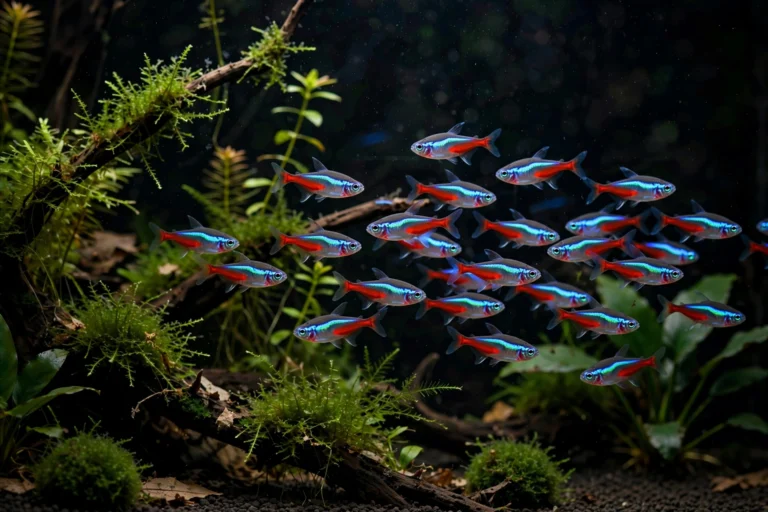
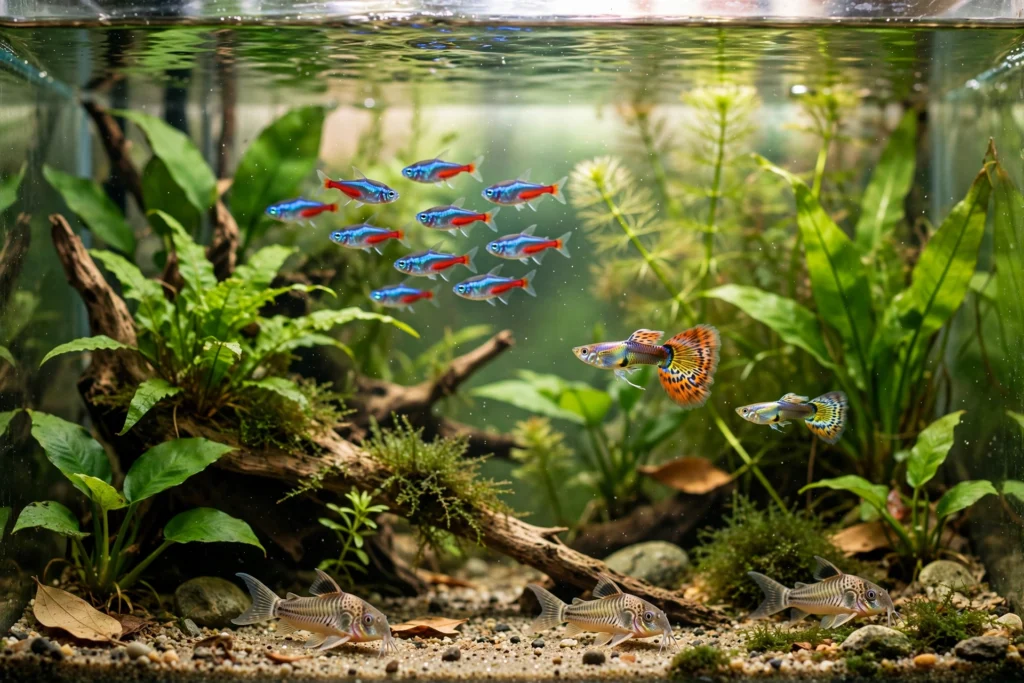
Add fish gradually — a few at a time, a week or two apart. Good first fish: a single betta (5+ gallons), neon or ember tetras (schools of 6+), guppies or platies, corydoras catfish (groups of 6), cherry shrimp and nerite snails as cleanup crew. Bad first fish: goldfish, oscars, or anything the store can’t tell you the adult size of.
Step 7: The Maintenance Routine
- Daily: feed twice, tiny amounts (2-minute rule), plus a 30-second visual check.
- Weekly: 25% water change with dechlorinated, temperature-matched water, wipe glass.
- Monthly: rinse filter media in old tank water (never tap water, never replace all at once), test parameters. About 30 minutes a week total.
The 7 Mistakes Every Beginner Makes
- Adding fish before cycling.
- Overstocking.
- Overfeeding.
- Replacing filter media (it holds your bacteria — rinse, don’t replace).
- 100% water changes (they nuke your cycle).
- Mixing incompatible fish.
- Impulse buying at the store — decide your stocking plan at home first.
What Your First Tank Costs
Rough budget for a 20-gallon setup: tank + lid ($50–80), filter ($30–50), heater ($25–35), light ($30–60), substrate ($20), test kit ($25–35), dechlorinator ($10), decorations and plants ($30–50). Total: roughly $220–320 before fish.
Do it in order — size, location, equipment, setup, cycle, stock slowly, maintain — and your first tank won’t be a learning-curve casualty. It’ll be the tank that gets you hooked.