How Much Does It Cost to Open a Coffee Shop in 2026? $80,000–$300,000, by Format
Opening a small sit-down coffee shop typically costs $80,000 to $300,000 in 2026, with most owners landing around $150,000 to $200,000 before the doors open. A kiosk or cart can start at $50,000, while a full cafe with seating and a drive-thru can reach $400,000. The format you choose matters more than any single line item.
That range comes from Bellwether Coffee’s 2026 breakdown; KoronaPOS reports a similar $80,000 to $275,000 for a sit-down cafe. But one range hides the real story: the space you lease, the format you pick and the cash you hold back change everything. This guide breaks down every major cost, format by format, so you can budget for your situation.
How Much Does It Cost to Open a Coffee Shop?
What kind of coffee shop? A cart in a busy lobby and a full cafe with a kitchen are barely the same business. The table below shows the published 2026 ranges by format, with Bellwether Coffee and Crimson Cup side by side — they do not agree on every format.
| Format | Typical cost | Best for |
|---|---|---|
| Kiosk, cart or stand | $50,000–$100,000 (Bellwether); $90,000–$150,000 (Crimson Cup) | Testing a concept |
| Small cafe, 500–1,000 sq ft | $100,000–$200,000 (Bellwether) | A first shop |
| Full cafe with seating | $150,000–$300,000 (Bellwether); $100,000–$350,000 (Crimson Cup) | A neighbourhood shop |
| Cafe with a full kitchen | $200,000–$400,000+ (Bellwether) | Food-led menus |
| Drive-thru only | $100,000–$250,000 (Crimson Cup) | Commuter routes |
| Seating plus drive-thru | $120,000–$400,000 (Crimson Cup) | Both audiences |
Sources: Bellwether Coffee (2026); Crimson Cup (June 2025).
The gap is worth understanding. Bellwether builds its numbers line by line from equipment and build-out prices, while Crimson Cup draws on work with hundreds of independent owners. On kiosks the gap is widest: $50,000 to $100,000 versus $90,000 to $150,000. Treat the low end as the lean version of a format and the high end as the version with a full build-out, premium equipment and a proper cash reserve.
What Decides Whether You Land Near $80,000 or $300,000
Three levers move the total most. The first is the space: taking over a former cafe with plumbing, electrical capacity and a working layout can cut $50,000 or more from the build-out, according to Bellwether Coffee, while a raw shell needs everything built from scratch and takes 16 to 24 weeks. The second is equipment — new or used, budget or premium. The third is the operating cash you reserve before opening, the line item most first-time owners cut.
Location sits behind all three. Rent for 1,000 square feet runs from about $1,110 a month in a small market to about $3,500 in New York or San Francisco, according to LivePlan’s 2026 analysis, and counter wages differ by roughly $10 an hour across the metros it checked. Build the budget for your city, not a national average.
Equipment: $20,000 to $80,000
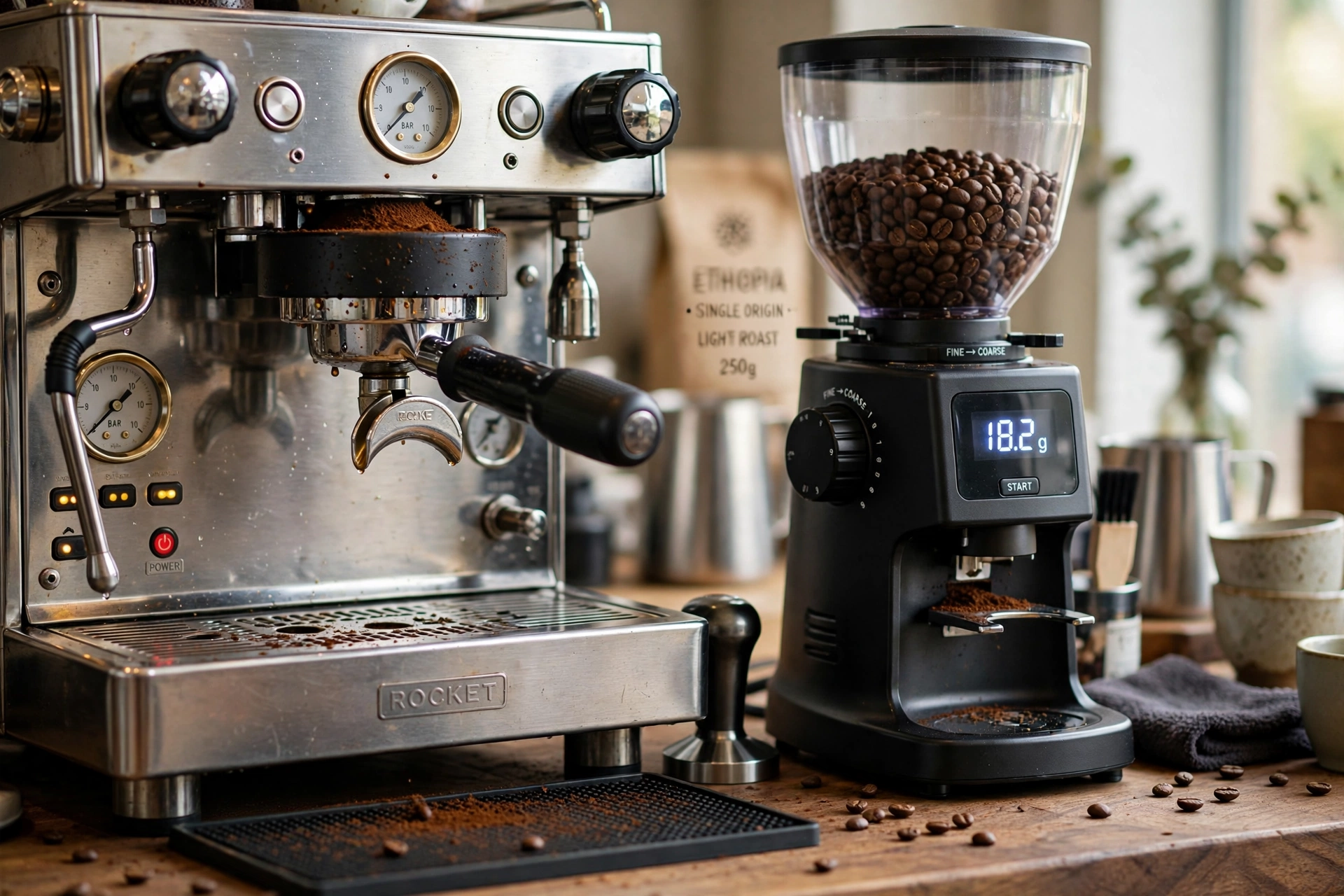
Equipment is usually the second-largest expense after the build-out, at $20,000 to $80,000 according to Bellwether Coffee. The espresso machine is the biggest item: budget two-group $5,000 to $8,000, mid-range $10,000 to $18,000, premium $20,000 to $35,000. Dealer prices seen in November 2026 run from about $10,400 for a Nuova Simonelli Appia Life to about $22,050 for a La Marzocco Linea PB, according to Restaurant Bottom Line. Add two grinders ($1,500 to $8,000), a batch brewer, water filtration, refrigeration, an ice machine, blenders, a dishwasher and smallwares.
The rest adds up fast. Refrigeration runs $2,000 to $20,000, a display case $1,000 to $12,000, and a dishwasher $2,000 to $15,000. A full kitchen jumps again: a convection oven costs $3,000 to $10,000, before the ventilation a fryer or grill would demand. Used equipment can save 30 to 50 percent, but Crimson Cup warns against used coffee equipment — the saving tends to come back as repairs and downtime. Buy the espresso machine and grinders new; buy furniture, shelving and display cases used.
Build-Out and Leasehold Improvements: $20,000 to $150,000
The build-out is the biggest check most owners write, and the hardest to estimate — it depends entirely on what the space already is. Bellwether Coffee puts leasehold improvements at $20,000 to $150,000: taking over an existing cafe costs $15,000 to $40,000 (two to six weeks); converting a retail space costs $40,000 to $80,000 (eight to 14 weeks); a raw shell costs $80,000 to $150,000 or more (16 to 24 weeks).
Per square foot, construction typically runs $150 to $300, according to a 2026 build-out guide from Custom Home — a second-generation cafe space at the low end, a full food-service improvement at the high end. A Los Angeles contractor guide from November 2026 gives the same $150 to $300-plus range, and $250 to $450-plus for a raw shell or retail conversion. The big-ticket items are plumbing ($5,000 to $20,000), electrical work ($5,000 to $25,000) and the counter or bar ($5,000 to $25,000), plus flooring, lighting, bathrooms, accessibility work and fire suppression.
Two moves cut this bill sharply. First, choose a second-generation space: a former cafe or restaurant with plumbing, a grease trap, ventilation and enough electrical capacity can save $50,000 to $150,000 against a raw shell. Second, negotiate a tenant improvement allowance before signing — landlords typically offer $10 to $60 per square foot for food and beverage spaces. Ask for one to three months’ free rent while you build out, too.
Licenses, Permits and Professional Fees
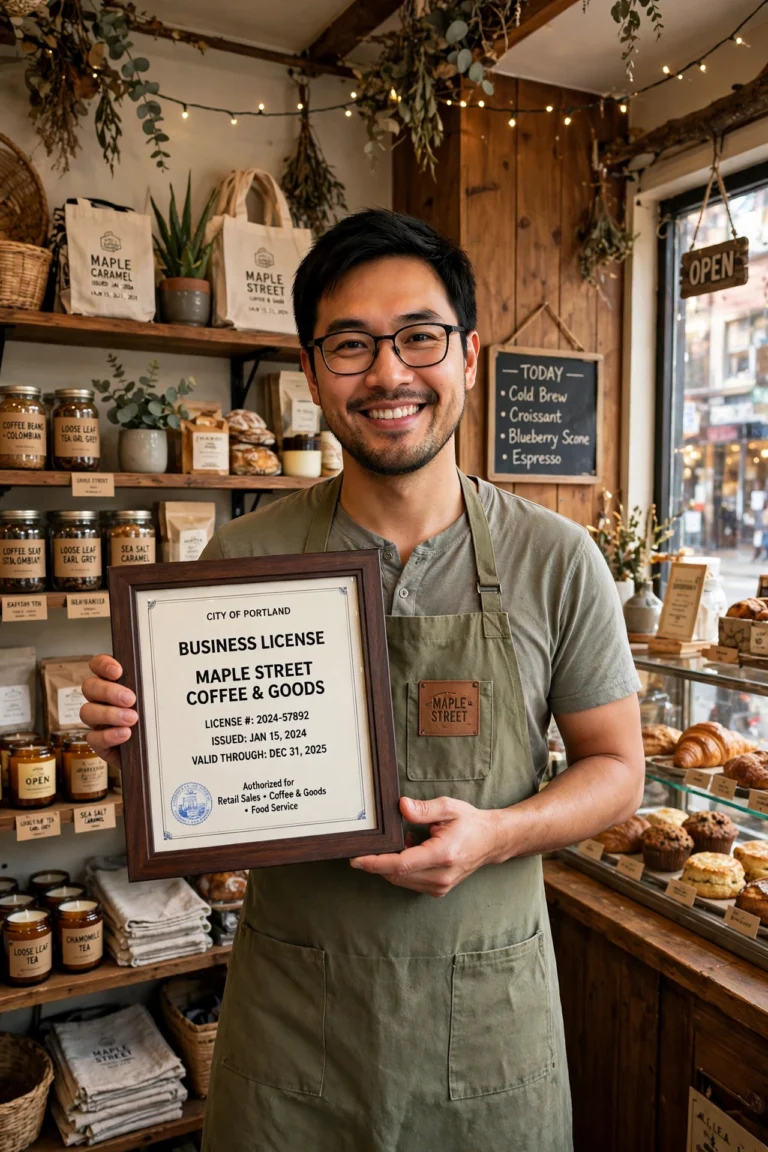
Regulatory costs are small next to construction, but they are the most likely to delay an opening if left late. Bellwether Coffee puts licenses and permits at $1,000 to $8,000 and professional fees at $2,000 to $15,000. A business license costs $50 to $500, a food service license $100 to $1,000, a building permit $500 to $5,000, and food handler certifications $10 to $30 per person. Music licensing runs $300 to $800 a year; a liquor licence, where it applies, is the outlier at $1,000 to $15,000.
An attorney for entity setup and lease review costs $1,500 to $5,000, an accountant $500 to $2,000, and an architect or designer $2,000 to $15,000. Get the lease reviewed: a five-year lease with a personal guarantee is a bigger commitment than the espresso machine.
Initial Inventory and Supplies
You need enough stock to open and operate for two to four weeks, and Bellwether Coffee puts initial inventory at $5,000 to $20,000. Roasted coffee runs $500 to $1,500 for 50 to 100 pounds, milk and alternative milks $300 to $600 for two weeks, and syrups, tea and other beverages a few hundred dollars each. Cups, lids, sleeves, napkins and cleaning supplies for two months add roughly $1,500 to $3,500.
The menu is the quiet driver: every item needs its own ingredients, storage, equipment and training. A short menu is cheaper to stock, faster to serve and easier to keep consistent — start with what you can execute perfectly, and add food once mornings are steady.
Technology, POS and Branding
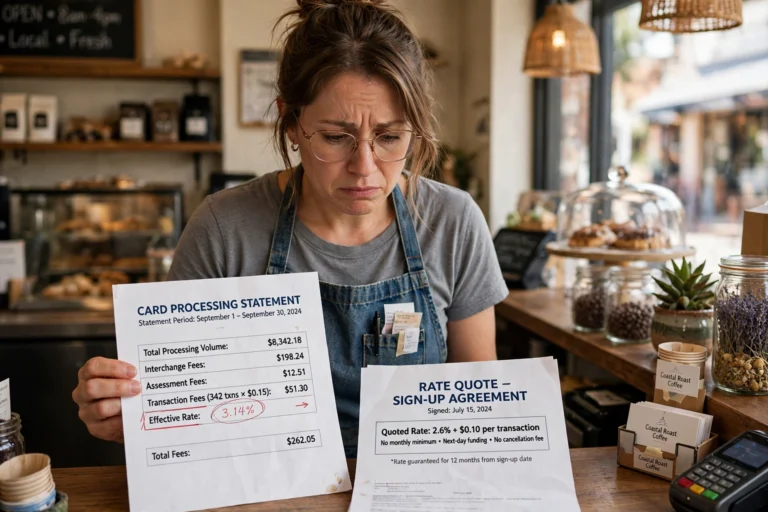
Bellwether Coffee puts technology and point of sale at $2,000 to $12,000, and marketing and branding at $3,000 to $15,000. A POS terminal costs $500 to $2,000 in hardware, software runs $50 to $200 a month, and processing takes 2.5 to 3.5 percent of every transaction. Wi-Fi, cameras and a website add $1,500 to $6,500 to set up.
Spend branding money on what customers see: the sign, the menu board and the cups. Keep opening marketing simple — a soft opening for neighbours, a clear Google Business Profile and an opening-week offer.
Working Capital: Keep Six Months of Operating Expenses in Cash
This is the line item that decides survival. Bellwether Coffee recommends three to six months of operating capital, at $20,000 to $100,000. The standing rule is plainer: hold six months of operating expenses in cash before opening. Most new cafes take six to 18 months to become profitable, with 12 months typical — and a shop that runs out of cash in month four never learns whether month 12 would have worked.
Monthly operating expenses for a small shop typically run $15,000 to $50,000: rent $2,000 to $10,000, payroll $8,000 to $25,000, inventory $3,000 to $10,000, utilities $500 to $1,500, insurance $300 to $800, and marketing $300 to $1,500. Six months at the low end is $90,000; at the high end, $300,000. That is why working capital, not the espresso machine, pushes many owners from a $150,000 plan to a $250,000 one. If the reserve does not fit, choose a smaller format or a cheaper space — not a smaller reserve.
Financing is where many owners bridge the gap, so price it before signing anything. If a loan is part of your plan, work out what an SBA loan costs for a small business alongside the equipment and build-out quotes, so the monthly payment sits inside the operating budget. Lenders will want to see the same reserve — undercapitalisation is a leading cause of cafe failure, and they know it.
What It Costs to Run the Shop Each Month
Opening costs get the attention, but the monthly numbers decide whether the shop lasts. At $15,000 to $50,000 a month, a small shop needs roughly $500 to $1,650 a day just to cover costs. Payroll is the largest monthly line by far, and the cost of goods is the other reality: beans, milk and cups are a small share of each drink’s price, but food, waste and giveaways eat into the margin. Track waste daily at first, price from real supplier quotes, and know your cost per cup and break-even drinks per day.
The Morning Rush Decides the Day

A coffee shop is not a twelve-hour business with twelve equal hours. The morning rush is where the day is won or lost: the room is full before nine, and by eleven it is often half empty. A cafe guide from Qashier puts the morning rush at between a third and a half of daily revenue, concentrated in about ninety minutes — which decides how many baristas to roster at seven and how fast the till must move.
Protect the morning: staff the rush properly, keep the menu fast, and never let the till or the drink handoff become the bottleneck. A customer who waits ten minutes on a Tuesday walks to the shop next door on Wednesday. Afternoon trade, food and retail beans add revenue, but they build on a morning operation that works.
Hidden Costs That Catch First-Time Owners
Bellwether Coffee advises a 10 to 20 percent contingency for surprises. Build-out overruns typically run 10 to 30 percent of the build-out budget, and permit delays can cost $2,000 to $10,000 in rent on a shop not yet open. First and last month’s rent run $4,000 to $20,000, training payroll $2,000 to $5,000, and a soft opening $1,000 to $3,000 — plus deposits, repairs, menu development and unexpected code requirements.
The most expensive hidden cost is time: a build-out eight weeks over schedule is eight weeks of rent, loan payments and insurance with no revenue. Build slack into the timeline, and do not set an opening date in print until the permits are in hand.
How to Open a Coffee Shop for Less
There are honest ways to bring the number down, and none involves skipping the cash reserve. Taking over an existing cafe saves $30,000 to $100,000 in build-out, according to Bellwether Coffee — the single biggest saving available. Used equipment saves 30 to 50 percent on major items, though the espresso machine and grinders are best bought new. A smaller menu cuts equipment, inventory and training costs at once.
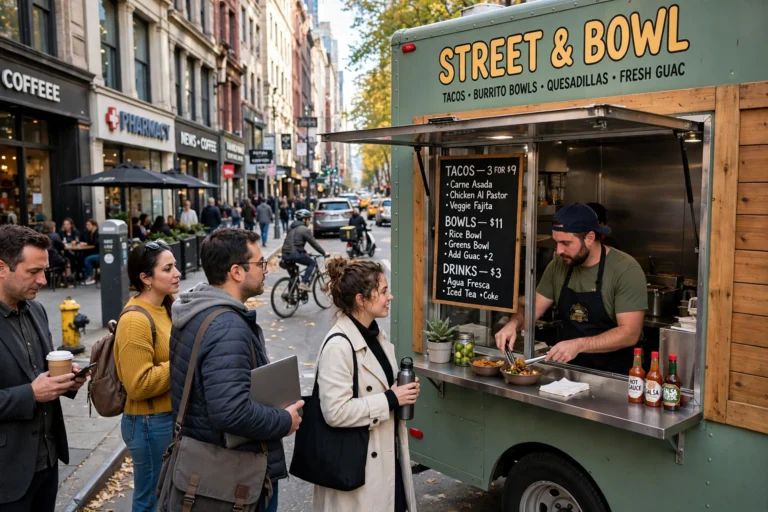
Starting small is a legitimate strategy. A kiosk or cart proves the concept and generates cash flow at $50,000 to $100,000, and its lessons make the full cafe cheaper later. A mobile setup has its own cost profile — compare the numbers for starting a food truck before choosing. Buying an existing shop is another route: the median coffee shop sold on BizBuySell from 2021 to 2025 went for $150,000, on median revenue of $375,000, according to LivePlan.
The franchise route is a different decision, with its own fees, and should be priced separately. Anyone comparing the independent path with a branded one should look at how much it costs to open a franchise first — franchise fees and brand-specified finishes push the total well above the independent ranges here.
The Bottom Line
How much does it cost to open a coffee shop? For most independent owners in 2026, the planning range is $80,000 to $300,000, averaging around $150,000 to $200,000. A kiosk starts near $50,000, a small cafe runs $100,000 to $200,000, and a full cafe with seating and a drive-thru can reach $400,000. The spread is not noise — it is the format, the space and the reserve, and each is a choice you make before signing.
The budget that works is built line by line for your space, in your city, with six months of operating cash held back and a contingency for surprises. Get three build-out quotes, price equipment new and used, and write the monthly budget before the opening budget. If the numbers work with the reserve intact, the shop has a real chance — if they only work by cutting the reserve, the format is too big for the money.
FAQ
How much does it cost to start a small coffee shop?
A small coffee shop of 500 to 1,000 square feet typically costs $100,000 to $200,000 to open, according to Bellwether Coffee: equipment $20,000 to $45,000, build-out $20,000 to $60,000, initial inventory $5,000 to $10,000, licences $2,000 to $5,000, and working capital $40,000 to $80,000. Taking over an existing cafe can cut the total by $30,000 to $100,000, because the plumbing, electrical work and layout are already in place.
What is the most expensive part of opening a coffee shop?
Leasehold improvements and working capital are typically the largest expenses. Build-out for a raw space can cost $80,000 to $150,000, and you need three to six months of operating reserves, at $45,000 to $150,000. Equipment is usually third, at $20,000 to $80,000. The build-out is hardest to predict, because it depends on whether the space was already a cafe, a retail shop or an empty shell.
Can I open a coffee shop for under $100,000?
Yes — with a kiosk format at $50,000 to $100,000, by taking over an existing cafe, or by starting very small. You will need strict budget discipline and may have to phase in equipment over time. Include at least $30,000 in working capital regardless of format — a shop with no cash reserve has no room for a slow first month.
How long until a coffee shop is profitable?
Most coffee shops take 6 to 18 months to reach profitability, with 12 months being typical, according to Bellwether Coffee. The timeline depends on location, operating efficiency and menu pricing. Budget working capital for at least six months of negative cash flow, and judge the shop on its trend — rising drink counts and repeat customers — rather than any single week.