Buy Now, Pay Later for Small Businesses: How It Works, What It Costs You, and Who Takes the Risk
Your customer is standing at the checkout with a $240 item in the cart, hesitating. Then they spot the line underneath the total: “or 4 interest-free payments of $60 with Klarna.” They buy. You get paid in full, minus a fee, and the lender chases the installments. That is the whole pitch of buy now pay later for small business owners — and it is why the option has spread from big retailers to independent shops, online stores and service businesses in the last few years.
But the fee is real, the risk allocation is widely misunderstood, and the providers do not publish one simple price. Here is how buy now pay later actually works on the merchant side, what it costs, who carries the loss when a customer stops paying, and when the fee is worth it.
How Buy Now Pay Later Works for a Small Business
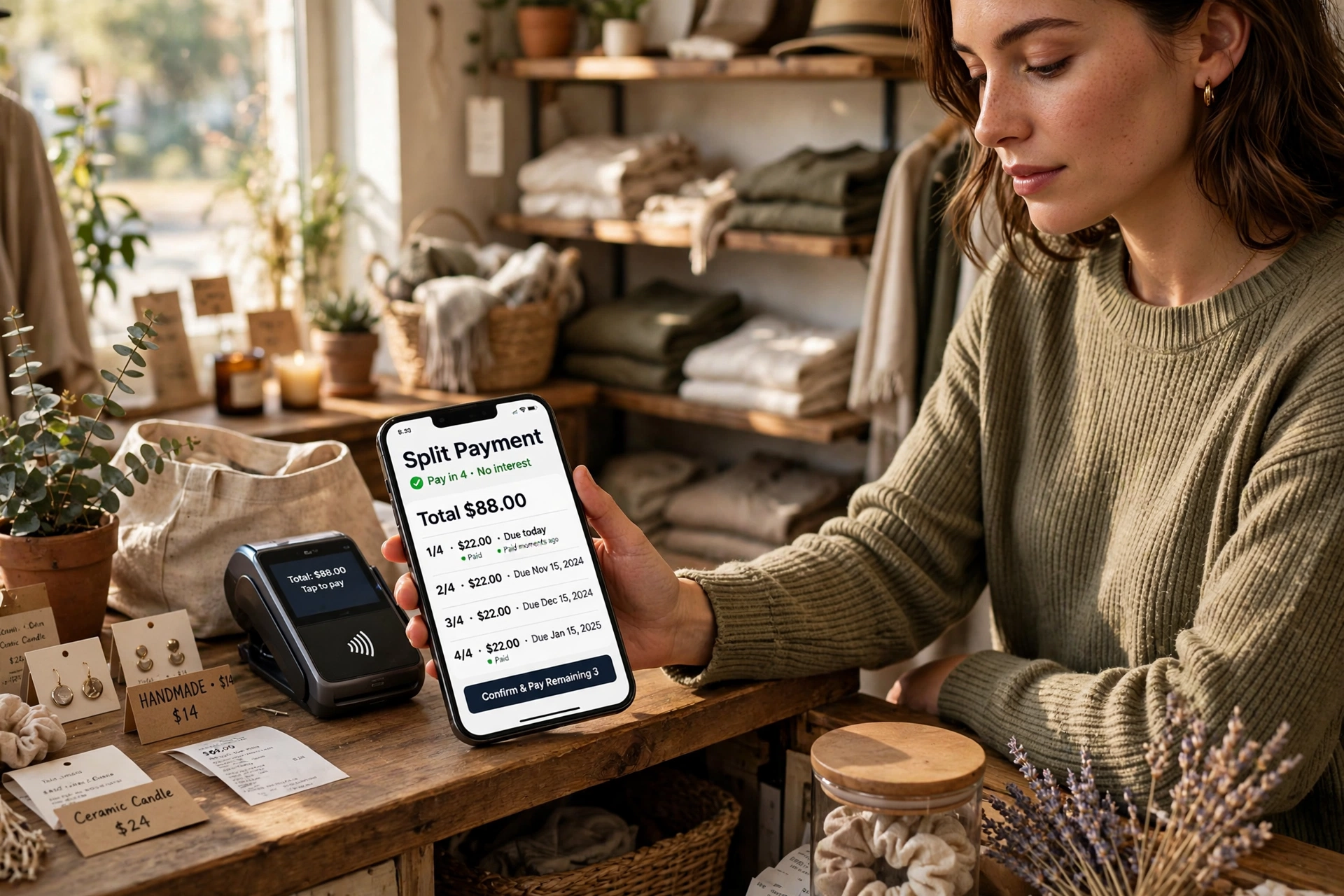
Buy now pay later, usually shortened to BNPL, lets a customer split a purchase into installments while the merchant gets paid up front. The customer applies at checkout — a soft credit check that does not affect their credit score — and if approved, the order goes through immediately. The BNPL provider pays you the full purchase price, minus its fee, usually within a few business days. The customer then repays the provider in installments over weeks or months.
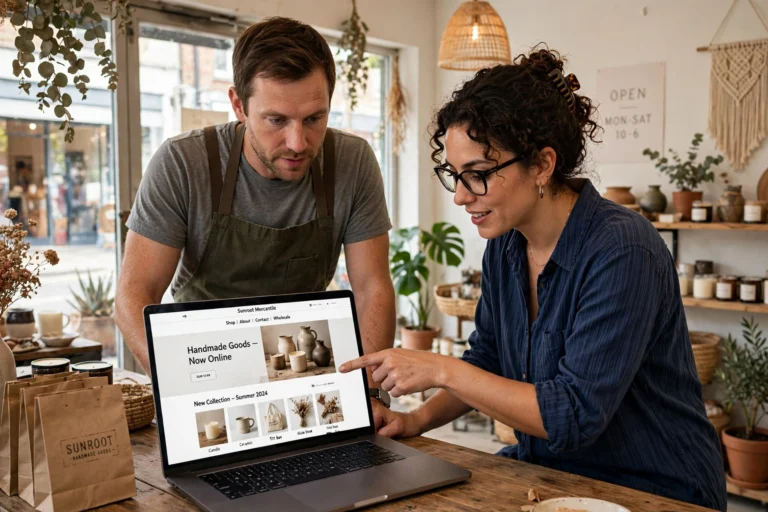
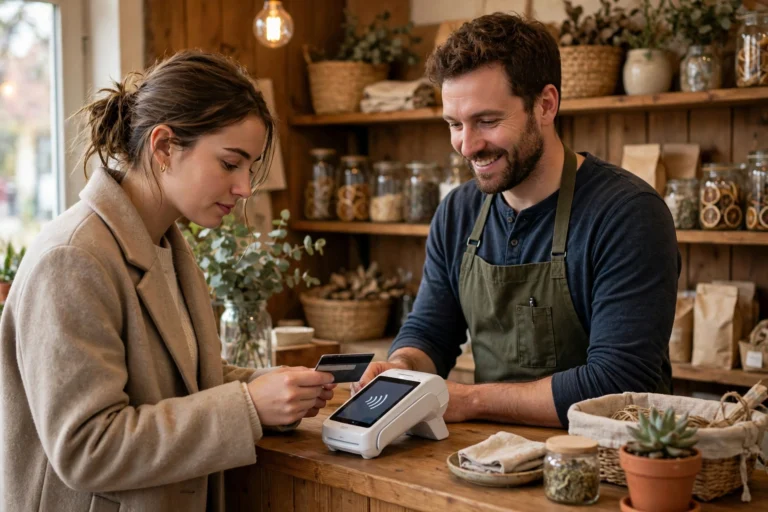
The most common plan is pay in four: four equal payments, the first due at purchase and the rest every two weeks, so the whole balance clears in about six weeks. Longer financing plans stretch from 3 to 36 months and may carry interest, depending on the provider and the offer. From your side of the counter, the mechanics are simple. You add the provider to your checkout — through your payment processor, your point-of-sale system or a plugin — and the option appears next to the card and PayPal buttons. There is no underwriting of your business in the way a loan would be, and no monthly fee to enable it on the main platforms. Square, for example, charges no monthly fee or start-up cost to switch on Afterpay.
One important limit: the big three providers — Affirm, Afterpay and Klarna — do not support business-to-business payments. BNPL is a consumer checkout product. If your customers are other businesses, it will not help you.
What It Costs You: The Merchant Fee
This is the part providers are least keen to advertise. None of the mainstream US providers publishes a single merchant rate card. What they do publish is the price their resellers charge, and Stripe’s published US pricing is the clearest window into what a small merchant actually pays:
Affirm (standard package) through Stripe: 6% + 30 cents. Affirm (enhanced package): 7.99% + 30 cents. Klarna: 5.99% + 30 cents. Afterpay: 6% + 30 cents. Sunbit: 6% + 30 cents. A domestic card, for comparison: 2.9% + 30 cents.
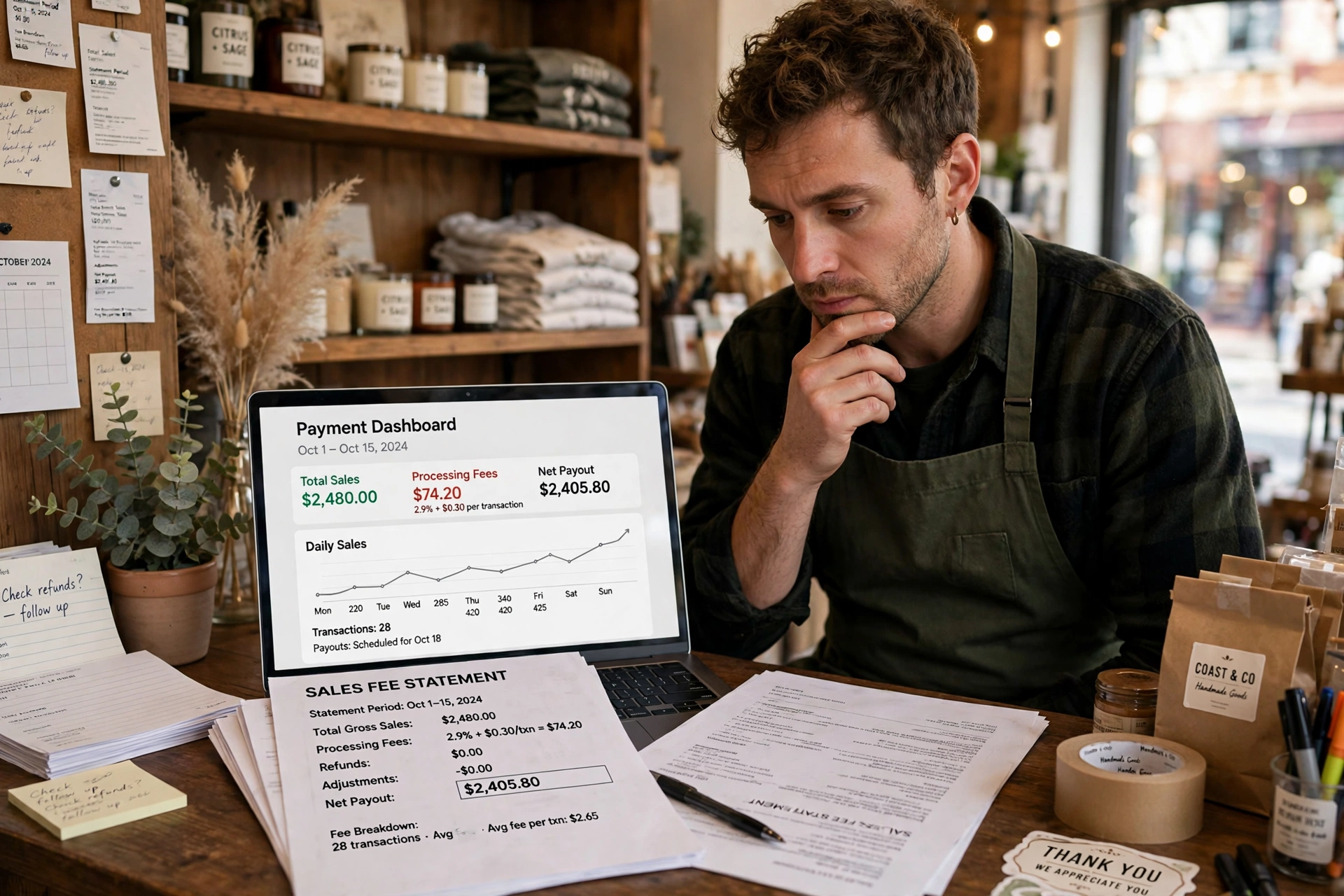
Square lists Afterpay at 6% plus 30 cents on every channel — in person, online, invoices and virtual terminal — on every subscription tier. PayPal Pay Later, listed on PayPal’s US merchant fee page as updated on 1 September 2026, costs 4.99% plus 49 cents, against 3.49% plus 49 cents for ordinary PayPal Checkout. Zip’s pay-in-four option through Stripe is 4.5% plus 30 cents. Put together, a BNPL sale through a mainstream processor costs somewhere between 4.5% and 8% plus a fixed 30 to 49 cents, against a card sale at roughly 2.6% to 3.5%.
The gap is the whole decision. On a $200 sale, a card costs you about $6.10 in processing. The same sale through Affirm’s standard package costs $12.30. That extra $6.20 is the price of the installment plan — and the question is whether the plan brings in sales you would not otherwise have made.
Large retailers negotiate much lower rates. Affirm’s own filings put its blended merchant fee at about 2.3% of the volume it finances across everything it does — a reminder that the 6% Stripe lists is what a small merchant pays for promotional zero-percent financing, not what a national chain negotiates. Small businesses should assume they will pay the published rate, not the negotiated one. The Consumer Financial Protection Bureau’s study of five large providers found merchant fees averaged 2.49% of the volume financed in 2021, down from 2.91% in 2020 — but that average is dominated by big merchants, and small sellers sit at the top of the range.
Stripe also notes that some businesses get a temporary 2.9% plus 30 cents rate on Klarna and Affirm for at least a month when they first enable them, before standard pricing applies unless they turn the methods off. Treat that as an introductory offer, not your real cost.
Who Takes the Risk When a Customer Doesn’t Pay
This is the part most merchants get wrong, and it is the best news in the whole arrangement. With Affirm, Klarna and Afterpay, the merchant is funded up front, in full, and the arrangement is non-recourse: the lender absorbs the consumer default risk. If a customer stops paying their installments, that is the provider’s problem, not yours. You keep the money you were paid.
There are exceptions, and they matter. A return is still your problem — the customer sends the item back to you, you refund the order, and the provider adjusts the customer’s remaining balance. Affirm’s merchant FAQ says it refunds the merchant discount rate and the transaction fee on refunded orders, so a returned BNPL sale should not leave you out of pocket on fees. Fraud is different again: if an order turns out to be fraudulent, the provider may claw the payment back, depending on the terms of your agreement. And chargebacks work differently from card chargebacks, because the customer owes the provider, not you — but a dispute about the goods themselves, such as an item never delivered, can still land on your desk.
One provider works differently and is worth knowing about. SplitIt does not lend the money itself. It uses the customer’s existing card credit, funds the merchant per installment as each one is charged, and leaves normal card risk with the merchant. If you are comparing providers, ask specifically whether funding is up front and non-recourse, because that single clause decides who loses money when a customer defaults.
What the Customer Gets
The customer’s side is what sells the product, so it is worth knowing the terms your shoppers will see. Pay in four is the headline offer everywhere: four interest-free payments over six weeks, with the first payment due at purchase. Afterpay’s pay-in-four covers purchases from about $1 to $2,000, and its monthly plans run $400 to $4,000 over 6 or 12 months with interest. Klarna offers pay in four from $1 to $2,000, pay in 30 days from $5 to $1,000, and financing up to $10,000 over as long as 36 months, which may include interest. Affirm’s pay-in-four covers $50 to $500, and its monthly plans run $100 to $30,000 over 3 to 36 months, with interest depending on the offer.
Late fees vary. Affirm charges no late fees, ever. Afterpay and Klarna do charge late fees on some plans, which is one reason customers compare the providers before choosing. The soft credit check at checkout means applying does not damage a customer’s credit score, although missed payments on longer financing plans can be reported.
Does It Actually Lift Sales?
Providers claim merchants offering BNPL see conversion rates rise by 20 to 30% and average order values climb by 30 to 50%. Those are provider numbers, published by companies selling the product, so treat them as the optimistic end of the range rather than a promise. What is harder to dispute is the logic behind them: a customer who can split a $240 purchase into four $60 payments is more likely to complete the purchase, and more likely to add a second item when the monthly cost looks small.
The lift is strongest where three conditions hold. First, the average order value is above $100 — below that, the installment amounts are so small that the option barely changes the buying decision, while you still pay the higher fee. Second, the product has healthy margins that can absorb a 6% fee without wiping out the profit. Third, the customer base skews younger: shoppers aged 18 to 40 are the heaviest BNPL users, and the option matters most in fashion, beauty, electronics, furniture and home goods. A hardware store selling $40 items to retirees will get far less from BNPL than a boutique selling $180 jackets to twenty-somethings.
The Catches: Returns, Disputes and the Fine Print
BNPL adds a second party to every sale, and that complicates the parts of selling that are already annoying. Returns take longer to settle because the refund has to flow from you to the provider and then to the customer’s installment plan. Customers sometimes contact the provider about a refund instead of you, which means a dispute you could have resolved in one email turns into a three-way conversation. Your staff need to know how to handle a BNPL return, or your first one will be a mess.
Regulation is also tightening. The Consumer Financial Protection Bureau has been increasing oversight of BNPL providers, requiring them to comply with many of the same consumer protection rules that apply to credit cards. That is mostly the provider’s problem, not yours, but it means the terms your customers see — and the disclosures at your checkout — can change with little notice. And in 2026 the industry is moving toward credit-bureau reporting of BNPL loans, which may change how customers use the product.
Then there is the margin question. A 6% fee on a product with a 20% gross margin takes nearly a third of your profit on that sale. On a product with a 60% margin, the same fee is a tenth. Before switching BNPL on, run the numbers on your own bestsellers, not on the provider’s example. If the fee eats the margin, the extra sales are not worth having.
Should Your Business Offer It?
Work through three questions. First, is your average order above $100? If it is, the installment math works for the customer. Second, can your margins absorb 6% plus 30 cents on the orders that use it? If they can, the fee is a marketing cost, not a loss. Third, are your customers the kind of shoppers who use BNPL — younger, online, buying discretionary goods? If the answer to all three is yes, switch it on with a single provider through the processor you already use, and measure it for a quarter: conversion rate, average order value, and the share of orders that use the option. If the answer to any of them is no, skip it. A card reader and a fair price are still a perfectly good checkout.
The bottom line is simple. Buy now pay later for small business owners is a trade: you pay roughly double the card processing fee, and in exchange you get paid up front, you carry no default risk, and some customers buy who otherwise would not. On high-margin, higher-ticket sales to younger shoppers, that trade usually pays. On thin-margin, low-ticket sales, it usually does not. Run your own numbers before you believe anyone else’s.
Square is one of the easiest ways to switch it on — see how much Square charges per transaction before you enable Afterpay.