
How Much Does an AI Chatbot Cost a Small Business in 2026?
If you run a small business, you have probably already been pitched an AI chatbot. The sales pitch is always the same: answer every customer instantly, never miss a sale, cut your support costs in half. The price, on the other hand, is almost never stated plainly. One vendor quotes $19 a month, another quotes $0.99 per conversation, a third wants a five-figure build fee, and all three claim to be the cheap option.
They can all be right, because “an AI chatbot” is not one product. It is three different products sold under one name: a simple no-code widget, a full customer-service platform with AI built in, and a custom-built agent wired into your systems. The honest answer to what an AI chatbot costs a small business in 2026 is that it runs from free to roughly $100 a month for most small firms, from $150 to $800 a month once volume and AI features grow, and from $10,000 to $150,000 or more if you have one built for you. The rest of this article shows which of those numbers applies to you, where the hidden costs sit, and how to work out your own figure before you sign anything.
The short answer: what most small businesses actually pay
For a small business handling a few hundred customer messages a month, the realistic starting range is $20 to $100 a month. That is the figure quoted by Bluehost’s 2026 pricing guide for entry-level tools, and it matches the entry prices of the best-known small-business platforms: ChatBot.com starts at $19 per user per month when billed annually, and several platforms still offer limited free plans for very low volumes.
That range covers a chatbot that answers common questions from a knowledge base you supply, hands tricky conversations to a human, and works on your website or Facebook page. It does not cover a bot that processes refunds, checks live order status, or talks to your booking system. Those jobs cost more, either in a higher plan or in custom development.
Once your volume grows — say 2,000 to 5,000 conversations a month with a small support team — realistic spend moves to $150 to $800 a month, according to Elfsight’s 2026 pricing research. And if you are quoted a custom build, expect $10,000 to $30,000 for a basic one and $75,000 to $150,000 or more for an advanced agent with integrations, per the same research. Agency-built chatbots are commonly quoted at $30,000 to $150,000, with enterprise deployments reaching far higher.
The three pricing models, and why they produce wildly different bills
Understanding the pricing model matters more than the headline price, because the same 1,000 conversations a month can cost $120 on one platform and nearly $1,700 on another. There are three models in common use in 2026.
Per seat. You pay a monthly fee for each human agent who uses the platform, and the AI features are bundled or added on. ChatBot.com’s $19 per user per month is a seat price. This model is predictable when your team is small and your message volume is steady, but the bill grows every time you hire, even if message volume does not.
Per conversation or per resolution. You pay only when the AI does something — typically $0.75 to $0.99 per conversation the bot resolves without a human. Intercom’s Fin AI Agent charges $0.99 per resolved outcome with a $49 monthly minimum, and Help Scout’s AI add-on charges $0.75 per resolution on top of its $25-per-user plans. This model is cheap at low volume and brutally expensive at high volume: 1,000 fully resolved conversations a month costs $990 on Fin and $750 on Help Scout before seat fees, according to Dupple’s October 2026 price check. The same volume on a flat-credit builder like Chatbase costs about $120 a month.
Per message credit. Platforms such as Chatbase sell monthly message credits — from $32 a month billed annually for 700 credits, for example. This sits between the other two models: predictable if your conversations are short, punishing if the bot needs four or five replies to close a chat, since each reply can burn a credit.
Before you compare any two vendors, ask one question: is the price per seat, per resolution, or per message? Until you know that, the numbers are not comparable at all.
A worked example: 1,000 conversations a month
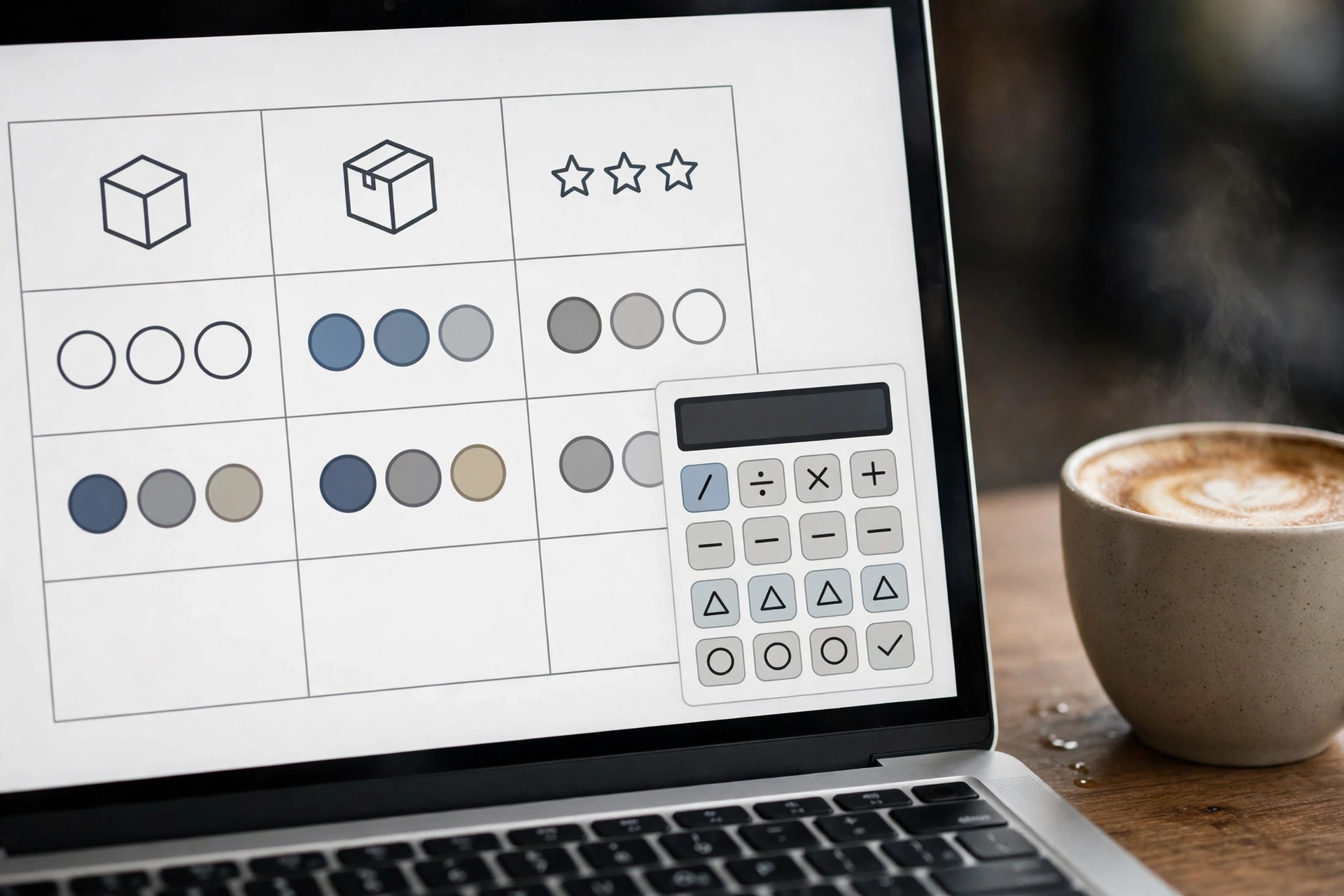
Take a small business with two support agents and 1,000 customer conversations a month that the bot fully resolves. Using vendor prices read on 28 October 2026, Dupple priced five real setups for exactly this scenario:
- Chatbase (bot only, message credits): about $120 a month.
- Help Scout Standard for two users plus AI Answers: about $800 a month.
- Intercom Fin on an existing helpdesk: about $990 a month.
- Gorgias Helpdesk plus AI Agent: about $1,686 a month.
The spread is more than tenfold for the same workload. The difference is not the AI — it is what else you are buying. Chatbase is a bot alone; you still need somewhere for human agents to work. Gorgias is a full helpdesk with the bot included. If you already have a helpdesk you like, adding a bot to it is usually cheaper than switching platforms to get a bundled one.
Scale the same example down to 100 resolved conversations a month and the order flips: Fin’s $49 minimum makes it $99, Help Scout lands at $125, and Chatbase at $32. At 5,000 resolutions, Fin costs $4,950 and Gorgias $7,932. The right choice depends entirely on your volume, which is why any vendor that quotes a price without asking how many messages you handle is selling, not advising.
The hidden fees that double the advertised price
The sticker price is rarely the real price. Four add-ons routinely catch small businesses out.
AI as a paid add-on. Many platforms advertise a low base plan, then charge separately for the AI itself. Tidio’s $29-a-month Starter plan becomes $97 a month once you add Lyro AI at $39, Flows automation at $29, and branding removal, per Elfsight’s breakdown. Always price the plan with the AI switched on, not the plan on the pricing page’s first screen.
Overage charges. Once you pass your plan’s included AI responses, vendors charge $0.01 to $0.05 per extra AI-generated reply. That sounds trivial until a busy week pushes you 2,000 replies over your limit and adds $100 to the bill.
Branding removal and setup. Removing the vendor’s “Powered by” badge is often a paid upgrade, and some platforms charge a setup or onboarding fee. Bluehost’s AI Receptionist, by contrast, charges a flat $25 a month with no setup fee — the exception that proves how common the fee is elsewhere.
Maintenance on custom builds. A custom chatbot is not a one-off purchase. Annual maintenance typically runs 15 to 20 percent of the build cost, so a $50,000 chatbot needs $7,500 to $10,000 a year just to stay current, update its answers, and keep its integrations working.
Add your own time to that list. One builder’s honest accounting puts the realistic first-year total for a platform chatbot at $2,500 to $8,000 once the hours spent training it, fixing wrong answers, and updating its knowledge base are valued at a reasonable hourly rate — not the $348 a year the pricing page implies.
What the chatbot actually replaces
The cost question only makes sense against the cost of the alternative, which is a human answering the same messages. A Salesforce study cited by Bluehost found AI handled around 30 percent of customer service cases in 2025, with service professionals expecting that figure to reach 50 percent by 2027. That is the realistic ceiling for most small businesses: the bot takes the repetitive third — opening hours, delivery times, return policy, booking changes — and humans keep the rest.
Work it out for your own business. If you spend 20 hours a month answering repetitive messages and value your hour at $40, that work currently costs you $800 a month. A $50-a-month platform bot that clears even half of it pays for itself sixteen times over. But if you handle fewer than 200 conversations a month, even the cheapest paid plan may not earn its keep, and a free tier or a simple FAQ page is the better buy. One independent builder’s rule of thumb: below 200 conversations a month, a platform chatbot at $50 to $100 a month should still show positive return within the first quarter — if it is actually resolving chats, not just greeting people and handing off.
There is also a do-it-yourself route that barely existed two years ago. If you build the agent yourself on top of a language model, the raw model calls for 300 conversations a month cost roughly $2 to $7, according to Skilzy’s 2026 breakdown, with hosting and a chat widget adding $0 to $55. The catch is the 6 to 15 hours of setup work and the ongoing job of keeping the knowledge base current. The technology is nearly free; the attention is not.
How to choose without overpaying
Start with your volume. Count last month’s customer messages across every channel — website chat, email, Instagram, WhatsApp — and split them into questions the bot could answer from a FAQ and questions that needed a human. That split is your business case. If fewer than a third are routine, a chatbot will not save you much, whatever it costs.
Then match the model to the volume. Under 200 conversations a month, take a free tier or a flat $20-to-$50 plan. At 500 to 2,000 a month, compare per-resolution pricing against a flat plan at your actual volume, not the vendor’s example volume. Above that, a flat plan or a credit plan usually beats per-resolution billing, and the per-resolution vendors know it — that is why their calculators default to small numbers.
Watch for three traps. First, a vendor that prices per seat and per resolution is charging you twice for the same conversation. Second, a “free” plan that caps you at 50 or 100 conversations a month is a trial, not a plan — you will blow past it in the first busy week. Third, any quote that does not include the cost of keeping answers up to date is incomplete. A chatbot that gives last year’s prices or a discontinued product name costs you customers, not just money.
And remember the legal footnote that now applies in Europe: since August 2026, the EU AI Act’s transparency rules require that a customer knows they are talking to a machine. A clear greeting line covers it, but the bot must not pretend to be human.
If you are new to these tools, our guide to using ChatGPT for a small business is a good place to start before you compare vendors.
The bottom line
An AI chatbot costs a small business $20 to $100 a month at the entry level, $150 to $800 a month at realistic growing volumes, and $0.75 to $0.99 per resolved conversation on the pay-per-outcome platforms that now dominate customer service. Custom builds start around $10,000 and climb past $150,000, plus 15 to 20 percent a year in maintenance. The cheapest option is not the lowest sticker price but the pricing model that fits your volume — and the most expensive mistake is buying a bot for messages you barely receive.
Count your messages, price the plan with the AI switched on, and trial it for a month on your ten most common questions. If it cannot answer those ten reliably, no price is low enough.
How much does an AI chatbot cost per month for a small business?
Most small businesses pay $20 to $100 a month for an entry-level chatbot platform. At 1,000 resolved conversations a month, real 2026 prices range from about $120 a month for a bot-only tool to about $990 on Intercom Fin and $1,686 on Gorgias, depending on what else is bundled in.
Is a chatbot worth it for a small business?
It is worth it when a large share of your messages are repetitive — opening hours, prices, delivery times, returns. AI handled around 30 percent of customer service cases in 2025, and that routine third is where the savings sit. Below roughly 200 conversations a month, a free tier or a good FAQ page may be the better buy.
What is the cheapest AI chatbot for a small business?
Several platforms offer free tiers for very low volumes, and paid plans start at $6 to $19 a month. But the cheapest sticker price is often not the cheapest bill: per-resolution pricing at $0.99 a conversation can overtake a flat $32-a-month plan once volume passes a few hundred chats.
Do AI chatbots replace human support staff?
No — not for a small business. They take the repetitive questions and hand the rest to a human. Expect the bot to resolve roughly a third of cases on its own, with the rest escalated. A bot that pretends to be human is also a legal problem in the EU, where transparency rules require customers to know they are talking to a machine.