How Often to Feed Betta Fish: The Complete Schedule
How often to feed betta fish is the most-asked question in the hobby — and the most misunderstood. The short answer is twice a day. But the portions, the food types, and the weekly fasting day matter far more than the frequency, and getting those details right is what separates bettas that live two years from bettas that live five.
Twice a Day: The Standard Schedule
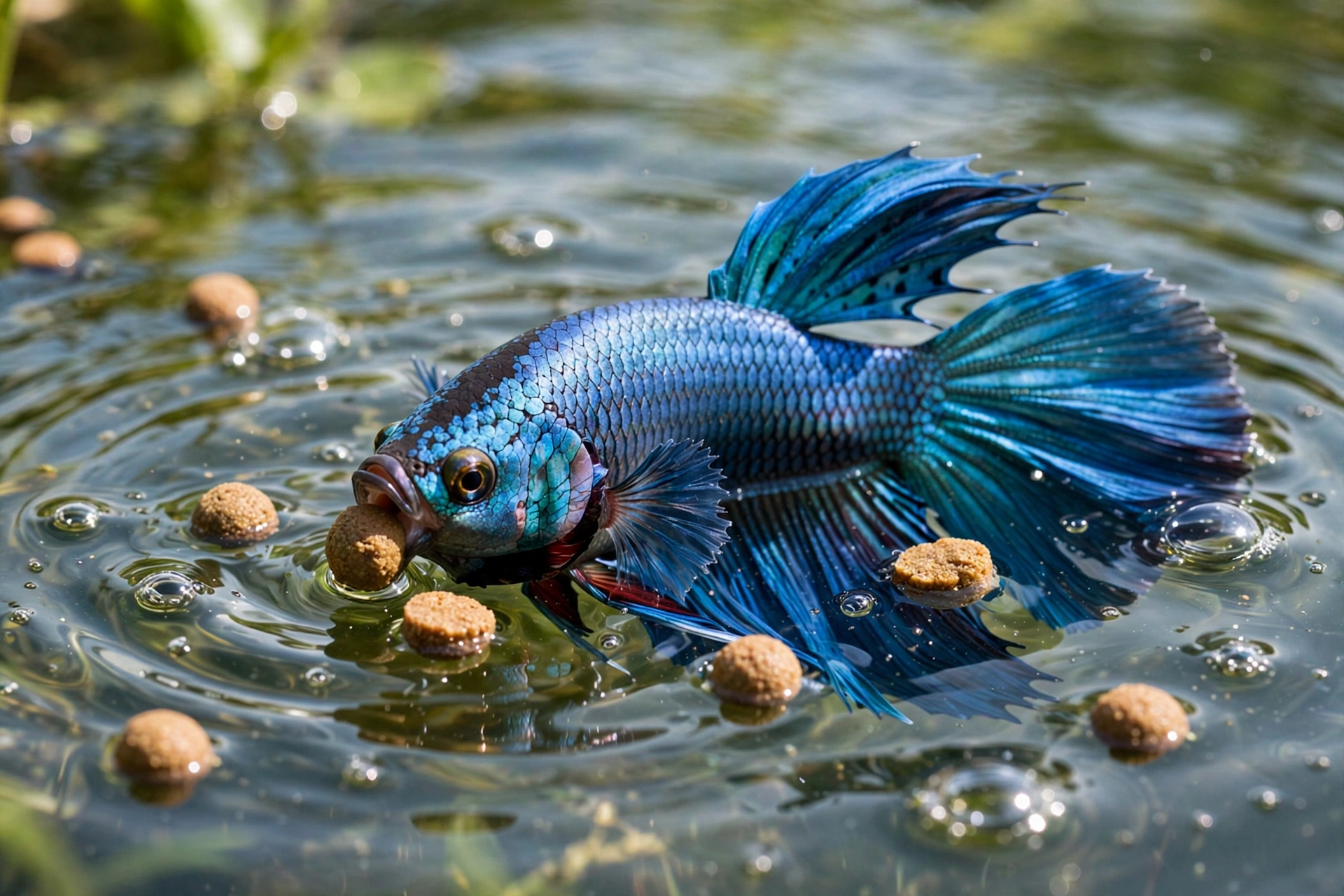
Feed your betta two small meals per day, roughly twelve hours apart — morning and evening fits most schedules. Each meal should be only what your betta eats in about two minutes. For most adult bettas, that’s two to four small pellets or an equivalent pinch of food. Consistency matters more than the exact clock time; pick times that fit your day and stick to them.
How Much Per Meal? The Eye-Size Rule
A betta’s stomach is approximately the size of its eye. Look at your betta’s eye — that tiny volume is one full meal. It looks like almost nothing, and that’s correct. Most feeding problems in this hobby are overfeeding problems, always in the same direction. Cut portions if you see food hitting the substrate uneaten, a visibly rounded belly after meals, water clouding between changes, or stringy white waste.
What to Feed: Build a Rotation
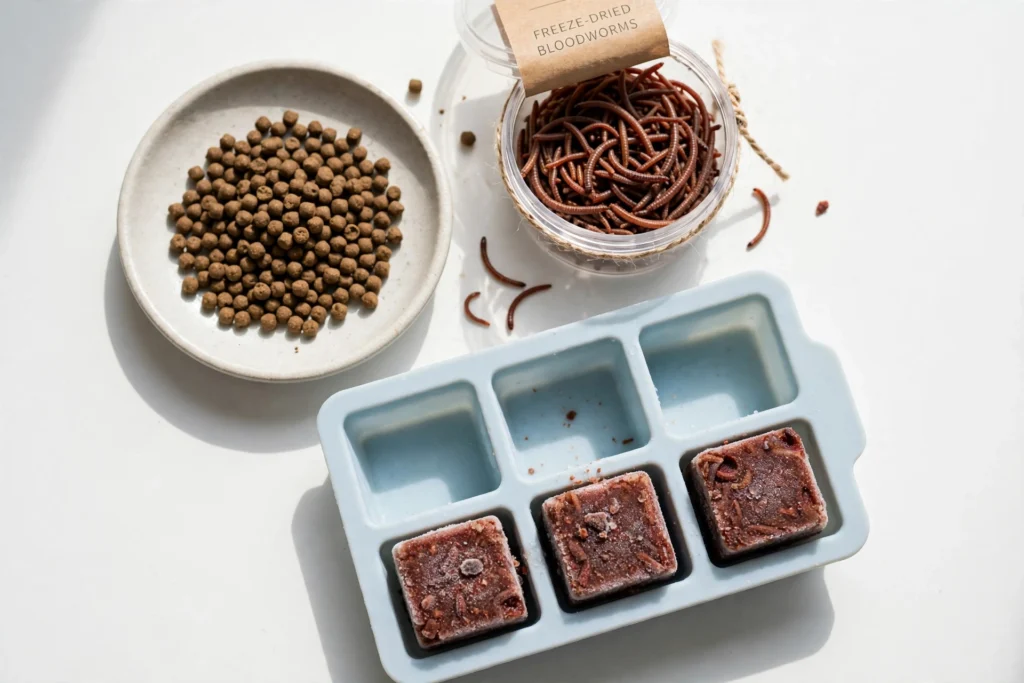
Don’t feed a single food forever — rotate for complete nutrition. Quality betta pellets work as the daily staple; look for 35% or higher protein with fish meal as the first ingredient. Add freeze-dried bloodworms or brine shrimp two to three times a week as treats, and frozen daphnia or mysis shrimp once or twice weekly for variety — daphnia doubles as a digestive aid. Soak freeze-dried foods for a minute before feeding, because they expand inside the stomach otherwise and cause bloating. Avoid tropical flakes as a staple: they disintegrate, foul the water, and lack the protein density a carnivorous betta needs.
The Weekly Fast Day
Skip feeding entirely one day per week. This isn’t cruelty — it’s preventive medicine. A weekly fast clears the digestive tract and prevents the constipation and bloating behind most swim bladder issues, the number one preventable killer of pet bettas. In the wild, bettas eat on no schedule at all; feast and famine is their natural rhythm. Pick a consistent day and stick to it.
Feeding by Life Stage
Fry under four weeks old need three to five tiny meals daily — they can’t go hours without food. Juveniles from one to four months do well on three small meals daily to fuel fast growth. Adults switch to the standard twice-daily schedule for life. Seniors over three years old keep twice-daily feeding but with slightly smaller portions, since metabolism slows and uneaten food fouls the water faster than they can eat it.
Special Situations
A new betta refusing food for two to three days is normal relocation stress — offer food, remove what’s uneaten after five minutes, and try again tomorrow. For a sick betta, reduce to once daily during treatment; most medications work better with less food going in, and the water stays cleaner. If you’re conditioning a pair for breeding, temporarily increase to three protein-heavy meals daily for one to two weeks, then return to normal. Going away for under a week? Skip the pet sitter entirely — a healthy adult betta is fine unfed for seven days, which is far safer than a well-meaning friend dumping a week’s worth of food in at once.
Feeding Mistakes That Shorten Betta Lives
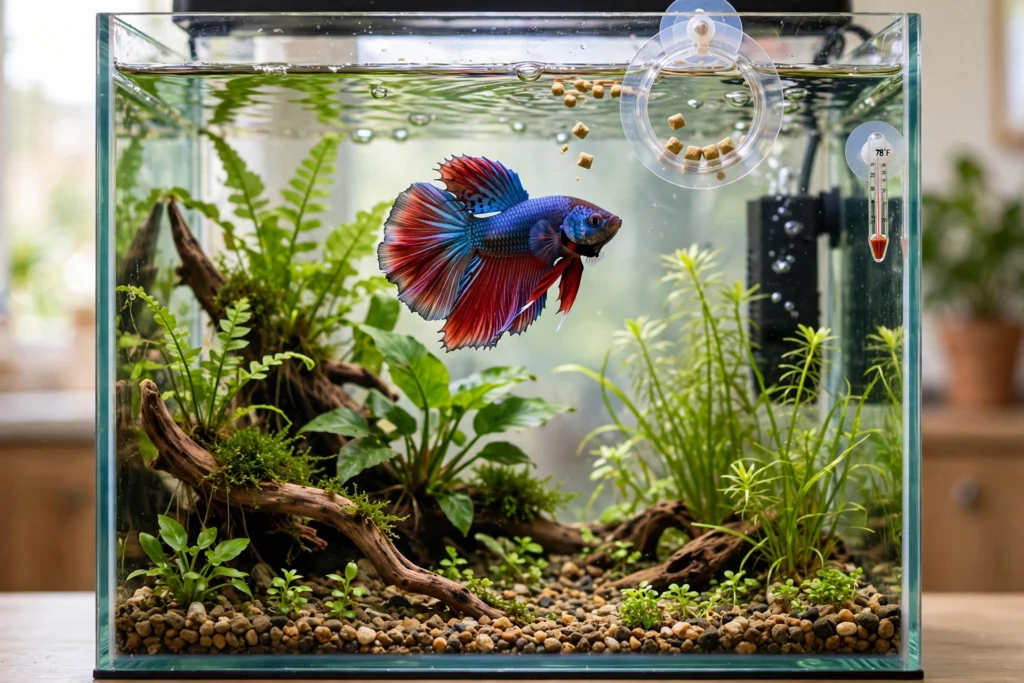
Feeding flakes as a staple. Eyeballing a “pinch” instead of counting two to four pellets. Feeding normally when the water is cold — below 74°F digestion slows dramatically, so fix the temperature, not the food. Skipping the weekly fast day, which leads to chronic mild overfeeding and swim bladder trouble. And feeding a sick fish a full schedule, which spikes ammonia on top of illness.
Twice a day, eye-sized portions, one fast day a week. Master that routine and you’ve solved ninety percent of betta feeding problems — the rest is just choosing good food.