Why Is My Fish Tank Cloudy? Causes and Fixes
Why is my fish tank cloudy? It’s the most common question new aquarium owners ask, and the answer is almost always good news: cloudy water is fixable once you identify the cause. The color of the cloudiness is your biggest clue — white, green, and brown cloudiness each point to a different problem with a different fix.
What Color Is the Cloudiness?
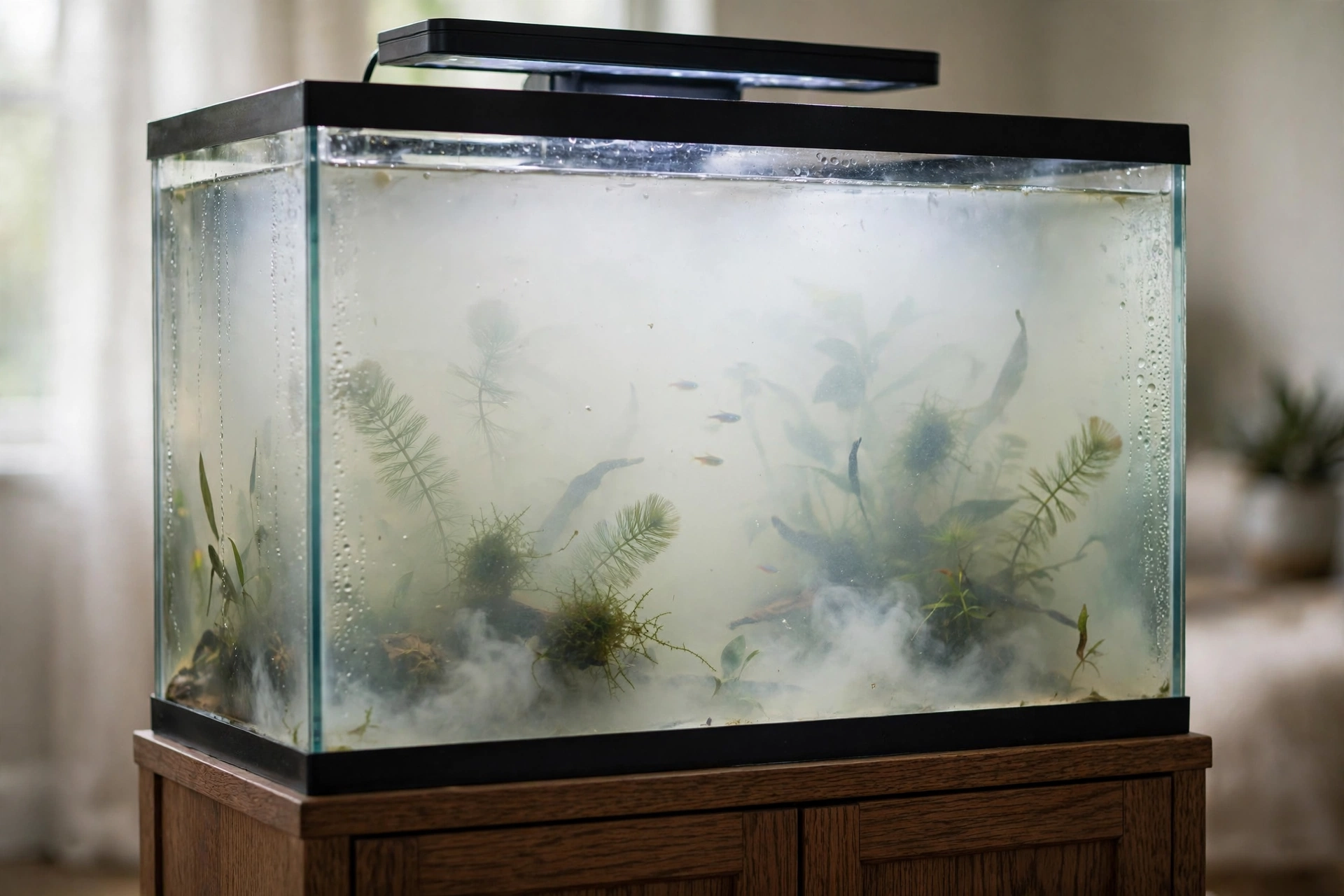
Milky white or gray water almost always means a bacterial bloom — free-floating beneficial bacteria multiplying rapidly in the water column. This is most common in new tanks under two months old, where bacteria haven’t yet colonized the filter and surfaces. Green cloudy water means an algae bloom: single-celled algae suspended in the water, fed by excess light and nutrients. Yellow or brown tint usually means tannins leaching from driftwood, or dissolved organic waste building up over time. Identify your color first, because each has a different fix.
Cause 1: Bacterial Bloom (New Tank Syndrome)
The number one reason for white cloudy water. In a new or recently reset tank, the beneficial bacteria colony hasn’t established itself on filter media and surfaces yet, so bacteria bloom freely in the water instead. The fix is mostly patience: don’t do massive water changes, because they prolong the bloom by removing the bacteria’s food. Keep feeding light, make sure the filter runs 24/7, and let the bacteria settle onto surfaces over one to two weeks. It clears on its own — intervening usually makes it last longer.
Cause 2: Overfeeding
Uneaten food decays into ammonia, which feeds both bacterial blooms and algae. If the cloudiness appeared after you started feeding more — or after someone else fed the fish — this is your culprit. The fix: cut back to once-daily feeding, only what the fish eat in two minutes. Siphon any uneaten food from the substrate. The water usually clears within a few days once the excess food stops.
Cause 3: Overstocking
Too many fish means more waste than your filtration can process, and chronic cloudiness is often the first symptom. The fix requires honesty about your stocking level: either upgrade to a larger tank or rehome some fish. No amount of water changes permanently fixes an overstocked tank.
Cause 4: Green Water (Algae Bloom)
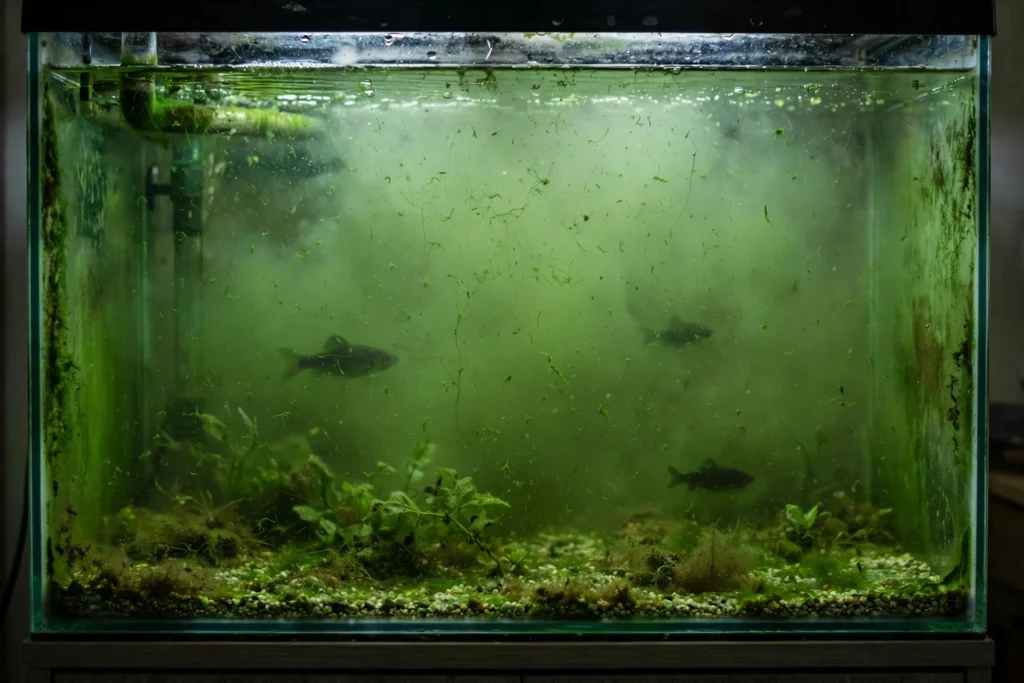
Green cloudy water is suspended algae, driven by too much light combined with excess nutrients like nitrate and phosphate. The fix: put lights on a timer for 6–8 hours daily, cut feeding, and add fast-growing live plants that outcompete algae for nutrients. A UV sterilizer clears green water within days if you want the fast, reliable option.
Cause 5: Substrate Disturbance
Just set up the tank, added new gravel, or did an aggressive gravel vacuum? Fine particles suspended in the water cause temporary cloudiness. The fix: always rinse new substrate before adding it. After a disturbance, just let the filter run — it clears within hours. A fine filter floss pad in the filter speeds this up dramatically.
Cause 6: Driftwood Tannins
New driftwood leaches tannins that tint the water yellow-brown. It’s completely harmless — many fish like tetras, bettas, and discus actually prefer tannin-stained water — but it looks dirty. The fix: boil driftwood before adding it, or soak it for a week with daily water changes. Activated carbon in the filter removes existing tannins from the water.
Cause 7: Filter Problems
A clogged, undersized, or recently “cleaned” filter can’t process waste properly. If cloudiness started right after you cleaned the filter or replaced the cartridge, you likely wiped out your beneficial bacteria colony. The fix: never replace all filter media at once. Rinse media gently in old tank water — never tap water, which kills bacteria with chlorine. If the filter is undersized for your tank, upgrade it.
What NOT to Do for Cloudy Water
Don’t reach for water clarifier chemicals first — they clump particles so the filter catches them, but they don’t fix the cause, and some harm beneficial bacteria. Don’t do 100% water changes — they reset your nitrogen cycle and make everything worse. And never add more fish to a cloudy tank.
When Cloudy Water Is an Emergency
Cloudy water alone, with active fish eating normally, is a water-quality issue — not an emergency. Treat it as urgent when cloudiness comes with fish gasping at the surface, clamped fins, lethargy, or ammonia or nitrite readings above zero. That’s a do-a-water-change-now situation.
Diagnose by color, fix the cause rather than the symptom, and resist the urge to nuke the tank with chemicals. Most cloudy water resolves within days once you stop feeding the underlying problem.