
How Much Does Inventory Management Software Cost for a Small Business in 2026?
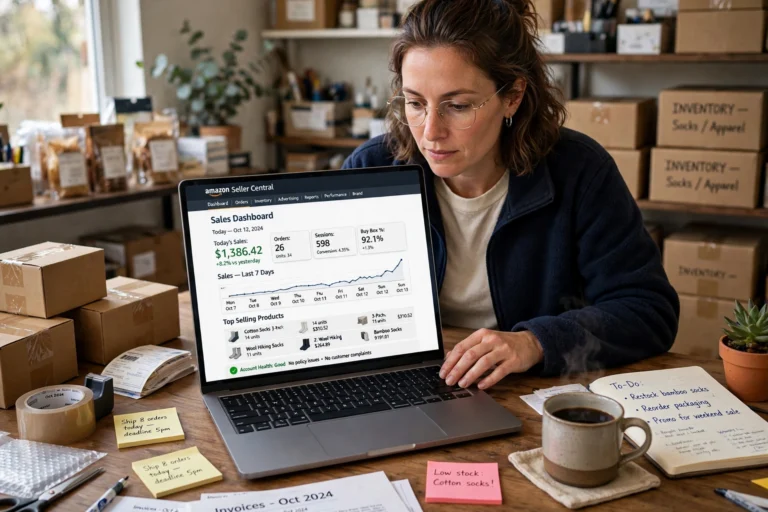
How much does inventory management software cost for a small business? Most small businesses pay between $0 and $999 a month in 2026, with the typical online seller spending $29 to $129 a month. The free Zoho Inventory plan covers 50 orders a month, while mid-market Cin7 Core starts at $349 a month.
Every price below was checked on 25 November 2026 on the vendor’s own pricing page or a current November 2026 source, credited in plain text. Prices change often, so confirm at checkout.
A side business shipping a few dozen orders a month can run on a genuinely free plan; a growing seller doing a few hundred lands in the $29 to $129 range. Once you sell across several channels with a small warehouse team, the bill jumps to $349 to $999 a month before add-ons — and the expensive mistakes are rarely the subscription itself, but the order cap you missed, the extra licences, and the onboarding fee in month one.
How Much Does Inventory Management Software Cost for a Small Business, by Band?
The market falls into three clear bands; almost every small business sits in the first two.
| Price band | Monthly cost | Order / user limits | Best for |
|---|---|---|---|
| Entry SaaS | Free–$49 | Up to 50 orders free; paid tiers to 500 orders, 1–3 users | Side businesses, new stores, single-channel sellers |
| Growth SaaS | $99–$299 | 3,000–15,000 orders a month, 5–10 users, 4–10 locations | Established online sellers, wholesalers, small manufacturers |
| Mid-market SaaS | $349–$999 | 6,000–120,000 orders a year, 5–15 users, unlimited locations | Multichannel brands, distributors, multi-warehouse operations |
Industry guides put most small and mid-sized businesses at $50 to $300 a month, full-featured plans roughly $150 to $1,000; enterprise systems, sold by quote, start above $5,000 a month.
The Cap That Decides Your Tier Is Order Volume, Not SKUs
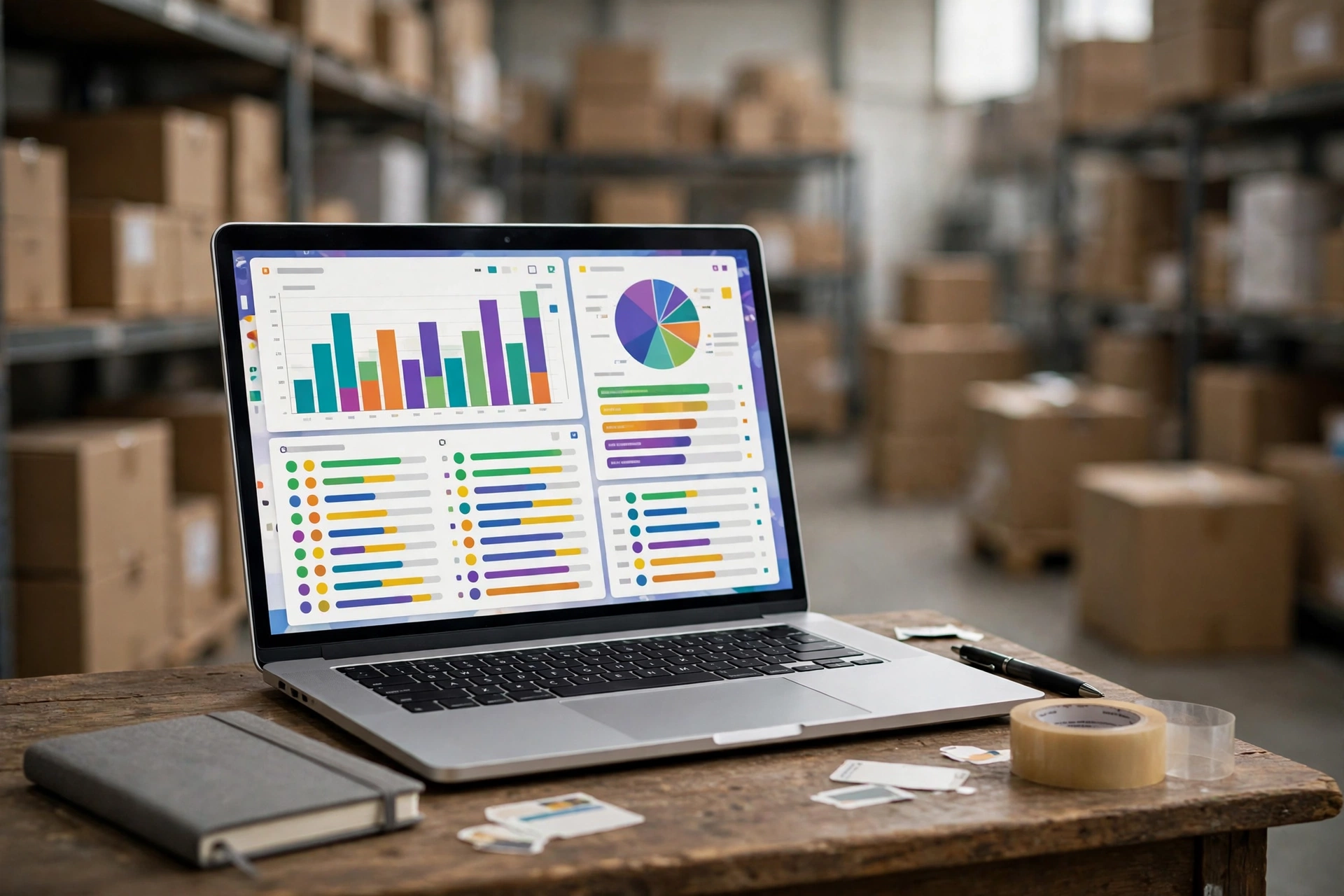
Vendors price by how much you sell and how many people touch the system, not by how many different products you stock. A shop with 400 SKUs and 900 orders a month is a small catalogue with a busy till — and SKU count barely appears on a pricing page, while order volume appears on every one.
Take the example used through this guide: a seller with 400 SKUs shipping 900 orders a month with three staff. On Zoho Inventory, the free plan (50 orders a month) is already 850 orders out of reach, and Standard at $29 a month billed annually covers 500 orders, 3 users and 2 locations — still 400 short. The seller can upgrade to Premium at $79 a month (3,000 orders, 5 users, 4 locations) or add a 500-order pack to Standard at $7.50 a month — $36.50 a month for 1,000 orders of headroom, saving $510 a year. Source: Zoho Inventory pricing page, checked 25 November 2026.
Cin7 Core prices by annual order volume: Standard at $349 a month includes 6,000 sale orders a year, Pro at $599 includes 24,000, Advanced at $999 includes 120,000. Our seller ships 10,800 a year, so it is into Pro even with three staff. Unleashed Core includes just 100 sales orders a month in the base $399 plan; upgrades cost $70 a month for up to 500 orders, $200 for up to 1,500, and $320 for up to 3,000 — so at 900 orders a month the bill is $399 plus $200, or $599, before add-ons. Source: Cin7 pricing page and Unleashed pricing page, both checked 25 November 2026.
Size your plan on your busiest month, not your average — a December spike that breaches the cap either blocks orders or triggers an upgrade. Count users honestly: Zoho charges $7.50 a month per extra user, Unleashed $69 on Core and $89 on Pro, so a five-person team on Unleashed Core pays $537 a month before orders are counted.
Entry Band: Free to $49 a Month
The entry band is genuinely usable, not a demo. Zoho Inventory’s free plan costs $0 and covers 50 orders a month, 1 user and 1 location, with composite items, dropshipment and backordering included. Standard costs $29 a month billed annually, or $39 billed monthly, for 500 orders a month, 3 users and 2 locations. Source: Zoho Inventory pricing page, checked 25 November 2026.
Sortly is a visual tracker rather than a full order system: its free plan covers 100 items with photo and QR-code tracking, and Advanced costs $49 a month billed monthly. It suits tracking equipment and supplies, not hundreds of customer orders, and Advanced has no purchase orders or stock counts. Source: Sortly pricing as reported in November 2026 pricing comparisons.
Square for Retail suits a shop already taking payments through Square. Basic inventory is free; Plus costs $49 a month per location and adds stock intake, vendors, purchase orders and cost-of-goods reports — two shops pay $98 a month, not $49. Source: Square for Retail pricing as reported in November 2026 pricing comparisons.
Fifty orders a month is roughly two a working day; a seller doing ten a day is already at 300 a month and needs a paid plan.
Growth Band: $99 to $299 a Month
Zoho Inventory’s Premium plan costs $79 a month billed annually for 3,000 orders a month, 5 users and 4 locations, adding barcode generation, stock counting and serial and batch tracking. Plus costs $129 for 7,500 orders, 10 users and 6 locations; Enterprise $249 for 15,000 orders, 10 users and 10 locations. Our example seller is covered by Premium at $79, or Standard plus an order pack at $36.50. Source: Zoho Inventory pricing page, checked 25 November 2026.
inFlow Inventory costs $129 a month, or $99 billed annually, with flat-rate pricing, so the bill stays predictable as the team grows. It is built for wholesale, B2B and field-service sellers, with a B2B showroom portal. Its pricing page uses a calculator based on team size, locations and order volume — always confirm the quoted figure. Source: inFlow Inventory pricing guide, October 2026.
Fishbowl starts at $229 a month billed annually for manufacturers and distributors already running QuickBooks, with deep QuickBooks Online and Xero sync. No free tier, only a trial. Source: Fishbowl pricing as reported in November 2026 pricing comparisons.
This band is where inventory meets the rest of the business. A seller whose stock lives in Shopify needs the two systems to agree on every sale, and how much Shopify costs per month is the other half of that budget. A seller moving into wholesale or how dropshipping works gets dropshipment and backordering in Zoho from the Standard plan. A multichannel seller should also price what it costs to sell on Amazon alongside the subscription — marketplace fees, not the software, are usually the bigger line.
Mid-Market Band: $349 to $999 a Month
Cin7 Core publishes its prices. Standard costs $349 a month for 5 users, 6,000 sale orders a year, 2 ecommerce integrations and unlimited locations. Pro costs $599 for 10 users, 24,000 orders a year, 4 integrations and material requirements planning. Advanced costs $999 for 15 users, 120,000 orders a year, 6 integrations and advanced warehouse management. A 14-day free trial is available; Omni is custom-quoted. Caution: some aggregators list Advanced at $1,199 a month — confirm the $999 figure on Cin7’s own pricing page at checkout. Source: Cin7 pricing page, checked 25 November 2026; tier details corroborated by a November 2026 read of the same page.
Unleashed suits product businesses where purchasing, landed costs and batch tracking are daily problems. Core usually costs $399 a month, or $4,389 a year; Pro $729 a month. A Black Friday promotion at the time of checking cut Core to $40 and Pro to $73 a month for three months for new customers subscribing by 30 November 2026. Core includes 3 users and 100 sales orders a month; extra users cost $69 each. Extras add up fast: the Advanced Inventory Manager is $149 a month, multi-bin warehouse management another $149, and onboarding runs $449 self-service to $5,549 full. Source: Unleashed pricing page, checked 25 November 2026.
Lightspeed Retail is priced as a point-of-sale system with inventory inside it. Basic costs $89 a month billed annually, or $109 month to month, per location, with one register included. Core costs $149 billed annually and adds landed costs, API access and workflows; Plus costs $289. Extra locations are charged again; hardware is quoted separately, from a $69 card reader to a $399 smart terminal. Source: Lightspeed pricing page and NerdWallet pricing read, November 2026. For a shop buying the till and the stock system together, what a POS system costs a small business is the companion figure.
Moving from $129 to $349 a month is $2,640 a year, and it only pays if the business actually uses multichannel sync, warehouse management or manufacturing features the growth band cannot do. A seller doing 900 orders a month through one channel does not need Cin7; one doing 900 across Shopify, Amazon and a wholesale portal, with stock in two warehouses, probably does.
What Is the Average Cost of Inventory Management Software?
The average cost of inventory management software for a small business is $50 to $300 a month, according to 2026 pricing guides. One November 2026 survey of 40 tools found a median entry price of $82 a month, with paid plans from $5 to $5,000. The useful average is the band average — entry $0 to $49, growth $99 to $299, mid-market $349 to $999.
Is There Free Inventory Management Software for a Small Business?
Yes, there is free inventory management software for a small business, and two free plans are genuinely usable. Zoho Inventory’s free plan covers 50 orders a month, 1 user and 1 location, with real order and purchasing features. Sortly’s free plan covers 100 items, and Odoo offers one app free with unlimited users. The catch is always the cap: outgrow it and you pay the first paid tier. A free plan is a good way to learn a tool, not to run a business doing hundreds of orders a month. Source: Zoho Inventory pricing page, checked 25 November 2026; Sortly and Odoo pricing as reported in November 2026 pricing comparisons.
The Costs Nobody Puts on the Pricing Page
The subscription is usually the smallest line in the first year. Industry guides put implementation at $500 to $10,000 or more, with small businesses using guided onboarding typically spending $500 to $2,000. Self-service setup costs $0 in fees and a weekend of the owner’s time. Source: inFlow Inventory pricing guide, October 2026.
Hardware is the second hidden line. A barcode scanner, label printer and labels typically run $300 to $800 for a small operation; a full setup with a dedicated terminal can reach $1,000 to $5,000. Buy hardware after the software is chosen — not every scanner works with every system.
Add-ons are the third hidden line. Zoho charges $7.50 a month per extra user or per 500 extra orders, and $10 per extra location. Unleashed charges $69 per extra Core user, $39 per extra integration, and $149 a month each for its Advanced Inventory Manager and multi-bin warehouse module. Cin7 sells its B2B portal, point of sale, forecasting and automations as add-ons. Before signing, price the features the business needs as a bundle, not as a headline plan price.
Payment processing is a fourth line for retail systems. Lightspeed charges 1.5% on card-present payments through Lightspeed Payments on its current bundles, and some reports note roughly $400 a month for retailers not using it — dwarfing the $89 subscription. Source: Lightspeed pricing page, checked 25 November 2026.
Worked First-Year Budget: A 400-SKU Seller at 900 Orders a Month
Budget for the example seller: 400 SKUs, 900 orders a month, three staff, one location, selling online from a small stockroom.
| First-year cost | Zoho route (Standard + order pack) | Cin7 route (Pro) |
|---|---|---|
| Subscription, 12 months | $438 ($36.50 × 12) | $7,188 ($599 × 12) |
| Implementation / onboarding | $1,000 (guided setup, mid-range) | $5,000 (partner-led, low end) |
| Hardware (scanner, label printer, labels) | $500 | $500 |
| Add-ons (extra users, integrations) | $0 | $0 |
| Total first year | $1,938 | $12,688 |
Year one totals $1,938 on the Zoho route, about $161 a month averaged, and $12,688 on the Cin7 route, about $1,057 a month. The $10,750 gap buys multichannel sync, advanced warehouse management and manufacturing planning this seller — one channel, one stockroom — does not need yet. It also shows why the subscription is the wrong number to compare alone: Cin7’s subscription is 16 times Zoho’s, but its first-year total is only about 6.5 times larger. In year two, Zoho costs $438 and Cin7 $7,188.
A simpler rule: multiply the monthly subscription by 12, add $500 to $2,000 for implementation and $300 to $800 for hardware. A $29-a-month plan costs $1,148 to $3,148 in year one; a $129 plan $2,348 to $4,348; a $349 plan $4,988 to $6,988 before its higher onboarding. If the total exceeds what the stockouts it prevents will cost, wait; if less, buy it now rather than after the next stockout.

What Is the Best Inventory Management Software for a Small Business?
The best inventory management software for a small business is Zoho Inventory for most online sellers: its free plan covers 50 orders a month, its $29-a-month Standard plan covers 500 orders with 3 users, and no rival matches that price per order. The honest answer depends on how the business sells. Sortly is best for visual tracking of supplies; Square for Retail for a shop already on Square; Lightspeed Retail for a store wanting till and stock ledger in one system; Cin7 Core for a multichannel brand outgrowing basic tools; Unleashed where purchasing and landed costs are the daily problem. There is no single best tool, only a best fit for a given order volume, channel mix and team size.
How to Choose, and When to Upgrade
Start with three numbers: orders in the busiest month, people who need logins, and sales channels. Find the cheapest plan whose caps clear all three with room to grow, then check add-on prices. Trial it with real products and orders for two weeks before paying — a trial with sample data proves nothing. Import a hundred real SKUs, process a real week of orders, and count the stock.
Upgrade when a cap is hit twice, not once — one busy month is a spike, two is a trend. Upgrade when the team starts keeping a second spreadsheet; that spreadsheet is the system failing. Downgrade without embarrassment when volume falls: Zoho lets plans change at any time with no contract. The cheapest software is the one that fits this month, not a business three sizes larger.
FAQ
What is the average cost of inventory management software?
The average cost is $50 to $300 a month — entry plans free to $49, growth $99 to $299, mid-market $349 to $999 a month.
Is there free inventory management software for a small business?
Yes. Zoho Inventory’s free plan covers 50 orders a month for 1 user, Sortly’s covers 100 items, and Odoo offers one app free. Free plans cap orders, items or users, so a growing business eventually needs a paid tier.
How much does inventory management software cost for a small business per month?
Most small businesses pay $29 to $129 a month. Zoho Inventory Standard costs $29 a month billed annually for 500 orders, Premium $79 for 3,000, and Cin7 Core starts at $349. Prices checked 25 November 2026.
What is the cheapest inventory management software for a small business?
The cheapest is free: Zoho Inventory’s free plan at $0 for 50 orders a month, or Sortly’s for 100 items. The cheapest paid plan is Zoho Inventory Standard at $29 a month billed annually, or $39 monthly.