
How Much Does It Cost to Start a Cleaning Business in 2026?
Starting a cleaning business costs $1,150 to $2,200 for a solo residential launch, or $6,000 to $15,000 for a commercial setup. Most solo cleaners spend far less than the headline figures suggest, and a survey of more than 80 owners found that 55% started for under $1,000.
That range is wide for a reason. A cleaning business can be a one-person operation run from a kitchen table with a vacuum, a caddy of supplies, and a phone, or it can be a commercial operation with a team, a van, and contracts to clean offices after hours. The work looks similar from the outside, but the startup bill is not. The size of the business you want on day one, the type of cleaning you plan to do, and the state and city where you register all move the number.
This guide breaks the cost down line by line, using published 2026 figures from industry guides and owner surveys, so you can build a budget that fits the business you actually want to start — not the one a franchise brochure wants to sell you.
Lean vs. Established: Three Ways to Start
There is no single startup cost for a cleaning business, because there is no single kind of cleaning business. The three models below cover almost every new owner. Pick the one that matches your plan, then use the line-by-line section that follows to adjust it for your area.
| Business model | Typical startup cost | Best for |
|---|---|---|
| Solo residential | $1,150–$2,200 | One cleaner, homes and apartments, working alone |
| Small team | $3,500–$8,000 | Two to four cleaners, residential and light commercial |
| Commercial | $6,000–$15,000 | Office and commercial contracts, larger equipment, a team |
The solo residential model is the cheapest entry point, and it is also the most common. A survey of more than 80 cleaning business owners by BoomFSA found that 55% started for under $1,000, while 23% launched with over $10,000 — mostly owners in floor care, where the machines alone cost thousands. That split tells the real story: residential cleaning is a low-cost business, and commercial and specialist cleaning is not.
Published guides put the same picture in slightly different ranges. ZenMaid puts the cost of starting a cleaning business at $2,000 to $10,000, a range that covers everything from a lean solo launch to a small team with commercial ambitions. Clean Estimator puts a solo launch lower, at $500 to $2,000. The $1,150 to $2,200 figure for a solo residential launch in this guide sits inside both of those ranges, and it is built from the itemised costs below rather than a single estimate.
The small-team model costs more because you are paying for more of everything at once: more equipment sets, more insurance, more marketing to fill more calendars, and often a simple booking or scheduling system so jobs do not get double-booked. The commercial model costs the most because commercial clients expect more — larger machines, a bonded and insured team, and the ability to clean bigger spaces on a fixed schedule.
Line-by-Line Startup Costs
The table above is useful for a quick answer, but a budget you can act on needs the individual lines. Here is what each one typically costs, and what drives the price up or down.
Business registration and licences: $50–$500
Registering the business and getting the licences you need usually costs $50 to $500 in total, depending on your state, county, and city. A sole proprietorship is often the cheapest structure to register, while forming an LLC costs more in filing fees but gives you a separate legal entity. Some cities also require a local business licence or a home-occupation permit if you run the business from home.
Do not guess at this number. Check your state secretary of state’s fee schedule and your city or county clerk’s office before you budget, because the same business can cost $50 to register in one place and several hundred in another. If you are still deciding between structures, read our guide to DBA vs LLC: which do you need? before you file — the choice affects your registration cost, your taxes, and your personal liability. For the licence side specifically, see how much a business license costs for a detailed breakdown by licence type.
General liability insurance: $400–$1,500 per year
General liability insurance for a cleaning business typically costs $400 to $1,500 per year, or about $40 to $85 per month. That is the single most important purchase on this list. It covers property damage and injury claims — a broken vase, a scratched floor, a client who slips on a freshly mopped surface — and many commercial clients will not sign a contract with a cleaner who cannot show a certificate of insurance.
The price depends on your revenue, your number of employees, the type of cleaning you do, and your claims history. A solo residential cleaner at the low end of the revenue scale pays near the bottom of the range. A team doing commercial work pays more, because the insurer is covering more people in more buildings. Get quotes from at least two or three insurers or brokers who work with cleaning businesses, and ask specifically whether the policy covers damage to clients’ property while you are cleaning it, because that is the claim you are most likely to face.
Janitorial bond: $100–$500 per year
A janitorial bond, also called a fidelity bond, typically costs $100 to $500 per year. It protects your clients against theft by an employee — if a cleaner takes something from a client’s home or office, the bond pays the client. It is not the same as insurance, and it does not cover damage, but many clients, especially commercial ones, ask for it alongside insurance.
For a solo cleaner with no employees, a bond is cheaper and sometimes optional, though it still helps win trust. For a business with staff, it is close to essential. Some insurers sell insurance and a bond together as a package, which can be cheaper than buying them separately.
Equipment: $400–$3,500
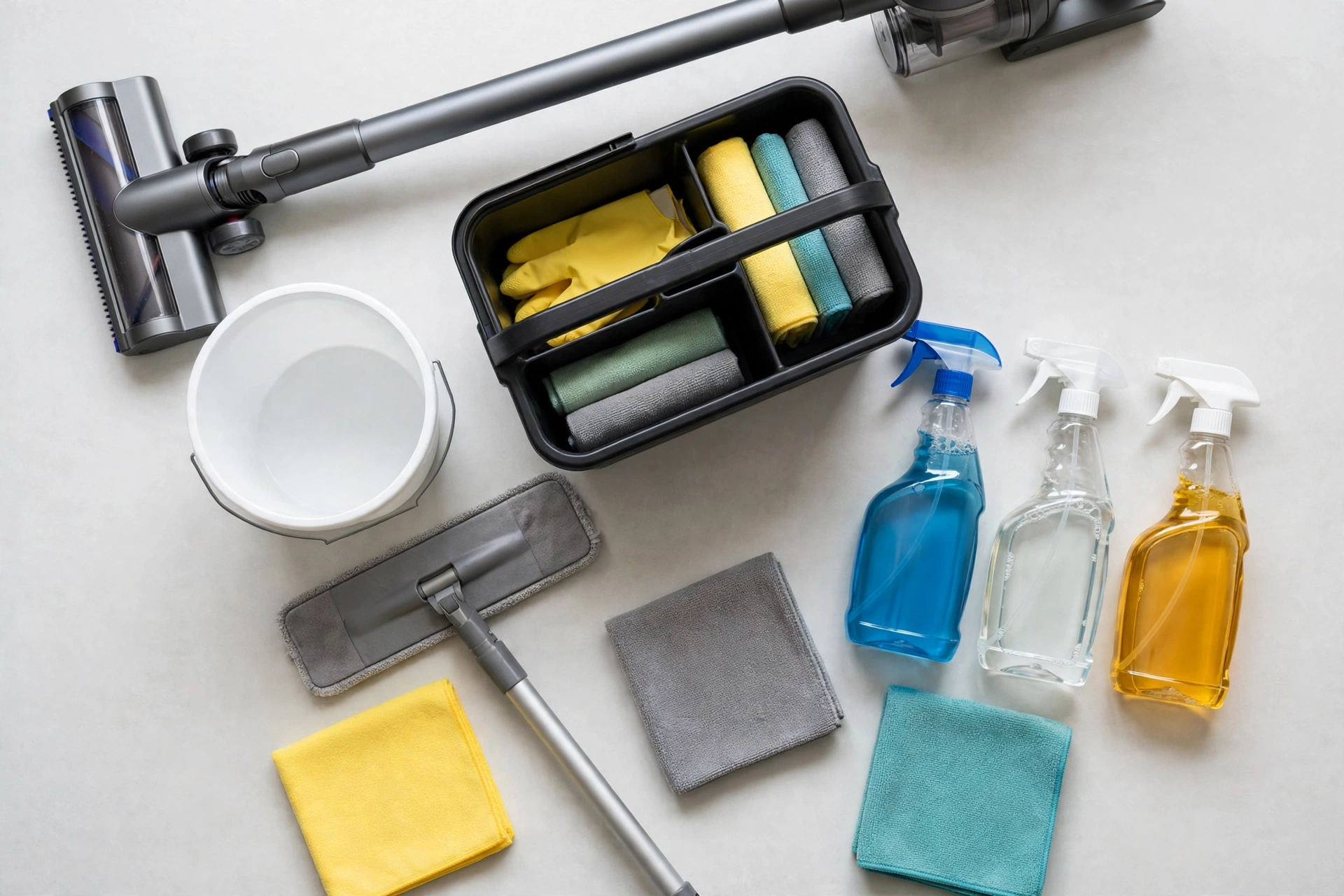
Equipment is the line where the gap between a lean launch and a full setup is widest. A solo residential cleaner can start with $400 to $800 of equipment: a good vacuum, a mop and bucket, a caddy, microfibre cloths, a duster, gloves, and a spray bottle set. That is genuinely enough to clean homes well.
The range runs to $3,500 when you add a commercial-grade vacuum, a carpet cleaner, a floor buffer or scrubber, a pressure washer, or specialist tools for post-construction or move-out cleans. Floor care is where the money goes — the BoomFSA survey found that the owners who spent over $10,000 to start were mostly in floor care, where a single machine can cost more than a residential cleaner’s entire kit.
Buy for the jobs you have, not the jobs you hope to get. A residential cleaner does not need a floor scrubber on day one. Rent or borrow specialist machines for the first few specialist jobs, and buy them once that work is regular enough to pay for the machine.
First-month cleaning supplies: $75–$140
Your first month of cleaning supplies typically costs $75 to $140. That covers the consumables you will use up: all-purpose cleaner, glass cleaner, bathroom cleaner, disinfectant, floor cleaner, sponges, cloths, bin bags, and gloves. Buying in bulk from a wholesale or janitorial supplier brings the per-job cost down, but do not stockpile a year’s worth of chemicals before you have your first client.
One practical tip: keep a separate caddy or kit for each cleaner if you have a team, and a checklist of what goes in it. Running out of glass cleaner halfway through a job is a small problem that feels large to a client standing in the room.
Marketing to start: $100–$1,000
Marketing to launch a cleaning business typically costs $100 to $1,000. At the low end, that is printed flyers, a Google Business Profile (free to set up), and posts in local community groups. At the high end, it is a paid local advertising campaign, printed door hangers, and a listing on a local services directory.
Word of mouth is the cheapest marketing a cleaner has, and it is also the most effective, but it takes time to build. In the first months, most new owners get their first clients from a mix of local advertising, referrals from friends and family, and online listings. Budget for at least a few months of modest marketing rather than one big spend that stops the moment the money runs out.
Website: $100–$500
A simple, professional website for a cleaning business typically costs $100 to $500 to set up. That covers a domain name, a year of basic hosting, and either a ready-made template you fill in yourself or a simple site built by a freelancer. A website is not a luxury for a cleaner: clients search online, check reviews, and judge a business by whether it looks established before they call.
Keep the first version simple — services, service area, prices or a quote form, reviews, and a phone number that is easy to find. You can add online booking and a blog later. The expensive mistake is paying thousands for a custom site before you have a single regular client.
Software: $0–$600
Software for a cleaning business costs anywhere from $0 to $600 to start. At $0, you are running the business on a phone, a calendar, and a spreadsheet. That works for a solo cleaner with a handful of clients. Booking and scheduling software, quoting tools, and invoicing apps cost more, and they become worth paying for once you have a team or enough clients that a missed appointment costs you real money.
Start free or cheap, and pay for software when a specific problem — double bookings, late invoices, clients who cannot book online — is actually costing you jobs. The software should solve a problem you have, not a problem you imagine you will have.
Vehicle: $0 to $3,000 or more
A vehicle costs $0 to start with if you already have a reliable car, and up to $3,000 or more if you need to buy, repair, or adapt one. Most solo cleaners start with the car they already own. That is sensible: a car payment is a fixed monthly cost that a new business does not need while it is still finding clients.
If your car is unreliable, budget for repairs before you budget for advertising, because a missed job damages your reputation more than a quiet week of marketing. A van becomes useful when you have a team and bulky equipment to move, and vehicle signage — a simple magnetic sign or a wrap — is cheap advertising that works every time you drive through a neighbourhood you serve.
Monthly Ongoing Costs
Startup costs get the attention, but the monthly running costs decide whether the business survives its first year. For a solo residential cleaner, ongoing monthly costs before marketing are roughly $284 to $344. That figure covers insurance, a bond, supplies, software, and a phone plan — the costs that arrive every month whether you have ten clients or two.
Insurance is the largest regular line, at $40 to $85 a month, followed by supplies as you use them up, and any software subscription you have taken on. Add marketing on top of that $284 to $344 base, and the amount depends on how aggressively you are trying to grow. A cleaner with a full diary can spend very little on marketing because referrals fill the calendar. A cleaner still building a client list may spend several hundred dollars a month on local advertising until the diary is full.
The other monthly cost that new owners underestimate is their own time spent on work that is not cleaning: quoting jobs, answering messages, invoicing, chasing late payments, and rescheduling. That time is not a cash cost, but it is the reason many solo cleaners find they can only clean for part of the week at first. As the business grows, that admin load is one of the first things owners pay to reduce, either with software or with a part-time helper.
Keep a simple monthly record from the start — income in, costs out, and the balance. That habit costs nothing and it pays for itself the first time you need to know whether a price rise is overdue or whether a marketing channel is actually bringing in work. If you want a fuller picture of the admin side, our guide to how much bookkeeping costs for a small business explains what a bookkeeper charges and when it is worth hiring one.
Costs People Forget
Taxes are the biggest. A self-employed cleaner owes income tax and self-employment tax on profit, and many new owners forget to set money aside for it. A simple rule is to put a fixed share of every payment into a separate account the moment it arrives, before you spend any of it. When tax time comes, you will be glad you did — and an accountant can tell you exactly what share to set aside for your situation. Our guide to how much a CPA costs for a small business covers what an accountant charges and what you get for it.
Background checks are another forgotten cost for owners who hire. Clients trust a cleaner with the keys to their home or office, and some commercial clients require background checks for anyone who will work on their premises. The cost per check is modest, but it adds up across a team.
Uniforms and branded clothing are easy to overlook, and they matter more than they seem. A clean, matching shirt with the business name on it makes a team look professional at the door, and clients notice. So do replacement costs: vacuum bags and filters, worn mop heads, broken spray bottles, and a vacuum that needs servicing. Supplies are a monthly cost, but equipment wears out, and the replacement rarely happens in a convenient month.
Finally, budget for the gap between starting and getting paid regularly. Your first-month cash need as a solo cleaner is $1,150 to $2,500, and that assumes clients pay on time. Some pay late, some cancel, and some ask to reschedule. A small cash buffer — even a few hundred dollars — turns a late payment from a crisis into an annoyance.
How to Keep Costs Down
Starting a cleaning business cheaply is mostly a matter of not buying things before you need them. The following steps keep a launch lean without cutting the corners that matter.
Start residential, not commercial. Residential cleaning needs less equipment, simpler insurance, and no team on day one, which is why the solo residential launch is the cheapest model. You can add commercial work later, once you have the equipment and the track record to win it.
Buy used equipment where it is safe to do so. A second-hand commercial vacuum from a reputable seller can cost half the new price and clean just as well. Test anything used before you pay for it, and do not buy used chemicals or anything you cannot inspect.
Use the car you already own, the phone you already own, and free software until the business earns enough to justify upgrades. A Google Business Profile, a simple website, and a spreadsheet will carry a solo cleaner a long way. Spend money where clients can see the difference — a good vacuum, clean supplies, and a professional manner — and save it where they cannot, on software features you have not used yet.
Get three quotes for insurance, and ask each insurer what the policy actually covers. The cheapest policy is not the best if it excludes the claim you are most likely to make. The same goes for supplies: a wholesale janitorial supplier is usually cheaper per unit than a supermarket, and the difference adds up over a year.
Finally, do your own marketing first. Flyers in local shops, a post in a neighbourhood group, and asking happy clients for a review cost little and bring in the kind of local work a new cleaner needs. Paid advertising works best once you know which neighbourhoods and which services bring you the best clients — and you only learn that by doing the work.
When to Spend More
Saving money is good, but spending too little in the wrong place can cost more than it saves. There are a few places where paying more is the right call.
Spend more on insurance if your work takes you into larger homes, offices, or buildings with expensive fittings. A policy that covers the real value of what you are cleaning is worth more than the saving from a policy that does not. The same applies to a bond once you hire staff: clients who trust you with their premises are worth the premium.
Spend more on your vacuum. It is the tool you use on every job, and a vacuum that cleans badly or breaks down costs you time on every clean and money in repairs. A reliable commercial-grade vacuum is one of the few equipment purchases that pays for itself quickly.
Spend more on your website and your first impressions once you have regular work. A tidy website, a clear quote, and a professional arrival — on time, in clean clothes, with organised equipment — are what turn a one-off clean into a regular client. Those are the clients who make the business profitable over time, and they are worth investing in.
And spend on help when the admin is eating your cleaning hours. If quoting, invoicing, and answering messages take a day a week, that is a day you are not earning. Software, a bookkeeper, or a part-time helper can give that day back, and the cost is often less than the income from the extra cleaning day it frees up.
The Bottom Line
A cleaning business is one of the cheapest service businesses to start. A solo residential launch costs $1,150 to $2,200, a small team costs $3,500 to $8,000, and a commercial setup costs $6,000 to $15,000. More than half of the owners surveyed started for under $1,000, which shows how low the real barrier is when you start residential and alone.
The honest budget is the line-by-line one: $50 to $500 for registration, $400 to $1,500 a year for insurance, $100 to $500 a year for a bond, $400 to $3,500 for equipment, $75 to $140 for your first month of supplies, and $100 to $1,000 for launch marketing, plus a website and software if you want them. Monthly running costs of roughly $284 to $344 before marketing keep the business going once it is running.
Start small, spend where clients can see the difference, keep a cash buffer for the first months, and add equipment and staff when the work — not the ambition — demands it. That is how a cleaning business starts cheap and stays in business.
Frequently Asked Questions
How much money do you need to start a cleaning business?
You need $1,150 to $2,200 to start a solo residential cleaning business, or $6,000 to $15,000 for a commercial setup. More than half of the owners in a BoomFSA survey of over 80 owners started for under $1,000, so a lean residential launch can cost less if you already own a vacuum, a car, and basic supplies. The exact figure depends on your state registration fees, your insurance quote, and whether you need to buy equipment or already own it.
Can you start a cleaning business with no money?
You can start a cleaning business with very little money if you already own the essentials, but starting with literally no money is difficult. You still need to pay for business registration, which typically costs $50 to $500, and insurance, which typically costs $400 to $1,500 a year. If you already have a vacuum, cleaning supplies, and a car, and you find your first clients through free channels such as a Google Business Profile and local community groups, your cash outlay can be a few hundred dollars — but registration and insurance are costs you should not skip.
Do you need a license to start a cleaning business?
You usually need a business licence or registration to start a cleaning business, but the exact requirement depends on your state, city, and county. Registration and licence fees typically total $50 to $500. Some areas require only a basic business registration, while others also require a local business licence or a home-occupation permit. Check with your state secretary of state and your local clerk’s office before you start trading, because operating without a required licence can lead to fines. Source: state and local licensing fee schedules, 2026.
Is a cleaning business profitable?
A cleaning business can be profitable because its startup and running costs are low compared with many other service businesses. A solo residential launch costs $1,150 to $2,200, monthly running costs before marketing are roughly $284 to $344, and the business has no stock to buy and no premises to rent. Profitability depends on how full your diary is, what you charge, and how well you control costs — a cleaner with regular clients and low overheads keeps more of each job’s income than one who spends heavily on advertising and equipment before the work is there. Source: ZenMaid 2026 guide; Clean Estimator; BoomFSA owner survey.