What Eats Algae? Best Algae Eaters for Freshwater Tanks
What eats algae? The honest answer is that no single fish, shrimp, or snail eats every kind of algae. Each algae eater has a specialty, and the trick is matching the right cleaner to the algae you’re actually fighting. Get the pairing right and your tank practically maintains itself. Get it wrong and you’ve just added another mouth to feed while the algae keeps spreading.
What Eats Algae? The Proven Cleaners
Here’s the short list of algae eaters that genuinely work, with what each one handles best:
- Siamese algae eater — the only fish that reliably eats black beard algae. Needs 20+ gallons and does best in groups of five or six.
- Otocinclus catfish — tiny, peaceful, and perfect for brown diatoms and soft green algae in small tanks.
- Bristlenose pleco — handles green spot algae and grazes driftwood all day. Stays 4–5 inches, unlike its giant cousins.
- Amano shrimp — the best all-round cleanup crew for planted tanks. Relentless on hair algae.
- Nerite snails — unbeatable on glass algae and green spot algae. Can’t reproduce in freshwater, so no population explosion.
- Cherry shrimp — graze soft algae and biofilm around the clock. Breed readily, so a starter colony becomes self-sustaining.
Match the Eater to Your Algae Type
Not all algae is the same, and neither are the eaters. Identify what you’re dealing with before buying anything:
Green spot algae — hard green dots cemented to glass and leaves. Nerite snails are the specialists here; their rasping mouthparts scrape off what fish mouths can’t budge.
Hair and thread algae — long green strands waving from plants and decor. Amano shrimp in solid numbers, plus young Siamese algae eaters. Manually pull out the worst of it first — no animal keeps pace with a full-blown outbreak.
Black beard algae — dark tufts growing on leaf edges, filter outlets, and decor. The Siamese algae eater is the only fish that consistently eats it. Nothing else touches the stuff reliably.
Brown diatoms — dusty brown coating, extremely common in new tanks. Otocinclus and nerite snails clear it fast, and diatoms usually fade on their own as the tank matures anyway.
Blue-green algae — slimy blue-green sheets with a musty, earthy smell. Nothing eats it reliably, because it isn’t algae at all — it’s cyanobacteria. Siphon it out, reduce the light period, and cut back on excess nutrients.
The Fish: Algae Eaters That Earn Their Keep
Siamese Algae Eater (Crossocheilus oblongus)
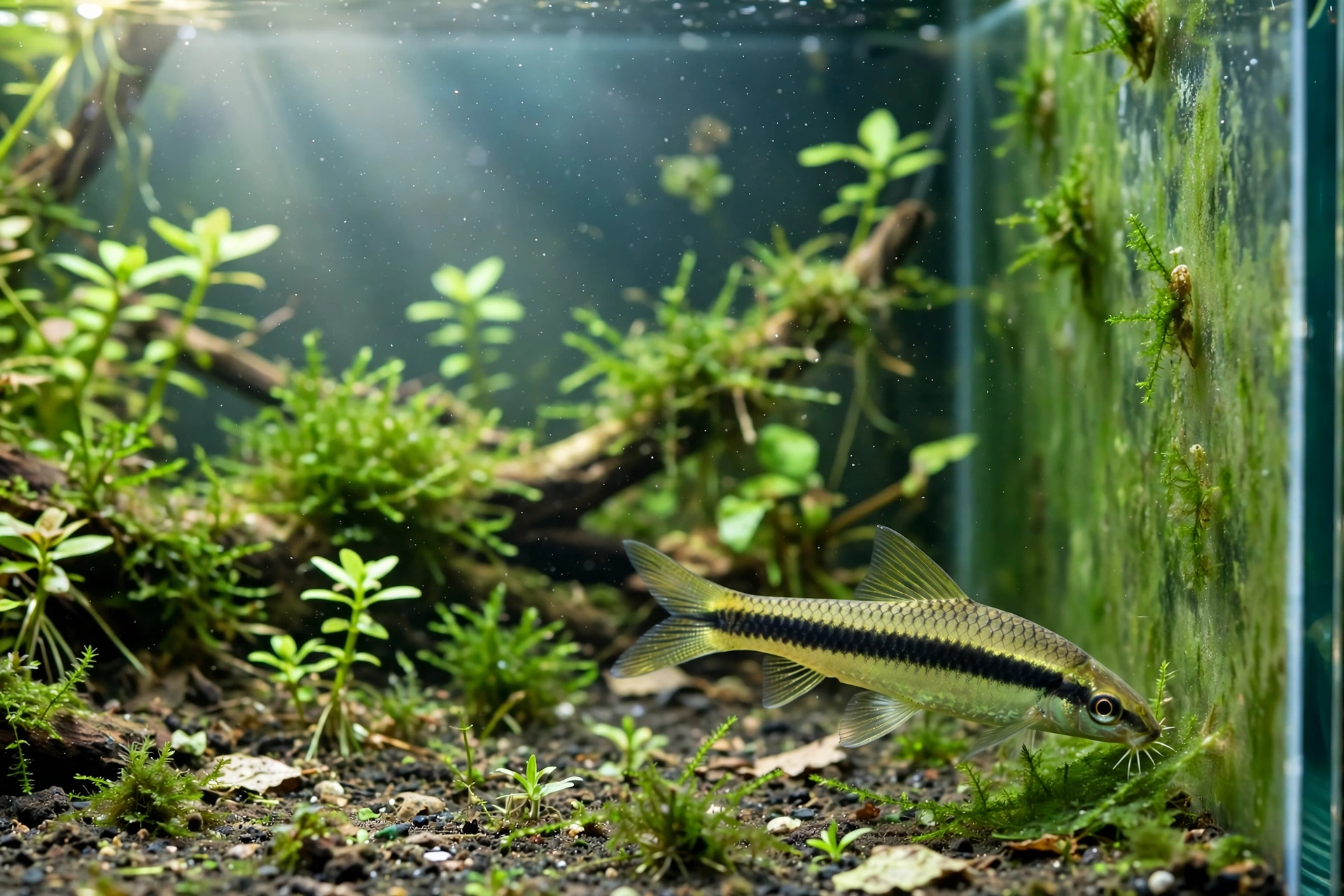
The undisputed champion. A true Siamese algae eater eats black beard algae, hair algae, and leftover food — and stays relatively peaceful in groups. They reach about six inches, so a 20-gallon tank is the realistic minimum, with 30 gallons or more being better for a proper group.
Watch out for imposters. Pet stores frequently mislabel the Chinese algae eater as a Siamese. The difference matters enormously. True Siamese have a ragged black lateral stripe that continues onto the tail fin; the Chinese lookalike’s stripe stops at the base of the tail.
One quirk worth knowing: Siamese algae eaters get lazier about algae as they age. A big adult prefers easy fish food over algae work. Keep them slightly hungry — don’t overfeed the tank — and let the younger ones do the heavy lifting.
Otocinclus Catfish
Otos are the nano-tank answer: barely an inch and a half long, gentle, and constantly grazing. Six of them in a 10-gallon tank will keep diatoms and soft green algae under control indefinitely. They’re schooling fish, so never buy just one or two — a lonely oto is a stressed oto.
The catch: most otos are wild-caught and arrive at stores half-starved. Beginners lose a lot of them in the first two weeks. Buy plump, active individuals, acclimate them slowly with a drip line, and make sure there’s already some algae — or blanched zucchini — waiting when they arrive.
Bristlenose Pleco (Ancistrus)
If you want a pleco, this is the one. Bristlenoses top out at four to five inches, eat green spot algae, graze driftwood constantly, and have real personality. One fits comfortably in a 20-gallon tank. Give them driftwood — they need the fiber for healthy digestion — and a cave or two to claim as territory.
The Invertebrate Crew: Shrimp and Snails
Amano Shrimp (Caridina multidentata)
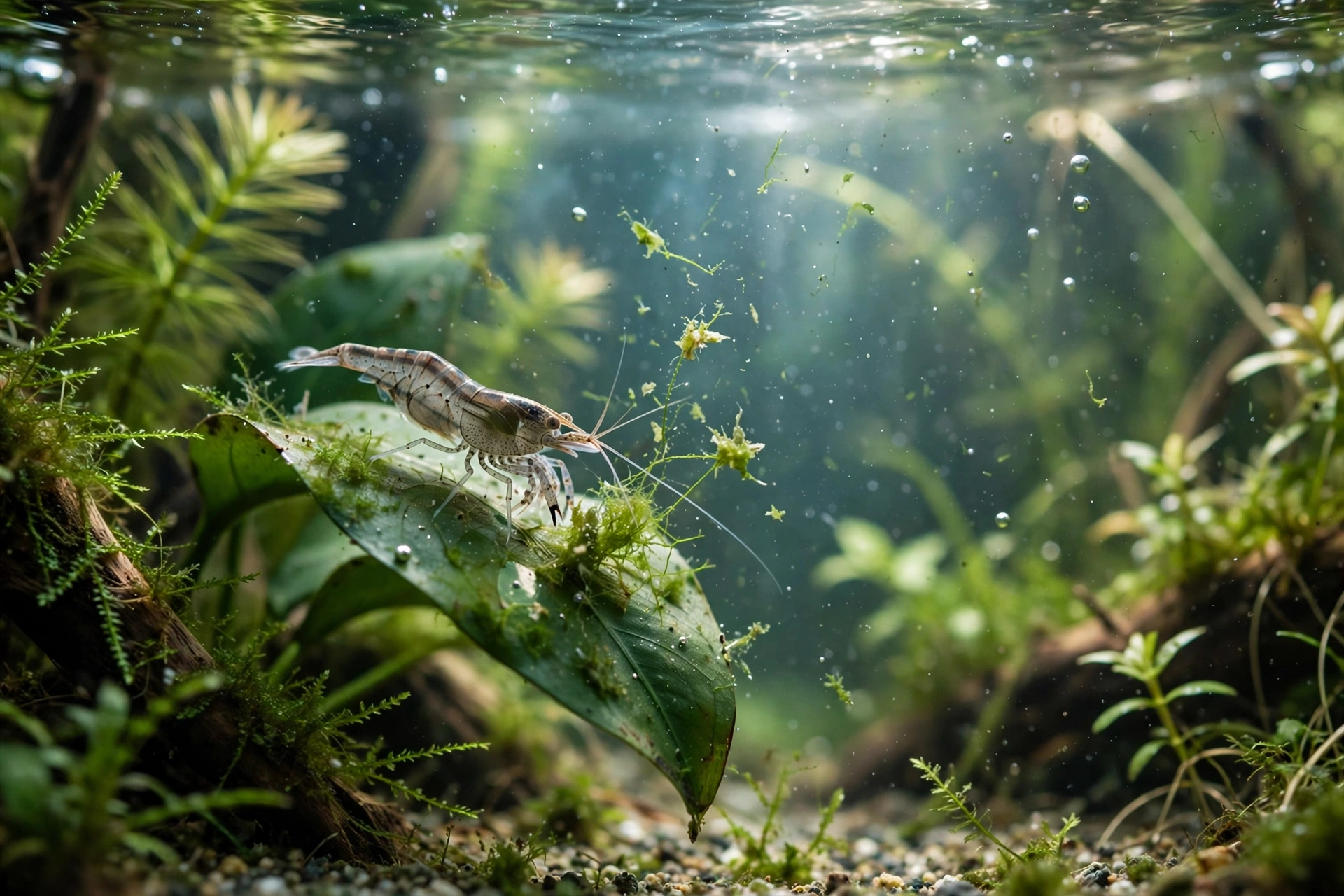
Ask experienced planted-tank keepers for their secret weapon and most will name the Amano shrimp. Six to ten of them in a 20-gallon tank demolish hair algae, polish plant leaves without damaging them, and hoover up leftover food. At up to two inches, they’re big enough to hold their own with most peaceful community fish.
They won’t breed in freshwater — the larvae need brackish water to develop — so the crew you buy is the crew you keep. No surprises.
Nerite Snails
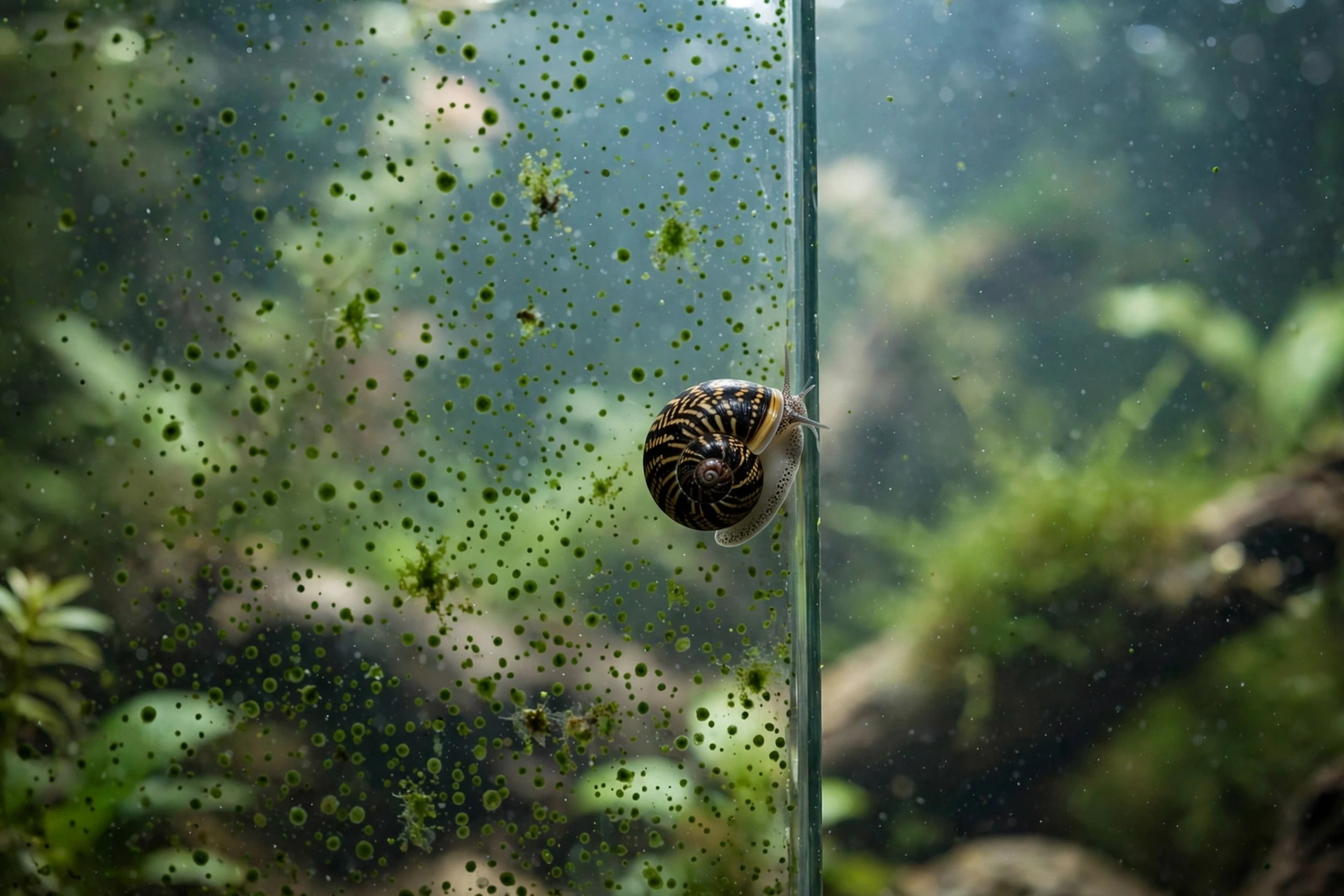
The glass-cleaning machines. Zebra, tiger, and horned nerites all rasp algae off glass, rocks, and equipment with an efficiency no fish can match. They’re also escape artists, so keep a tight-fitting lid — you will occasionally find one on a mission across the room.
Their famous advantage: nerites cannot reproduce in freshwater. Females may lay tiny white eggs on hard surfaces — harmless, though a bit unsightly — but the eggs never hatch. No snail infestation, ever.
Cherry Shrimp (Neocaridina davidi)
Less powerful than Amanos against tough algae, but cherry shrimp graze biofilm and soft algae around the clock — and they breed freely in freshwater, so a starter colony of ten becomes hundreds within months. In a shrimp-only tank or a peaceful community, they’re a self-sustaining cleanup crew. Just don’t house them with bettas or large cichlids unless you enjoy serving expensive live snacks.
What Doesn’t Work: Algae Eaters to Avoid
The common pleco. That two-inch baby at the store becomes a two-foot waste factory. Adults largely stop eating algae, produce enormous amounts of waste — which feeds more algae — and outgrow nearly every home aquarium. It’s the single most regretted fish purchase in the hobby.
The Chinese algae eater. Aggressive, territorial, and stops eating algae as it matures, switching to sucking the slime coats off slow-moving tankmates. Frequently mislabeled as a Siamese algae eater. If the “algae eater” at the store has a sucker mouth and a stripe that stops before the tail fin, walk away.
Overstocking cleaners. Ten otos in an algae-free tank will starve. Algae eaters supplement your maintenance routine; they don’t replace it. And every one of them needs supplemental feeding — algae wafers, blanched vegetables — once the algae is under control.
How Many Algae Eaters Do You Need?
Fewer than most people buy. A cleanup crew should match the tank, not carpet it:
- 10-gallon: six otocinclus or five to six Amano shrimp, plus two nerite snails
- 20-gallon: six Amano shrimp plus three to four nerite snails — or a small group of Siamese algae eaters if it’s a 20-long or bigger
- 40-gallon and up: combine forces — one bristlenose pleco plus an Amano crew plus nerites covers nearly everything
Add cleaners gradually, and only when there’s actually algae for them to eat. A starving cleanup crew is worse than no crew at all.
Algae Eaters Still Need Real Food
This is the mistake that kills most cleanup crews: assuming the tank feeds them. Once your algae is under control — which is the entire goal — supplement with algae wafers, blanched zucchini or cucumber, and quality sinking pellets. A well-fed algae eater lives for years; a starved one fades within months.
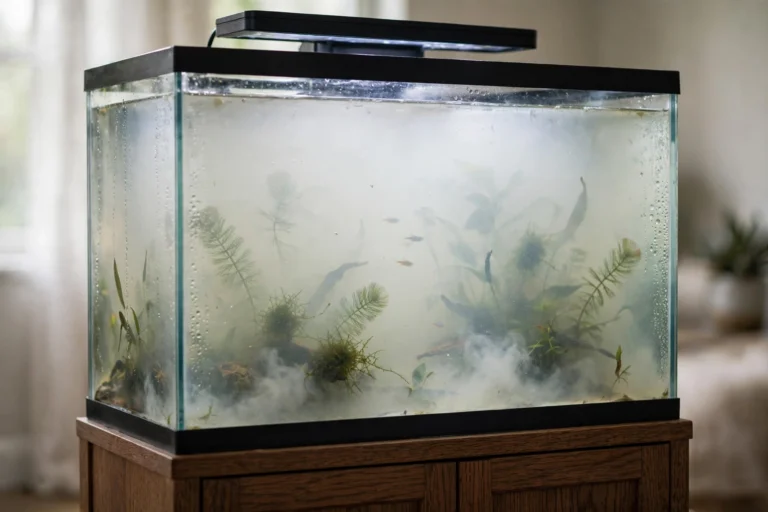
And remember what “algae eater” doesn’t mean: tank mechanic. None of these animals fix the root cause of algae — too much light, excess nutrients, or an imbalance between the two. If you’re fighting constant green water that turns the whole tank into pea soup, that’s a light-and-nutrient problem to solve directly rather than a livestock problem. I walk through the full diagnosis in my guide to why fish tanks go cloudy.
The right algae eater, matched to the right algae, in the right tank size, turns algae control from a weekly chore into background noise. Identify your algae, pick the specialist, skip the common pleco — and feed your cleaners like the working animals they are.