Why Is My Goldfish Turning Black? Causes & Treatment
Why is my goldfish turning black? If you’re noticing black patches spreading on your goldfish, it can be alarming. The good news: in most cases, a goldfish turning black is healing, not dying. The bad news: sometimes it signals a water quality problem you need to fix fast. Here’s how to tell which one you’re dealing with.
Why Is My Goldfish Turning Black? The Most Common Cause: Healing Ammonia Burns
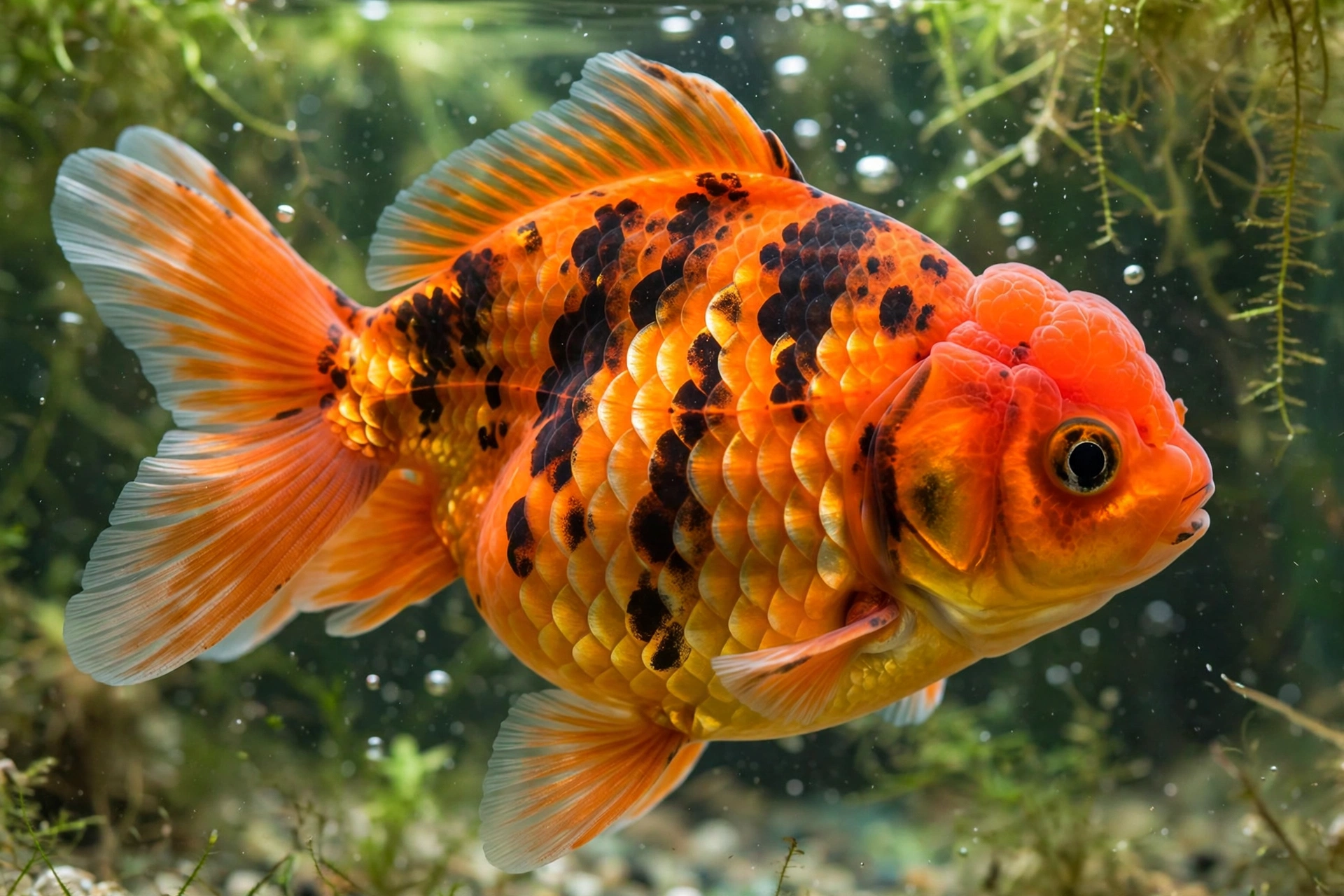
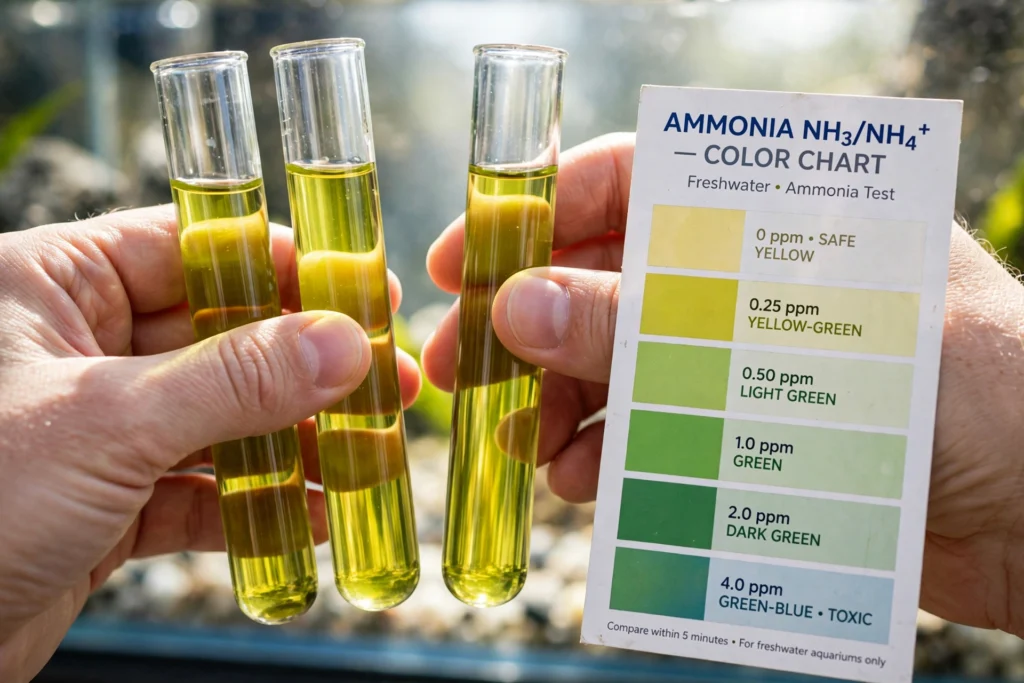
This surprises everyone: black patches on a goldfish are usually healing tissue, not active disease. When ammonia in the water burns a goldfish’s skin and fins, the damaged tissue often turns black as it heals — similar to how a scab darkens. So if your goldfish is turning black, the real question is: what burned it in the first place? Test your water immediately for ammonia and nitrite. If either reads above zero, you’ve found your culprit. What to do: test ammonia, nitrite, nitrate, and pH with a liquid test kit. Do a 30–50% water change with dechlorinated water if ammonia or nitrite is present. Find the source: overfeeding, overstocking, an uncycled tank, or a crashed filter are the usual suspects. The black patches themselves need no treatment — they’re the healing. Fix the water, and new healthy tissue replaces them over weeks.
Cause 2: Natural Color Change (Genetics)
Many goldfish change color throughout their lives, especially in the first 1–2 years. Black moors, shubunkins, and calico-patterned fish are genetically programmed to shift colors. How to tell: the fish is active, eating normally, water parameters are perfect, and the black areas look like smooth coloration rather than damaged tissue. No action needed.
Cause 3: Black Spot Disease (Less Common)
True black spot disease shows as small, raised black dots — not patches. It’s uncommon in indoor aquariums. How to tell: distinct small black spots like pepper grains, often with scratching against objects. Treatment: antiparasitic medication containing praziquantel.
How to Diagnose: The Checklist
- Test the water — ammonia or nitrite above zero means ammonia burns healing; fix water quality.
- Check the pattern — smooth spreading patches means healing or genetics; raised dots suggest parasites.
- Watch behavior — eating and active with good water likely means genetic; lethargic with clamped fins means water emergency.
- Consider age — young goldfish under 2 years change color naturally.
Preventing It in the Future
- Cycle the tank fully before adding goldfish.
- Don’t overcrowd — one fancy goldfish needs 20 gallons.
- Feed what they eat in 2 minutes, twice daily.
- Rinse filter media monthly in old tank water.
- Do 25–30% weekly water changes.
When to Worry
Worry when black patches come with red streaks in fins, ulcers or open sores, pineconing scales, or sudden lethargy. Black coloration alone, on an active fish in clean water, is almost never an emergency.
A goldfish turning black is usually a fish recovering from a water quality insult — the aquatic equivalent of a scab. Test the water, fix what’s wrong, and let the healing finish.